Zhang Yin, Li Yang, Liang Xiao, Cao Xiaojuan, Huang Longfei, Yan Jie, Wei Yanxing, Gao Jian
College of Fisheries, Key Lab of Agricultural Animal Genetics, Breeding and Reproduction of Ministry of Education/Key Lab of Freshwater Animal Breeding, Ministry of Agriculture, Huazhong Agricultural University, Wuhan, China.
Freshwater Aquaculture Collaborative Innovation Center of Hubei Province, Hubei, People's Republic of China.
PLoS One. 2017 Feb 17;12(2):e0172386. doi: 10.1371/journal.pone.0172386. eCollection 2017.
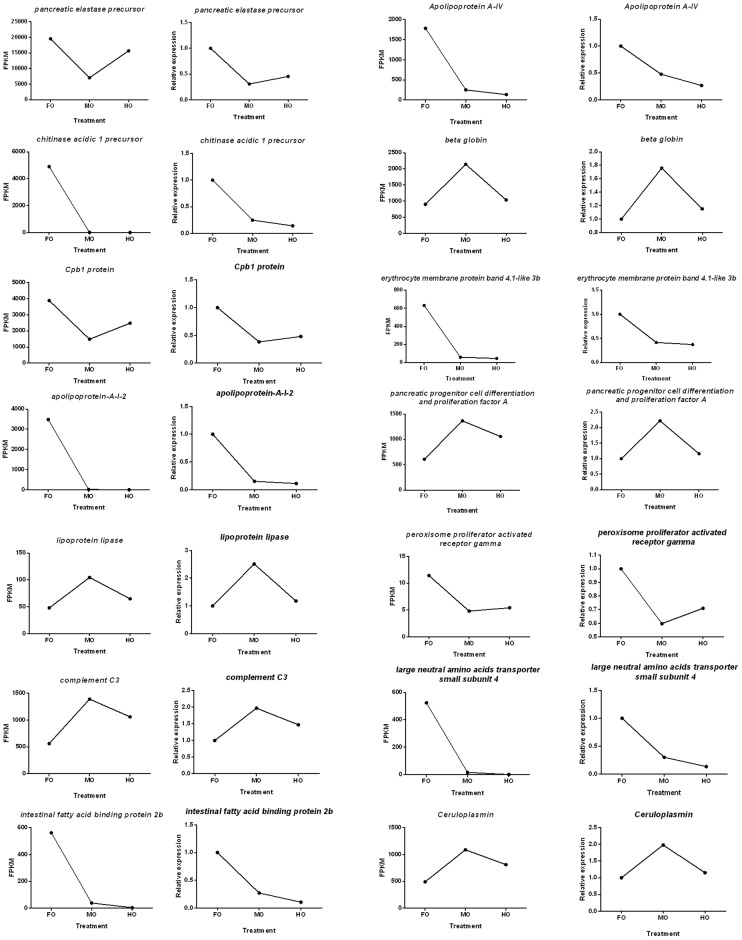
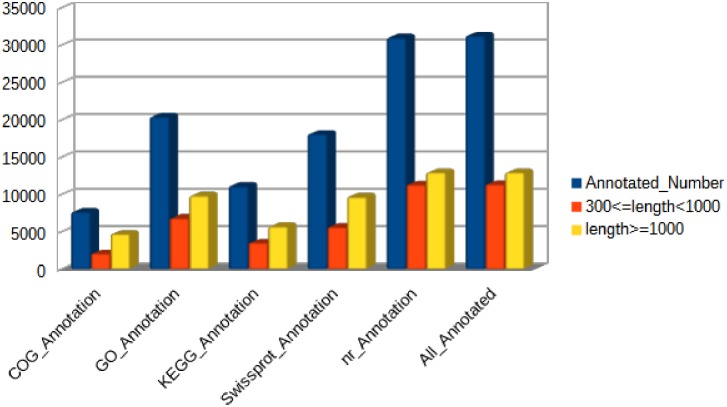
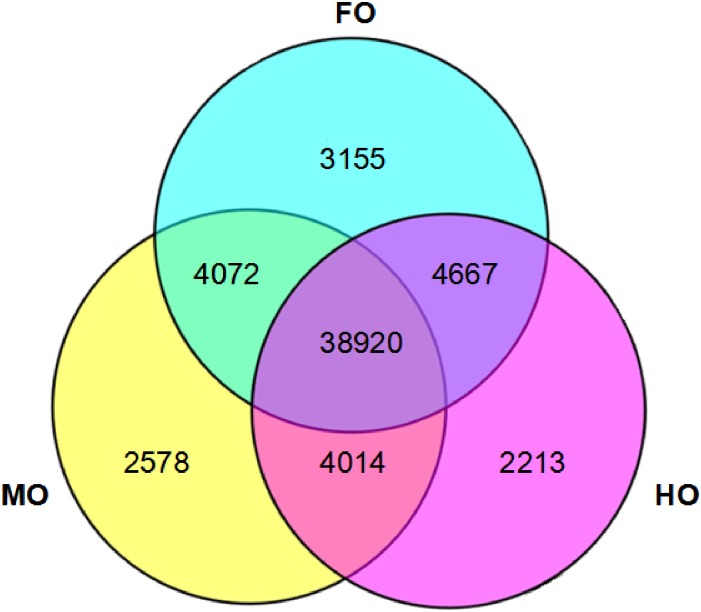
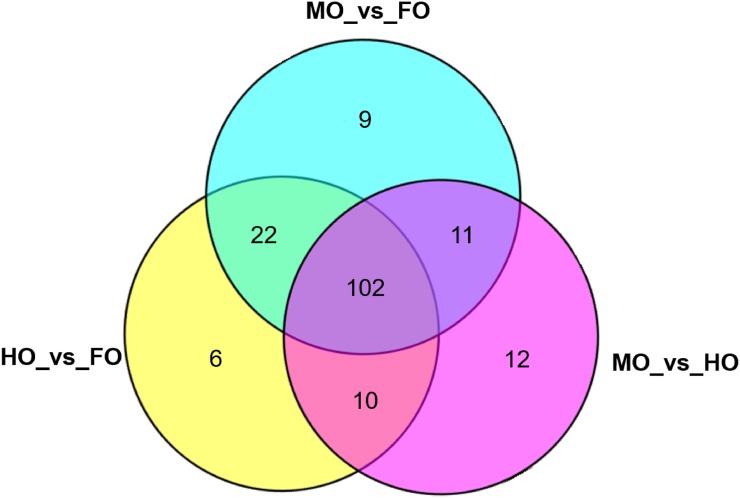
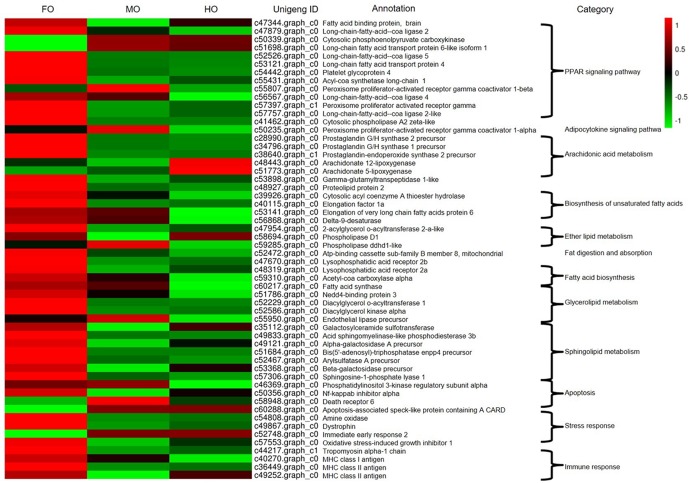
RNA sequencing and short-read assembly were utilized to produce a transcriptome of livers from loaches (Misgurnus anguillicaudatus) fed with three different diets respectively containing fresh fish oil (FO group), medium oxidized fish oil (MO group) and high oxidized fish oil (HO group). A total of 60,663 unigenes were obtained in this study, with mean length 848.74 bp. 50,814, 49,584 and 49,814 unigenes were respectively obtained from FO, MO and HO groups. There were 2,343 differentially expressed genes between FO and MO, with 855 down- and 1,488 up-regulated genes in the MO group. 2,813 genes were differentially expressed between FO and HO, including 1,256 down- and 1,552 up-regulated genes in the HO group. 2,075 differentially expressed genes were found in the comparison of MO and HO, including 1,074 up- and 1,001 down-regulated genes in the MO group. Some differentially expressed genes, such as fatty acid transport protein (fatp), fatty acid binding protein (fabp), apolipoprotein (apo), peroxisome proliferator activated receptor-gamma (ppar-γ), acetyl-CoA synthetase (acs) and arachidonate 5-lipoxygenase (alox5), were involved in lipid metabolism, suggesting these genes in the loach were responsive to dietary oxidized fish oil. Results of transcriptome profilings here were validated using quantitative real time PCR in fourteen randomly selected unigenes. The present study provides insights into hepatic transcriptome profile of the loach, which is a valuable resource for studies of loach genomics. More importantly, this study identifies some important genes responsible for dietary oxidized fish oil, which will benefit researches of lipid metabolism in fish.
利用RNA测序和短读长组装技术,分别对投喂三种不同饲料(分别含有新鲜鱼油的FO组、中度氧化鱼油的MO组和高度氧化鱼油的HO组)的泥鳅(Misgurnus anguillicaudatus)肝脏进行转录组分析。本研究共获得60,663个单基因,平均长度为848.74 bp。分别从FO组、MO组和HO组获得50,814、49,584和49,814个单基因。FO组和MO组之间有2,343个差异表达基因,MO组中有855个基因下调,1,488个基因上调。FO组和HO组之间有2,813个差异表达基因,HO组中有1,256个基因下调,1,552个基因上调。在MO组和HO组的比较中发现2,075个差异表达基因,MO组中有1,074个基因上调,1,001个基因下调。一些差异表达基因,如脂肪酸转运蛋白(fatp)、脂肪酸结合蛋白(fabp)、载脂蛋白(apo)、过氧化物酶体增殖物激活受体γ(ppar-γ)、乙酰辅酶A合成酶(acs)和花生四烯酸5-脂氧合酶(alox5),参与脂质代谢,表明泥鳅中的这些基因对饲料中的氧化鱼油有反应。本研究随机选择了14个单基因,利用实时定量PCR对转录组分析结果进行了验证。本研究为泥鳅肝脏转录组图谱提供了见解,这是泥鳅基因组学研究的宝贵资源。更重要的是,本研究鉴定了一些与饲料氧化鱼油相关的重要基因,这将有助于鱼类脂质代谢的研究。