Ali Sajjad, Liu Ying, Ishaq Muhammad, Shah Tariq, Ilyas Aasir, Din Izhar Ud
College of Economics and Management, Huazhong Agricultural University, Wuhan 430070, China.
Hubei Collaborative Innovation Center for Grain Industry, Yangtze University, Jingzhou 434025, China.
Foods. 2017 May 24;6(6):39. doi: 10.3390/foods6060039.
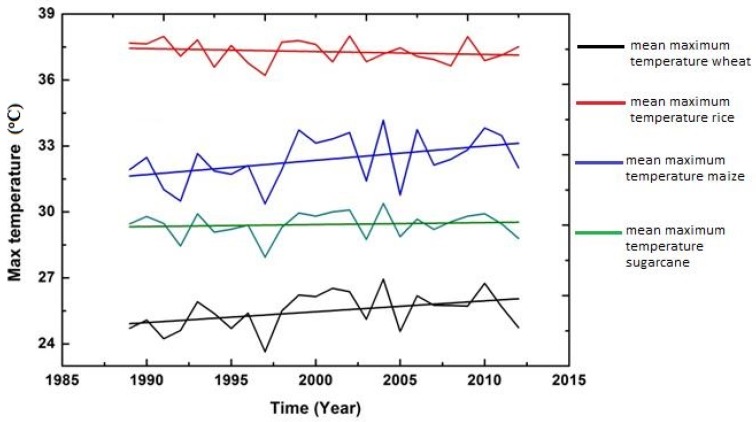
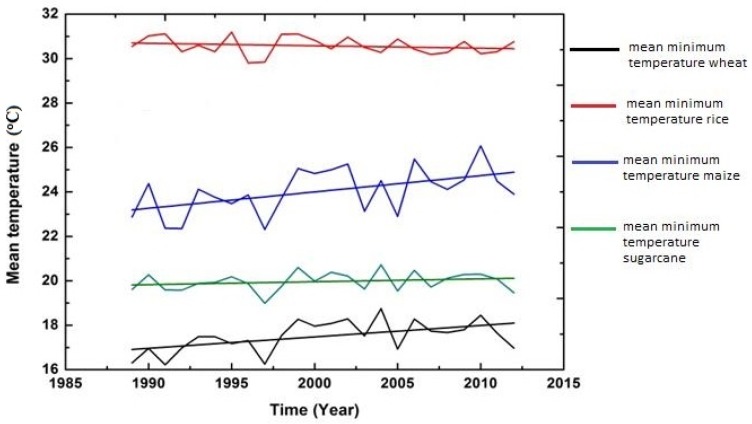
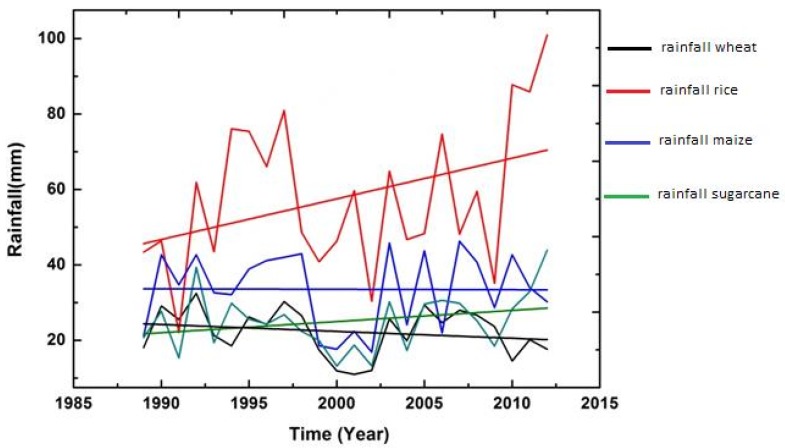
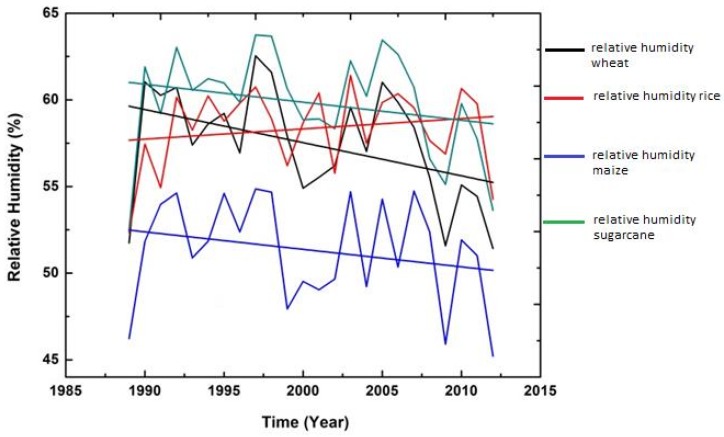
Pakistan is vulnerable to climate change, and extreme climatic conditions are threatening food security. This study examines the effects of climate change (e.g., maximum temperature, minimum temperature, rainfall, relative humidity, and the sunshine) on the major crops of Pakistan (e.g., wheat, rice, maize, and sugarcane). The methods of feasible generalized least square (FGLS) and heteroscedasticity and autocorrelation (HAC) consistent standard error were employed using time series data for the period 1989 to 2015. The results of the study reveal that maximum temperature adversely affects wheat production, while the effect of minimum temperature is positive and significant for all crops. Rainfall effect towards the yield of a selected crop is negative, except for wheat. To cope with and mitigate the adverse effects of climate change, there is a need for the development of heat- and drought-resistant high-yielding varieties to ensure food security in the country.
巴基斯坦易受气候变化影响,极端气候条件正威胁着粮食安全。本研究考察了气候变化(如最高温度、最低温度、降雨量、相对湿度和日照)对巴基斯坦主要农作物(如小麦、水稻、玉米和甘蔗)的影响。利用1989年至2015年的时间序列数据,采用可行广义最小二乘法(FGLS)以及异方差和自相关(HAC)一致标准误的方法。研究结果表明,最高温度对小麦产量有不利影响,而最低温度对所有作物的影响是正向且显著的。除小麦外,降雨对所选作物产量的影响为负。为应对和减轻气候变化的不利影响,需要培育耐热和耐旱的高产作物品种,以确保该国的粮食安全。