College of Pharmaceutical Sciences, Zhejiang University, Hangzhou 310058, China.
College of Preclinical Medicine, Zhejiang Chinese Medical University, Hangzhou 310053, China.
Molecules. 2017 Aug 31;22(9):1443. doi: 10.3390/molecules22091443.
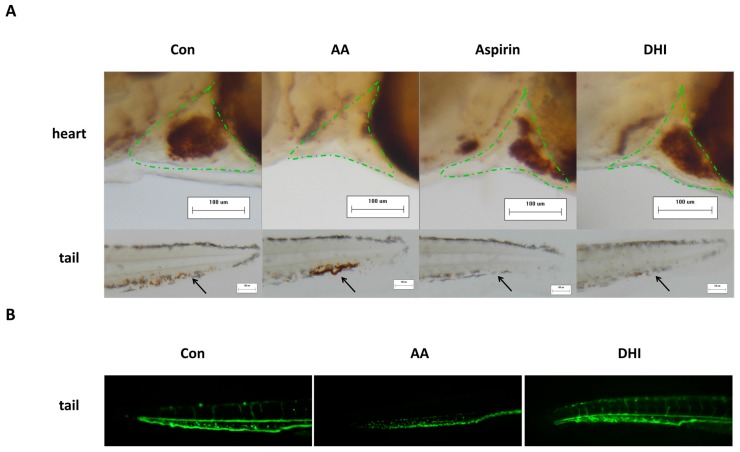
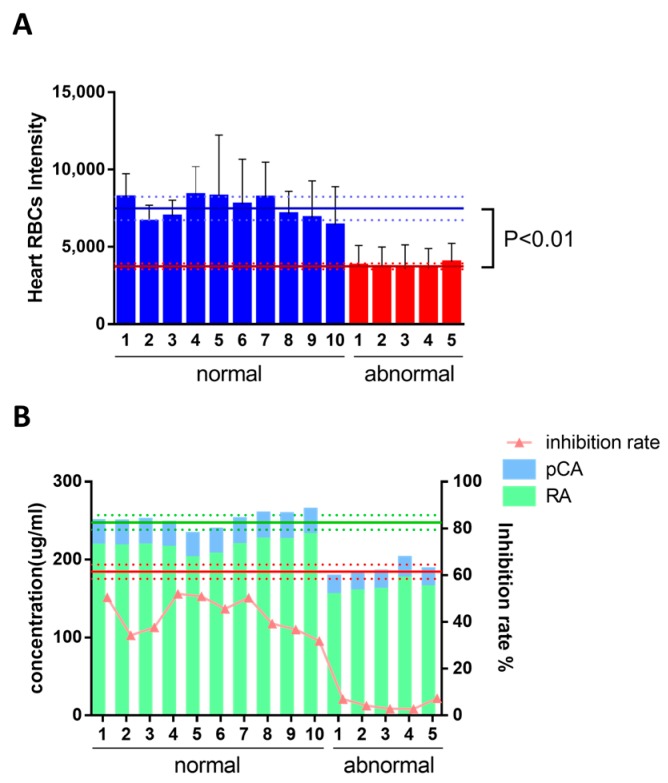
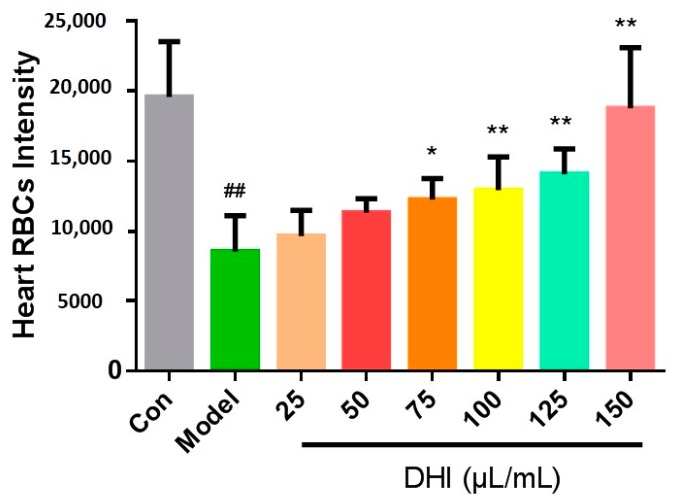
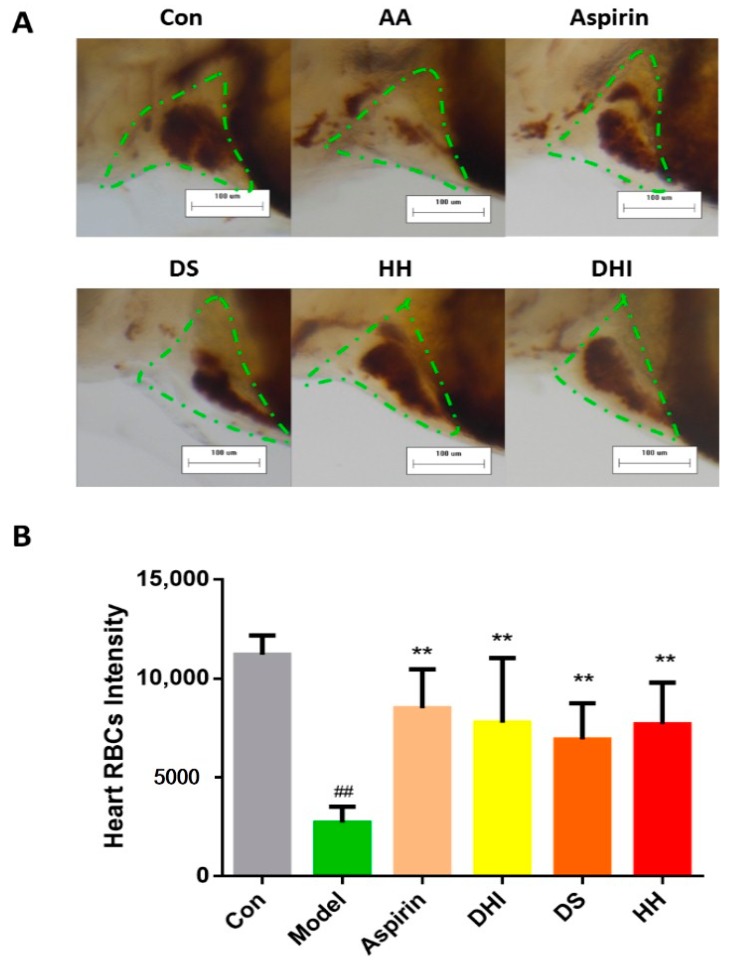
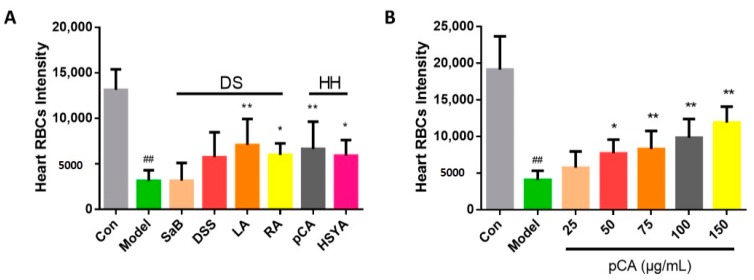
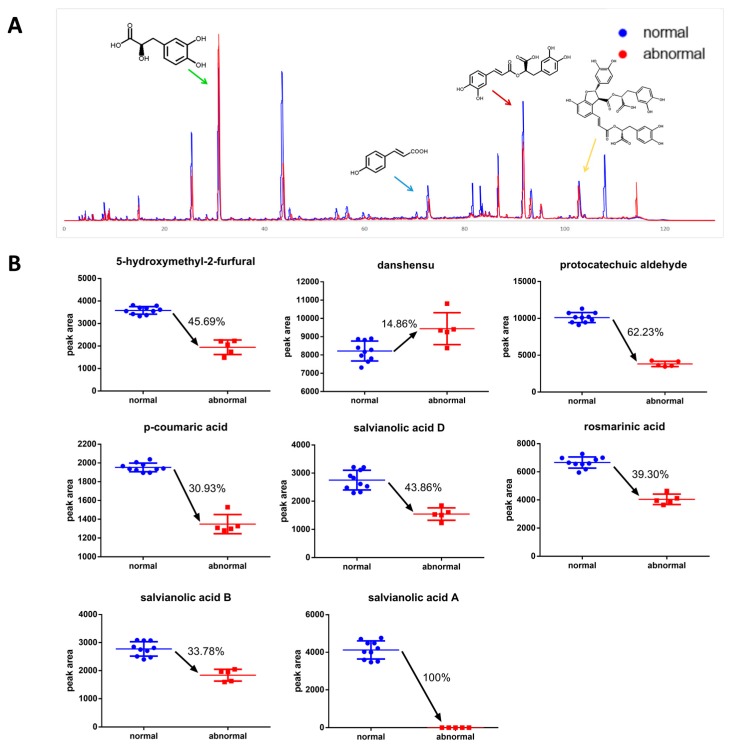
Quality-marker (Q-marker) is an emerging concept to ensure the quality and batch-to-batch consistency of Chinese medicine (CM). However, significant difficulties remain in the identification of Q-markers due to the unclear relationship between complex chemical compositions and the pharmacological efficacy of CM. In the present study, we proposed a novel strategy to identify the potential Q-marker of danhong injection (DHI) by an in vivo zebrafish thrombosis model. The anti-thrombotic effects of DHI and its major constituents were evaluated by the zebrafish model of arachidonic acid (AA)-induced thrombosis. The results indicated that DHI can attenuate tail venous thrombus and recover the decrease of heart red blood cell (RBC) intensity in a dose-dependent manner. The result that DHI prevented the formulation of thrombosis in zebrafish was also validated in the zebrafish thrombosis model with green fluorescence protein (GFP)-labeled hemoglobin. The major components of DHI, namely danshen (DS) and honghua (HH), as well as the major chemical constituents of DHI, also exerted anti-thrombotic effects, among which rosmarinic acid (RA) and p-coumaric acid (pCA) showed moderate anti-thrombotic effects. This is the first time that pCA from HH has been found as an active compound exerting an anti-thrombotic effect in a dose-dependent manner, whose IC value is approximately 147 μg/mL. By analyzing 10 batches of normal DHI samples and five abnormal samples by high-performance liquid chromatography (HPLC), we found the contents of pCA and RA can be positively correlated to the anti-thrombotic effect of DHI, suggesting that pCA and RA could be potential Q-markers of DHI to ensure batch-to-batch consistency. Our findings illustrated that discovering major active compounds from CM by in vivo pharmacological models can be a useful approach to identifying Q-markers of CM, and in vivo pharmacological models can be a potential tool to evaluate batch-to-batch consistency of CMs.
质量标志物(Q-marker)是确保中药质量和批次一致性的新兴概念。然而,由于中药复杂化学成分与药理功效之间的关系尚不清楚,因此在鉴定 Q-marker 方面仍存在重大困难。在本研究中,我们提出了一种通过体内斑马鱼血栓模型鉴定丹红注射液(DHI)潜在 Q-marker 的新策略。通过 AA 诱导的斑马鱼血栓模型评价 DHI 及其主要成分的抗血栓作用。结果表明,DHI 可剂量依赖性地减轻尾部静脉血栓形成,并恢复心脏红细胞(RBC)强度的降低。DHI 预防斑马鱼血栓形成的结果也在 GFP 标记血红蛋白的斑马鱼血栓模型中得到了验证。DHI 的主要成分丹参(DS)和红花(HH)以及 DHI 的主要化学成分也表现出抗血栓作用,其中迷迭香酸(RA)和对香豆酸(pCA)表现出中等抗血栓作用。这是首次发现 HH 中的 pCA 作为一种活性化合物,以剂量依赖的方式发挥抗血栓作用,其 IC 值约为 147μg/ml。通过 HPLC 分析 10 批正常 DHI 样品和 5 批异常样品,发现 pCA 和 RA 的含量与 DHI 的抗血栓作用呈正相关,提示 pCA 和 RA 可能是 DHI 的潜在 Q-marker,以确保批次间的一致性。我们的研究结果表明,通过体内药理学模型发现中药的主要活性化合物可以是鉴定中药 Q-marker 的有效方法,体内药理学模型可以是评估中药批次间一致性的潜在工具。