Division of Infection Control and Environmental Health, Norwegian Institute of Public Health, Oslo 0403, Norway.
Department of Nursing and Health Promotion, Faculty of Health Sciences, OsloMet Oslo Metropolitan University, Oslo 0310, Norway.
Nutrients. 2018 Feb 17;10(2):230. doi: 10.3390/nu10020230.
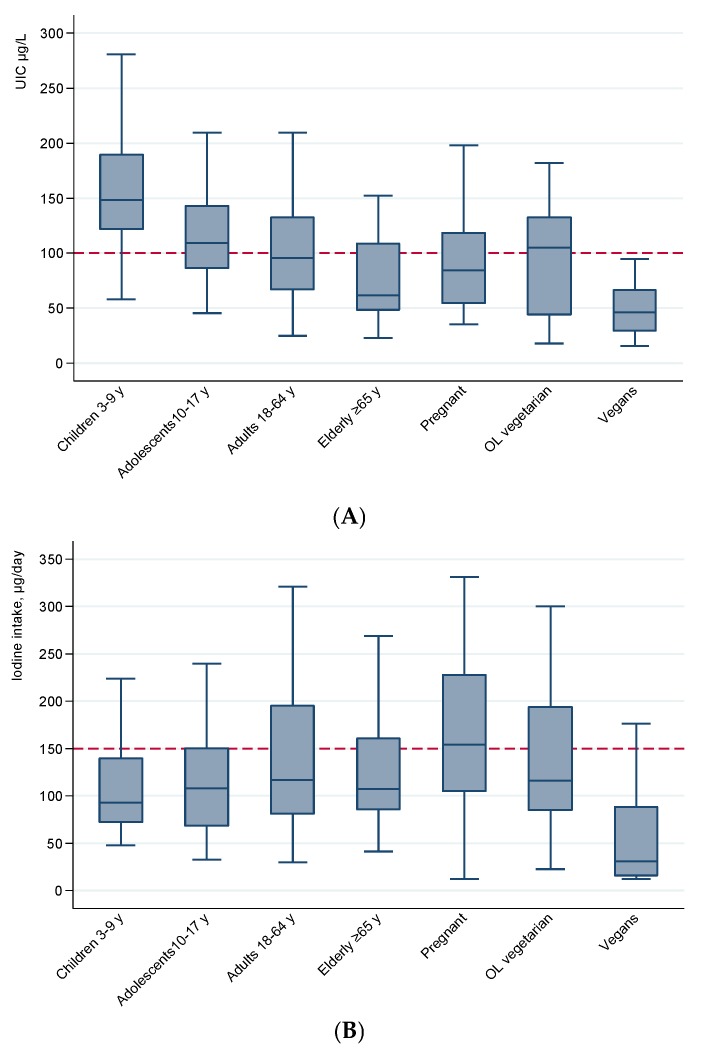
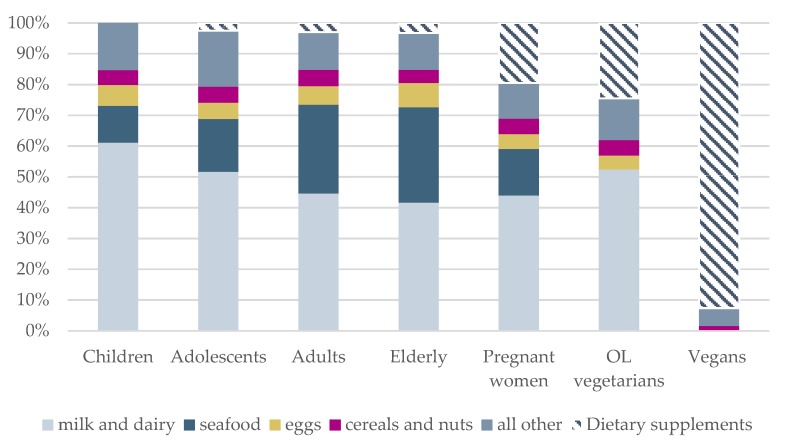
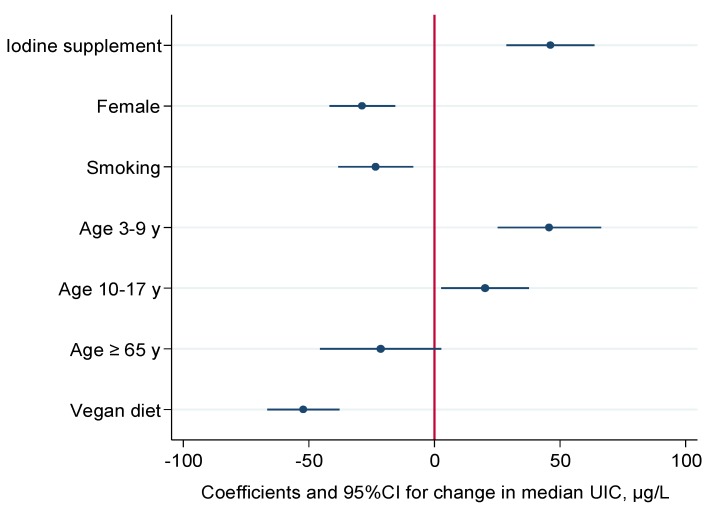
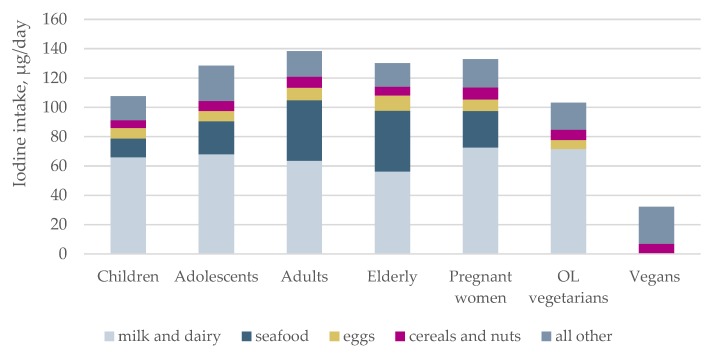
Inadequate iodine intake has been identified in populations considered iodine replete for decades. The objective of the current study is to evaluate urinary iodine concentration (UIC) and the probability of adequate iodine intake in subgroups of the Norwegian population defined by age, life stage and vegetarian dietary practice. In a cross-sectional survey, we assessed the probability of adequate iodine intake by two 24-h food diaries and UIC from two fasting morning spot urine samples in 276 participants. The participants included children ( 47), adolescents ( 46), adults ( 71), the elderly ( 23), pregnant women ( 45), ovo-lacto vegetarians ( 25), and vegans ( 19). In all participants combined, the median (95% CI) UIC was 101 (90, 110) µg/L, median (25th, 75th percentile) calculated iodine intake was 112 (77, 175) µg/day and median (25th, 75th percentile) estimated usual iodine intake was 101 (75, 150) µg/day. According to WHOs criteria for evaluation of median UIC, iodine intake was inadequate in the elderly, pregnant women, vegans and non-pregnant women of childbearing age. Children had the highest (82%) and vegans the lowest (14%) probability of adequate iodine intake according to reported food and supplement intakes. This study confirms the need for monitoring iodine intake and status in nationally representative study samples in Norway.
几十年来,人们一直认为某些人群的碘摄入量不足。本研究旨在评估挪威人群中按年龄、生命阶段和素食饮食习惯划分的亚组的尿碘浓度(UIC)和碘摄入充足的概率。在一项横断面研究中,我们通过 276 名参与者的两份 24 小时食物日记和两份空腹晨尿样本来评估碘摄入充足的概率和 UIC。参与者包括儿童(47 名)、青少年(46 名)、成年人(71 名)、老年人(23 名)、孕妇(45 名)、乳蛋素食者(25 名)和纯素食者(19 名)。在所有参与者中,UIC 的中位数(95%CI)为 101(90,110)µg/L,计算碘摄入量的中位数(25 分位,75 分位)为 112(77,175)µg/天,估计的碘摄入量中位数(25 分位,75 分位)为 101(75,150)µg/天。根据世卫组织评估 UIC 中位数的标准,老年人、孕妇、纯素食者和育龄期非孕妇的碘摄入不足。根据报告的食物和补充剂摄入量,儿童的碘摄入充足的概率最高(82%),纯素食者的概率最低(14%)。本研究证实了在挪威有代表性的研究样本中监测碘摄入和碘营养状况的必要性。