Author to whom any correspondence should be addressed.
Phys Med Biol. 2018 Sep 17;63(18):185016. doi: 10.1088/1361-6560/aada6c.
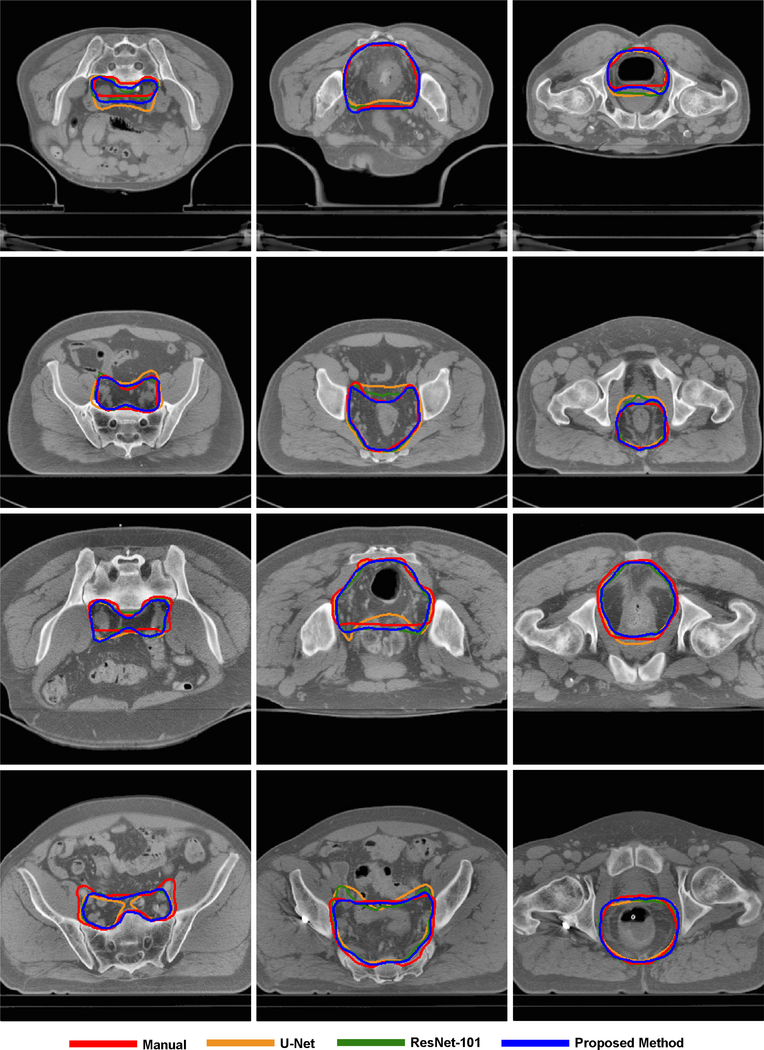
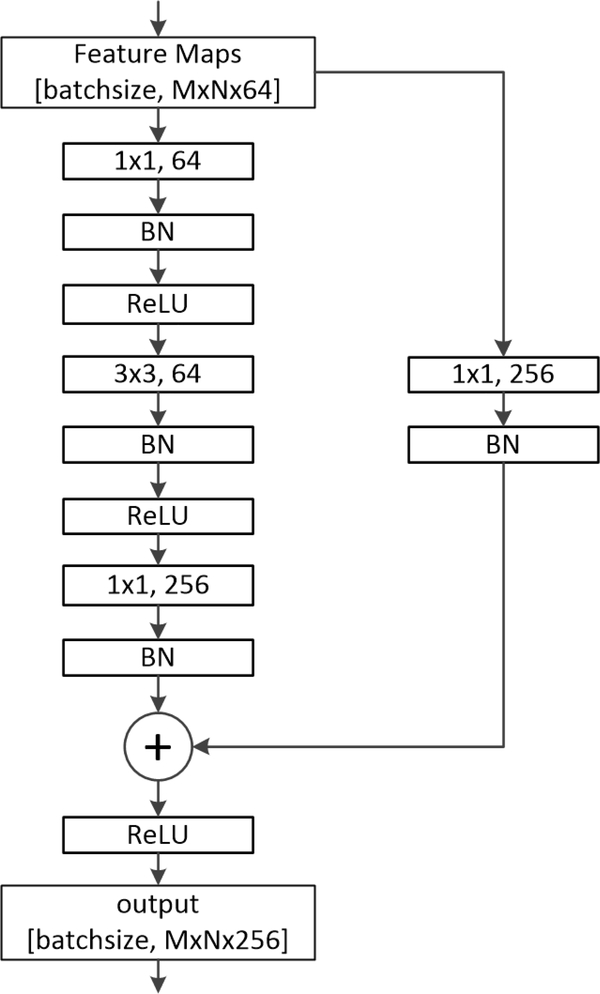
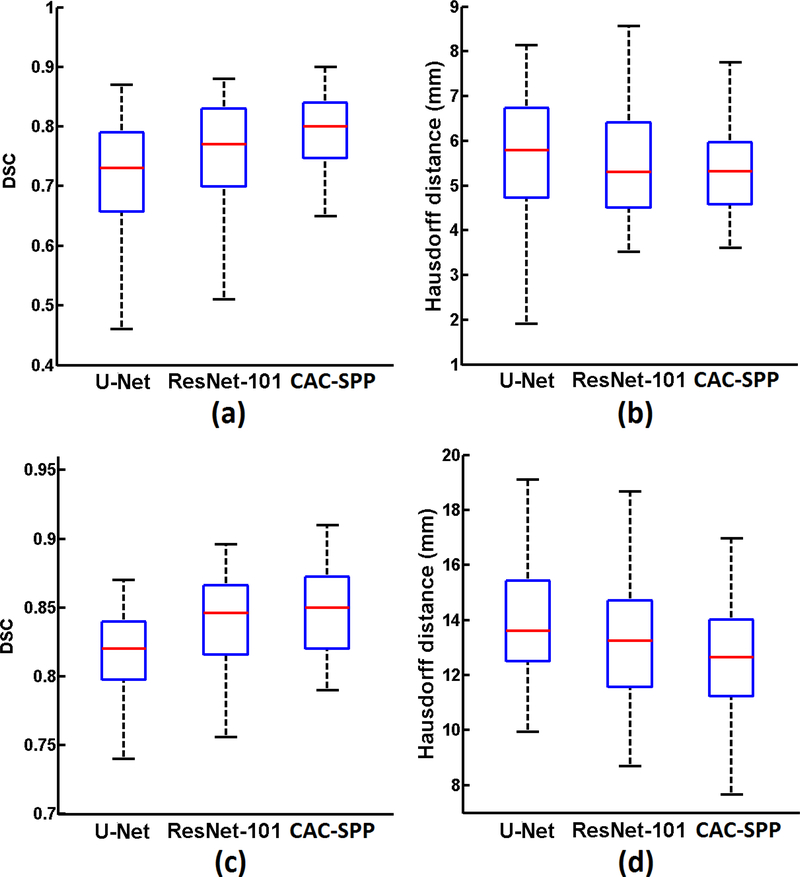
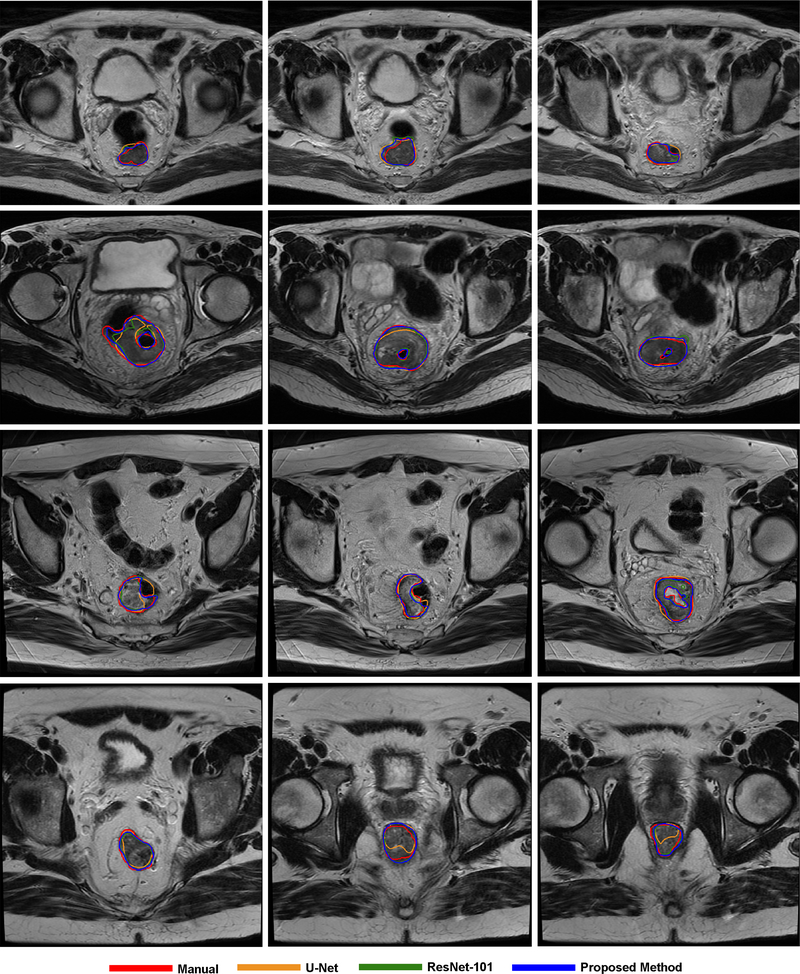
Convolutional neural networks (CNNs) have become the state-of-the-art method for medical segmentation. However, repeated pooling and striding operations reduce the feature resolution, causing loss of detailed information. Additionally, tumors of different patients are of different sizes. Thus, small tumors may be ignored while big tumors may exceed the receptive fields of convolutions. The purpose of this study is to further improve the segmentation accuracy using a novel CNN (named CAC-SPP) with cascaded atrous convolution (CAC) and a spatial pyramid pooling (SPP) module. This work is the first attempt at applying SPP for segmentation in radiotherapy. We improved the network based on ResNet-101 yielding accuracy gains from a greatly increased depth. We added CAC to extract a high-resolution feature map while maintaining large receptive fields. We also adopted a parallel SPP module with different atrous rates to capture the multi-scale features. The performance was compared with the widely adopted U-Net and ResNet-101 with independent segmentation of rectal tumors for two image sets, separately: (1) 70 T2-weighted MR images and (2) 100 planning CT images. The results show that the proposed CAC-SPP outperformed the U-Net and ResNet-101 for both image sets. The Dice similarity coefficient values of CAC-SPP were 0.78 ± 0.08 and 0.85 ± 0.03, respectively, which were higher than those of U-Net (0.70 ± 0.11 and 0.82 ± 0.04) and ResNet-101 (0.76 ± 0.10 and 0.84 ± 0.03). The segmentation speed of CAC-SPP was comparable with ResNet-101, but about 36% faster than U-Net. In conclusion, the proposed CAC-SPP, which could extract high-resolution features with large receptive fields and capture multi-scale context yields, improves the accuracy of segmentation performance for rectal tumors.
卷积神经网络(CNNs)已成为医学分割的最新方法。然而,重复的池化和跨步操作会降低特征分辨率,导致详细信息丢失。此外,不同患者的肿瘤大小不同。因此,小肿瘤可能会被忽略,而大肿瘤可能会超出卷积的感受野。本研究的目的是使用具有级联空洞卷积(CAC)和空间金字塔池化(SPP)模块的新型 CNN(命名为 CAC-SPP)进一步提高分割准确性。这是首次尝试将 SPP 应用于放射治疗中的分割。我们在 ResNet-101 基础上进行了改进,大大增加了网络的深度,从而提高了准确性。我们添加了 CAC 来提取高分辨率特征图,同时保持大的感受野。我们还采用了具有不同空洞率的并行 SPP 模块来捕获多尺度特征。将性能与广泛采用的 U-Net 和具有独立直肠肿瘤分割的 ResNet-101 进行比较,分别为两个图像集:(1)70 个 T2 加权磁共振图像和(2)100 个计划 CT 图像。结果表明,所提出的 CAC-SPP 在两个图像集上均优于 U-Net 和 ResNet-101。CAC-SPP 的 Dice 相似系数值分别为 0.78±0.08 和 0.85±0.03,高于 U-Net(0.70±0.11 和 0.82±0.04)和 ResNet-101(0.76±0.10 和 0.84±0.03)。CAC-SPP 的分割速度与 ResNet-101 相当,但比 U-Net 快约 36%。总之,能够提取具有大感受野和捕获多尺度上下文的高分辨率特征的提出的 CAC-SPP 提高了直肠肿瘤分割性能的准确性。