Department of Epidemiology and public health, Sciensano, Juliette Wytsmanstraat 14, 1050 Elsene, Belgium.
Test Aankoop/Test-Achat, Hollandstraat 13, 1060 Sint-Gillis, Belgium.
Nutrients. 2020 Mar 25;12(4):884. doi: 10.3390/nu12040884.
Breakfast cereals are frequently consumed in Belgium, especially among children. We investigated the nutritional content, labelling and marketing of breakfast cereals and the changes in nutrient content and reformulation in anticipation of the implementation of the Nutri-Score front-of-pack label.
Pictures were taken of cereal packages. The WHO-Europe nutrient profiling tool was used to classify cereals into 'permitted'/'not-permitted' to be marketed to children, while the nutritional quality was assessed using Nutri-Score. The proportion of cereals with nutrition and health claims and/or promotional characters on the front-of-pack was compared between permitted and not-permitted cereals and between different Nutriscore categories using Chi-squared tests. The average nutrient contents per 100g were compared between 2017 and 2018 using paired -tests.
Belgium.
All breakfast cereals in the major supermarkets ( = 7) in 2017 and 2018.
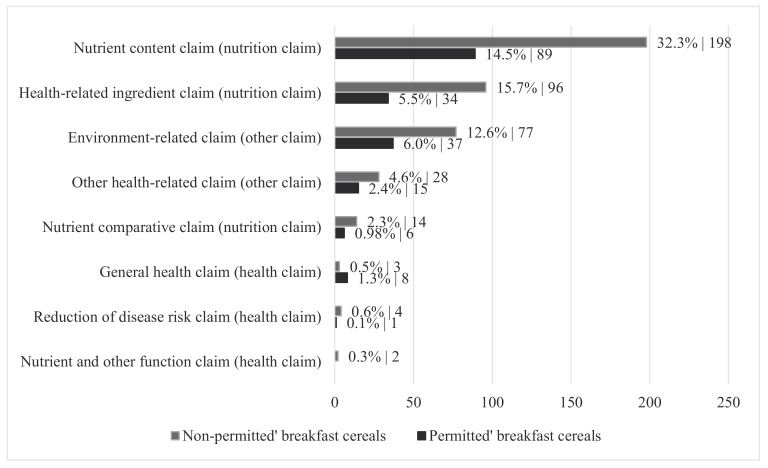
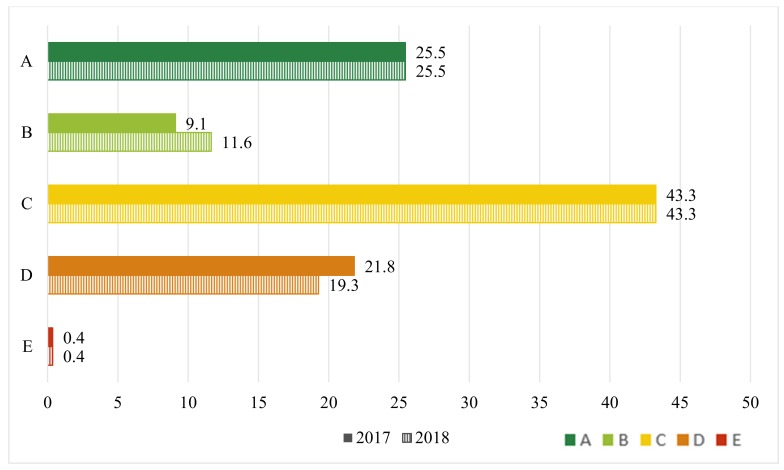
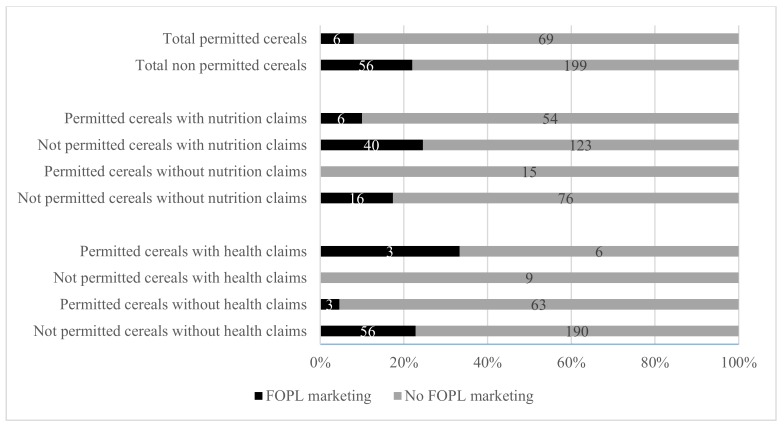
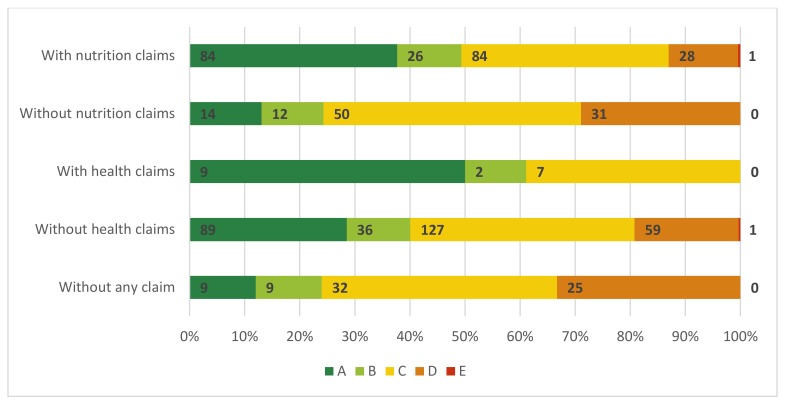
Overall, 330 cereals were included. About 77.2% of cereals were not permitted to be marketed to children but, of those, 22.0% displayed promotional characters. More claims (68.9% of all claims) were found on 'not-permitted' compared with 'permitted' cereals, particularly nutrition claims. Most claims were displayed on cereals with the allocated Nutri-Score A (42.0%) and C (37.0%). A significant reformulation of cereals was found between 2017 and 2018, with reductions in total sugar (-5%) ( < 0.001) and sodium (-20%) ( = 0.002) and increases in fibre (+3%) ( = 0.012) and proteins (+2%) ( = 0.002).
Breakfast cereals on the Belgian market are predominantly unhealthy and frequently carry claims and promotional characters. Minimal reformulation occurred over one year. Policy recommendations include restrictions on claims and marketing for not-permitted cereals.
早餐麦片在比利时经常被食用,尤其是在儿童中。我们调查了早餐麦片的营养成分、标签和营销情况,以及在实施 Nutri-Score 标签之前,营养成分和配方的变化。
拍摄了麦片包装的照片。使用世卫组织欧洲营养成分分类工具将麦片分为“允许”/“不允许”向儿童销售的类别,同时使用 Nutri-Score 评估营养质量。使用卡方检验比较允许和不允许的麦片以及不同 Nutriscore 类别的包装上前部有营养和健康声明和/或促销人物的麦片比例。使用配对 t 检验比较 2017 年和 2018 年的每 100 克平均营养素含量。
比利时。
2017 年和 2018 年主要超市的所有早餐麦片(=7)。
总体而言,共纳入 330 种麦片。约 77.2%的麦片不允许向儿童销售,但其中 22.0%显示促销人物。在“不允许”的麦片中发现了更多的声明(所有声明的 68.9%),而不是在“允许”的麦片中,特别是营养声明。大多数声明显示在分配 Nutri-Score A(42.0%)和 C(37.0%)的麦片中。在 2017 年至 2018 年间,麦片进行了重大的配方调整,总糖含量降低了 5%(<0.001),钠含量降低了 20%(=0.002),纤维含量增加了 3%(=0.012),蛋白质含量增加了 2%(=0.002)。
比利时市场上的早餐麦片主要是不健康的,经常带有声明和促销人物。在一年的时间里,配方的调整微乎其微。政策建议包括限制不允许的麦片的声明和营销。