Al-Ansari Mysoon M, Dhasarathan P, Ranjitsingh A J A, Al-Humaid Latifah A
Department of Botany and Microbiology, Female Campus, College of Science, King Saud University, Riyadh, Saudi Arabia.
Department of Biotechnology, Prathyusha Engineering College, Chennai 600056, India.
Saudi J Biol Sci. 2020 Nov;27(11):2993-3002. doi: 10.1016/j.sjbs.2020.09.008. Epub 2020 Sep 10.
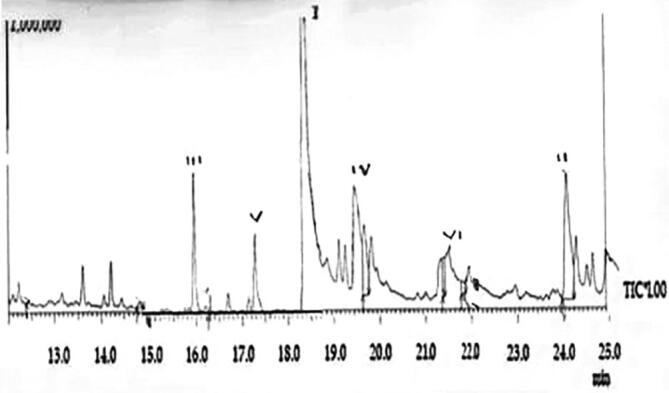
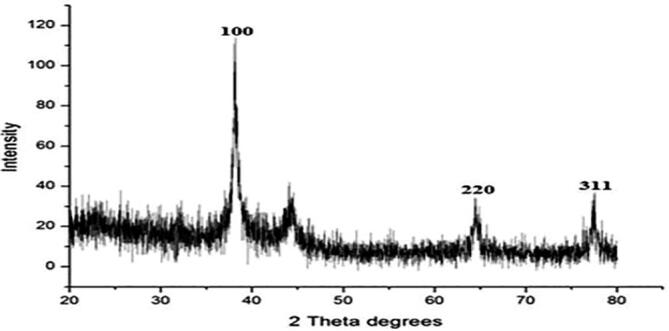
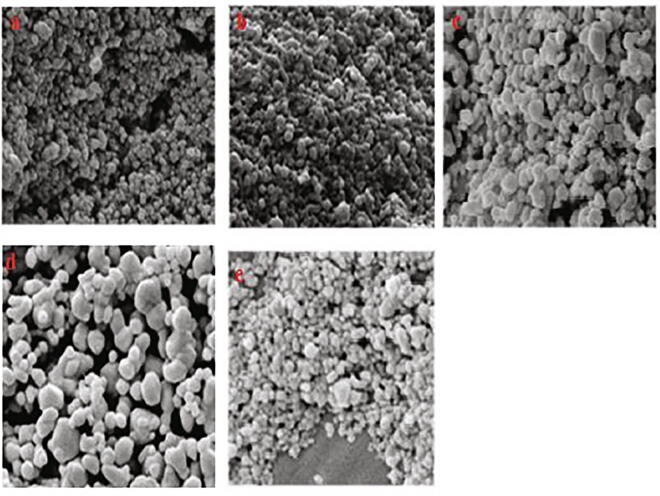
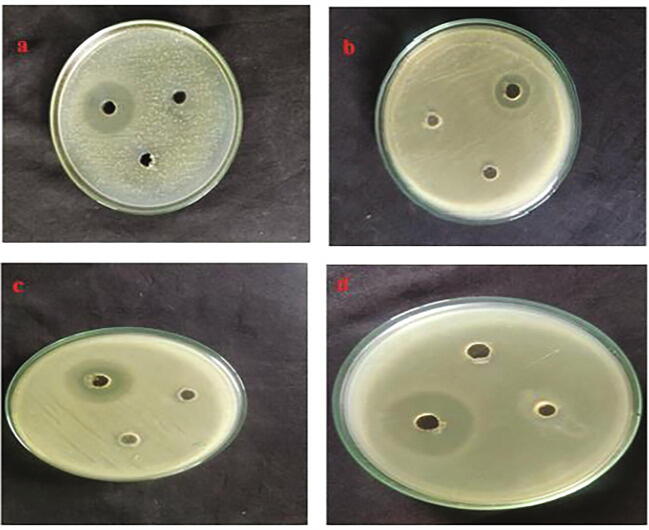
In the search for alternative therapy for infections and other ailments, metallic nanoparticles, mainly silver nanoparticles (AgNPs) synthesized through bioengineered sources are extensively explored. Fungal bioactive compounds and their nanoparticles were reported with the potential biomedical application. A medicinal mushroom was reported as a repository of rich medicinal properties. In the current study, silver nanoparticles were synthesized using the extracts of and its antimicrobial activity was tested against drug-resistant isolated from the catheter used for urinary tract infection (CAUTI). The GC-MS study of extracts showed the presence of ethyl acetoacetate ethylene acetal with the highest area percentage of 72.2% and retention time (RT 5873). Pyridine-3-ol is the second primary compound with a peak height of 6.44% and a retention time of 2.143. The third compound is l,4-Dioxane-2,3-diol, with an area of 8.09% and RT 5450. Butylated Hydroxy Toluene [BHT] is the fourth major compound with an area of 3.32%, and 9-Cedranone constitutes the fifth position in occupying the area percentage [1.88] and height 1.56%. Pyrrole is the sixth primary compound registering an area size of 0.96% and height 2.06%. The AgNPs synthesized using extract were in size range 23 and 58 nm as per SEM analysis and within the range wavelength 0.556-0.796 nm as per UV-Vis spectral study. FTIR Spectroscopy and X-ray diffraction analysis (XRD) were made to characterize the formed nanoparticles. The AgNPs synthesized effectively inhibited the growth of isolated from catheter-associated urinary tract infection and showed resistance to many drugs. The antioxidant potential of the synthesized nanoparticles assessed using DPPH radical scavenging activity, EC50 (µg/ml), and ARP data showed that the prepared nanoparticles were more potent in free radical scavenging activity than the standard quercetin. The cytotoxicity effect of Ag-NPs on breast cancer cell line- MDA-MB-231 confirmed its anticancer potential. The half-maximal inhibitory concentration (IC) of Ag-NPs to inhibit 50% of the tumor was 9.2 g/mL. The synthesized GL-AgNPs was exhibited a multifocal biomedical potential.
在寻找感染及其他疾病的替代疗法过程中,人们广泛探索了金属纳米颗粒,主要是通过生物工程来源合成的银纳米颗粒(AgNPs)。真菌生物活性化合物及其纳米颗粒具有潜在的生物医学应用价值。据报道,一种药用蘑菇富含多种药用特性。在本研究中,利用[某种物质]的提取物合成了银纳米颗粒,并测试了其对从用于尿路感染的导管(CAUTI)中分离出的耐药菌的抗菌活性。对[某种物质]提取物的气相色谱 - 质谱(GC - MS)研究表明,乙酰乙酸乙酯缩乙醛的存在面积百分比最高,为72.2%,保留时间(RT 5873)。3 - 吡啶醇是第二种主要化合物,峰高为6.44%,保留时间为2.143。第三种化合物是1,4 - 二氧六环 - 2,3 - 二醇,面积为8.09%,RT 5450。丁基化羟基甲苯[BHT]是第四种主要化合物,面积为3.32%,9 - 雪松酮在占据面积百分比[1.88]和峰高1.56%方面位居第五。吡咯是第六种主要化合物,面积大小为0.96%,峰高2.06%。根据扫描电子显微镜(SEM)分析,利用[某种物质]提取物合成的AgNPs尺寸范围为23至58纳米,根据紫外 - 可见光谱研究,其波长范围在0.556 - 0.796纳米之间。采用傅里叶变换红外光谱(FTIR)和X射线衍射分析(XRD)对形成的纳米颗粒进行表征。合成的AgNPs有效抑制了从导管相关尿路感染中分离出的[某种细菌]的生长,并对多种药物表现出耐药性。使用二苯基苦味酰基自由基(DPPH)清除活性、半数有效浓度(EC50,μg/ml)和抗氧化性能(ARP)数据评估合成纳米颗粒的抗氧化潜力,结果表明制备的纳米颗粒在自由基清除活性方面比标准槲皮素更有效。Ag - NPs对乳腺癌细胞系 - MDA - MB - 231的细胞毒性作用证实了其抗癌潜力。Ag - NPs抑制50%肿瘤的半数最大抑制浓度(IC)为9.2 g/mL。合成的GL - AgNPs展现出多方面的生物医学潜力。