Department of General Surgery, Nanchang University, The Second Affiliated Hospital of Nanchang University, NanChang, JiangXi, 330006, China.
Cancer Med. 2021 May;10(10):3309-3322. doi: 10.1002/cam4.3654. Epub 2021 May 2.
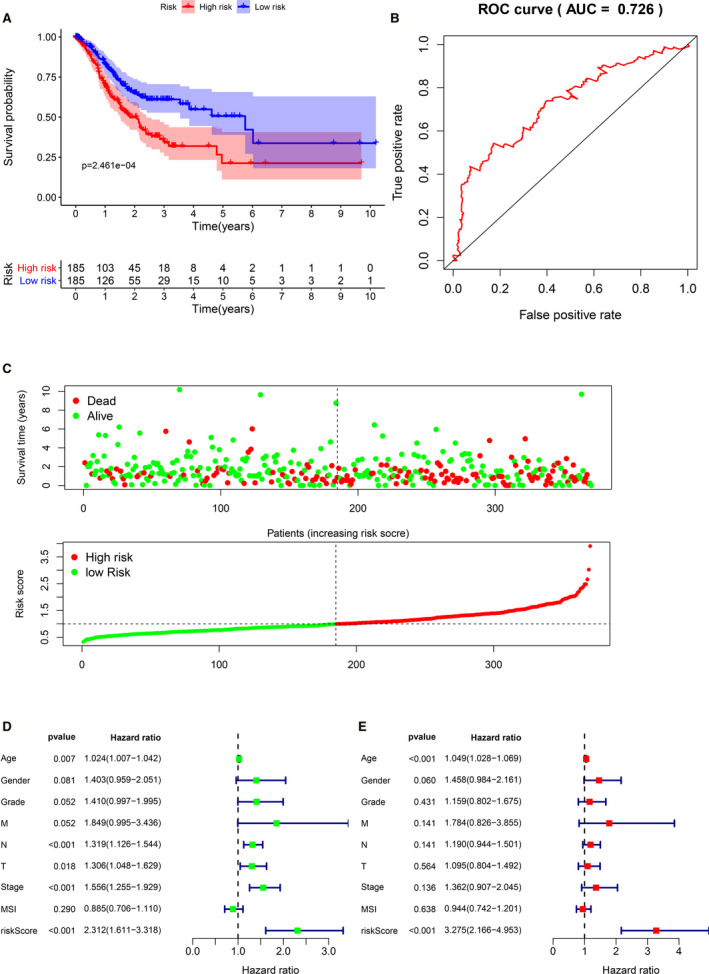
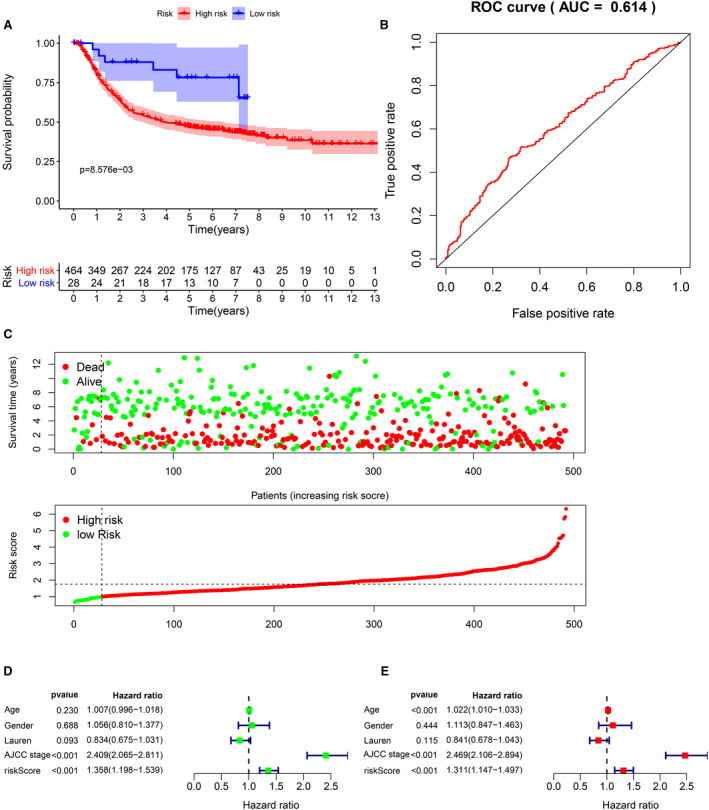
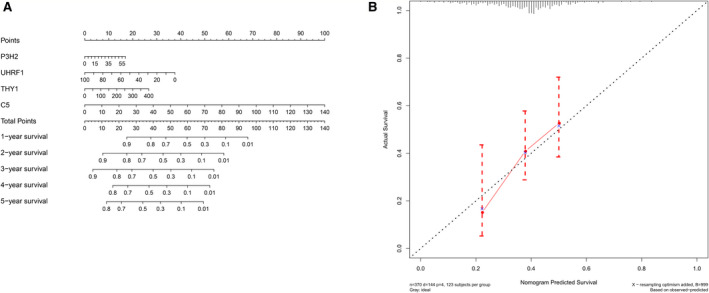
Gastric cancer (GC) is a kind of malignancy with a high mortality and recurrence. An effective prediction model based on ideal biomarkers to assess prognosis could benefit patients for optimization of treatment. Bioinformatics has played an increasingly important role in the study of cancer diseases. Therefore, this study started with bioinformatics to establish a reliable prognostic model of gastric cancer. The gene expression data and clinical data of GC tissues and normal tissues were obtained from the Gene Expression Omnibus (GEO), Genotype-Tissue Expression (GTEx), and The Cancer Genome Atlas (TCGA) profile database. We finally identified a four gene signature and constructed a prognostic model. The results of internal and external validation showed that the model is highly reliable. In addition, we also constructed a nomogram based on the model, which was verified by a calibration curve to show its predicted accuracy. Comprehensive analysis indicated that the four genes in the model are related to the occurrence and development of tumors, perhaps they are potential targets for tumor treatment. Generally, this prognostic model can bring potential benefits to patients with gastric cancer.
胃癌(GC)是一种死亡率和复发率都很高的恶性肿瘤。建立一种基于理想生物标志物的有效预测模型来评估预后,可以使患者受益,从而优化治疗方案。生物信息学在癌症研究中发挥着越来越重要的作用。因此,本研究从生物信息学入手,建立了一种可靠的胃癌预后模型。从基因表达综合数据库(GEO)、基因型-组织表达(GTEx)和癌症基因组图谱(TCGA)数据库中获取 GC 组织和正常组织的基因表达数据和临床数据。我们最终确定了一个由四个基因组成的特征,并构建了一个预后模型。内部和外部验证的结果表明该模型具有高度可靠性。此外,我们还基于该模型构建了一个列线图,并通过校准曲线进行验证,以显示其预测的准确性。综合分析表明,模型中的四个基因与肿瘤的发生和发展有关,它们可能是肿瘤治疗的潜在靶点。总的来说,该预后模型可为胃癌患者带来潜在获益。