Biomedical Engineering Department, College of Engineering, Imam Abdulrahman Bin Faisal University, Dammam 31441, Saudi Arabia.
Department of Internal Medicine, College of Medicine, Imam Abdulrahman Bin Faisal University, Dammam 31451, Saudi Arabia.
Sensors (Basel). 2021 Oct 14;21(20):6820. doi: 10.3390/s21206820.
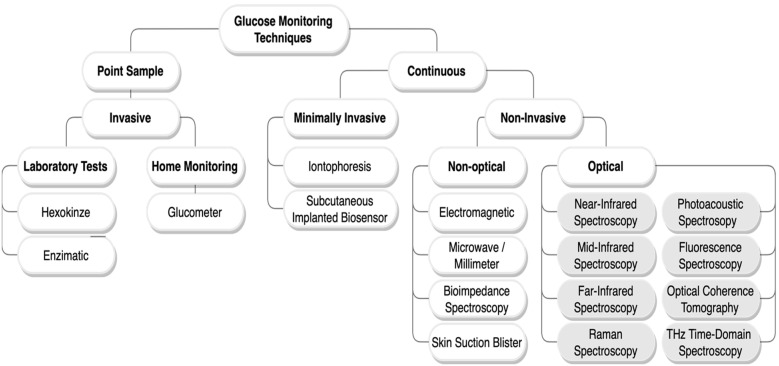
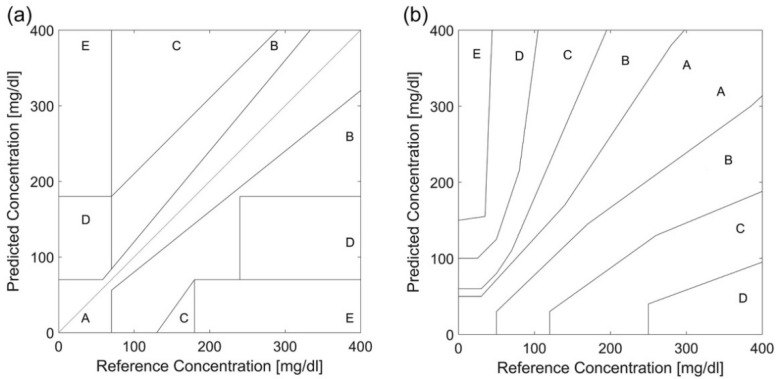
The prevalence of diabetes is increasing globally. More than 690 million cases of diabetes are expected worldwide by 2045. Continuous blood glucose monitoring is essential to control the disease and avoid long-term complications. Diabetics suffer on a daily basis with the traditional glucose monitors currently in use, which are invasive, painful, and cost-intensive. Therefore, the demand for non-invasive, painless, economical, and reliable approaches to monitor glucose levels is increasing. Since the last decades, many glucose sensing technologies have been developed. Researchers and scientists have been working on the enhancement of these technologies to achieve better results. This paper provides an updated review of some of the pioneering non-invasive optical techniques for monitoring blood glucose levels that have been proposed in the last six years, including a summary of state-of-the-art error analysis and validation techniques.
糖尿病的患病率在全球范围内不断上升。预计到 2045 年,全球将有超过 6.9 亿例糖尿病病例。持续的血糖监测对于控制疾病和避免长期并发症至关重要。糖尿病患者目前正在使用传统的血糖仪,这些血糖仪具有侵入性、疼痛和成本高昂的特点,因此他们每天都在为此感到痛苦。因此,对于非侵入性、无痛、经济实惠且可靠的血糖监测方法的需求正在增加。几十年来,已经开发出了许多葡萄糖传感技术。研究人员和科学家一直在努力改进这些技术,以取得更好的效果。本文提供了过去六年来提出的一些用于监测血糖水平的开创性非侵入性光学技术的最新综述,包括对最新的误差分析和验证技术的总结。