Ibragimova Shakhzada, Ramachandran Revathy, Ali Fahad R, Lipovich Leonard, Ho Samuel B
College of Medicine, Mohammed Bin Rashid University of Medicine and Health Sciences, Dubai Healthcare City, Dubai, UAE.
Department of Medicine, Mediclinic City Hospital, Dubai Healthcare City, Dubai, UAE.
Front Cell Dev Biol. 2021 Nov 12;9:725821. doi: 10.3389/fcell.2021.725821. eCollection 2021.
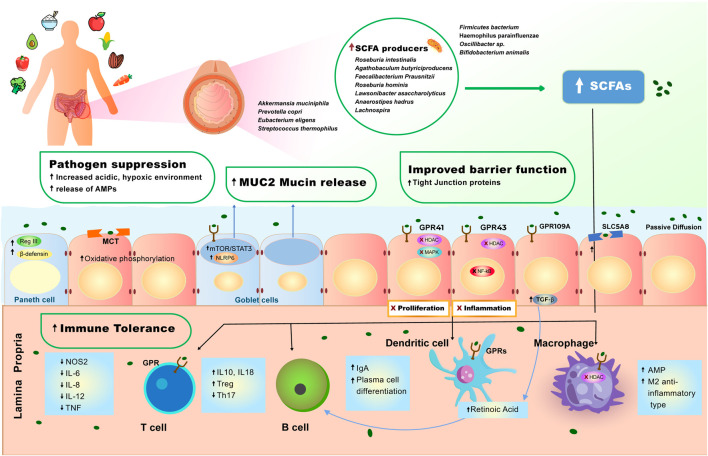
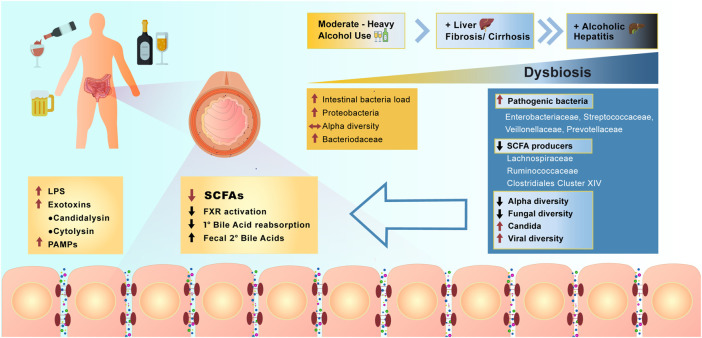
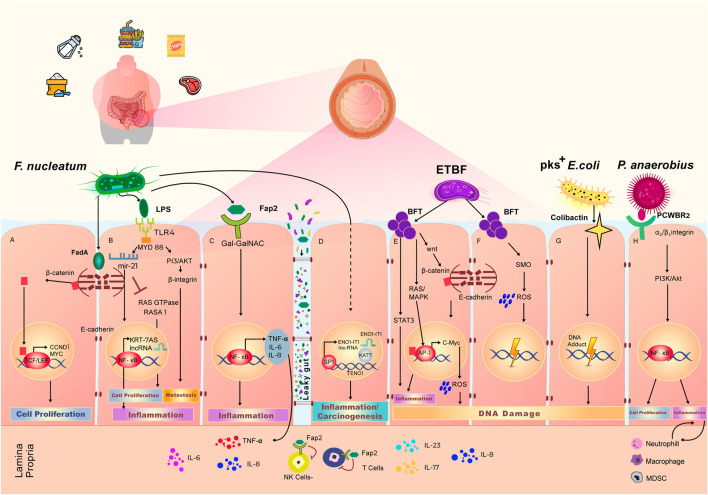
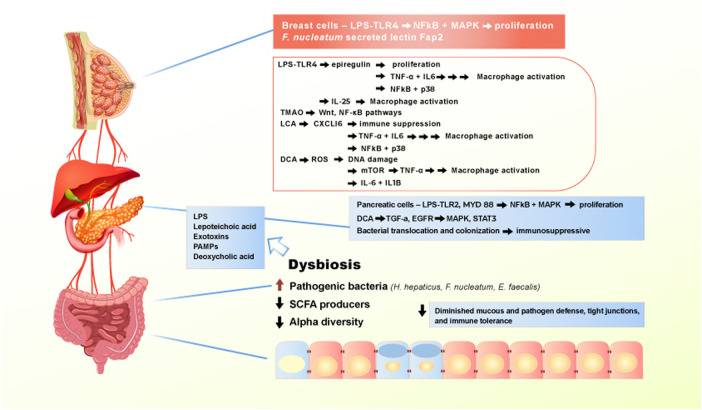
The recent increases in cancer incidences have been linked to lifestyle changes that result in obesity and metabolic syndrome. It is now evident that these trends are associated with the profound changes that occur in the intestinal microbiome, producing altered microbial population signatures that interact, directly or indirectly, with potentially pro-carcinogenic molecular pathways of transcription, proliferation, and inflammation. The effects of the entire gut microbial population on overall health are complex, but individual bacteria are known to play important and definable roles. Recent detailed examinations of a large number of subjects show a tight correlation between habitual diets, fecal microbiome signatures, and markers of metabolic health. Diets that score higher in healthfulness or diversity such as plant-based diets, have altered ratios of specific bacteria, including an increase in short-chain fatty acid producers, which in turn have been linked to improved metabolic markers and lowered cancer risk. Contrarily, numerous studies have implicated less healthy, lower-scoring diets such as the Western diet with reduced intestinal epithelial defenses and promotion of specific bacteria that affect carcinogenic pathways. In this review, we will describe how different dietary patterns affect microbial populations in the gut and illustrate the subsequent impact of bacterial products and metabolites on molecular pathways of cancer development, both locally in the gut and systemically in distant organs.
近期癌症发病率的上升与导致肥胖和代谢综合征的生活方式改变有关。现在很明显,这些趋势与肠道微生物群发生的深刻变化相关,产生了改变的微生物种群特征,这些特征直接或间接地与转录、增殖和炎症等潜在致癌分子途径相互作用。整个肠道微生物群对整体健康的影响是复杂的,但已知单个细菌发挥着重要且可明确的作用。最近对大量受试者的详细检查表明,习惯性饮食、粪便微生物群特征和代谢健康标志物之间存在紧密关联。在健康或多样性方面得分较高的饮食,如植物性饮食,会改变特定细菌的比例,包括短链脂肪酸产生菌的增加,这反过来又与改善的代谢标志物和降低的癌症风险相关。相反,许多研究表明,像西方饮食这样不太健康、得分较低的饮食会降低肠道上皮防御能力,并促进影响致癌途径的特定细菌生长。在这篇综述中,我们将描述不同的饮食模式如何影响肠道中的微生物种群,并说明细菌产物和代谢物随后对癌症发展分子途径的影响,包括在肠道局部和远处器官的全身影响。