Department of Public Health and Health Policy, Hiroshima University, Hiroshima, Japan.
WHO Representative Office in Mongolia, World Health Organization, Ulaanbaatar, Mongolia.
BMC Public Health. 2022 Jan 4;22(1):5. doi: 10.1186/s12889-021-12070-3.
Over the past few decades, economic, political, and social changes have directly and indirectly affected the health of the Mongolian population. To date, no comprehensive analysis has been conducted on the burden of diseases in this country. Thus, we aimed to describe the leading causes of death and disabling conditions and their trends between 1990 and 2019 in the Mongolian population.
We used the data from the Global Burden of Disease (GBD) 2019 study. In the current study, we examined life expectancy at birth, healthy life expectancy, the 20 leading causes of death, years of life lost (YLLs), years lived with disability (YLDs), disability-adjusted-life-years (DALYs), and the contribution of major risk factors to DALYs in Mongolia.
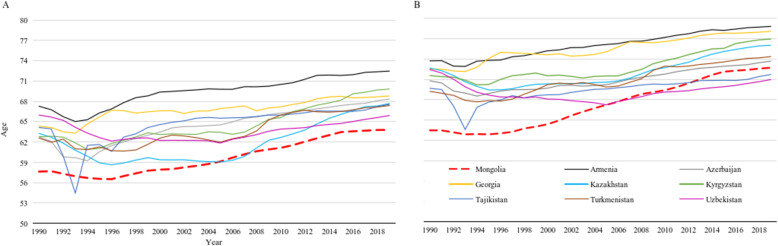
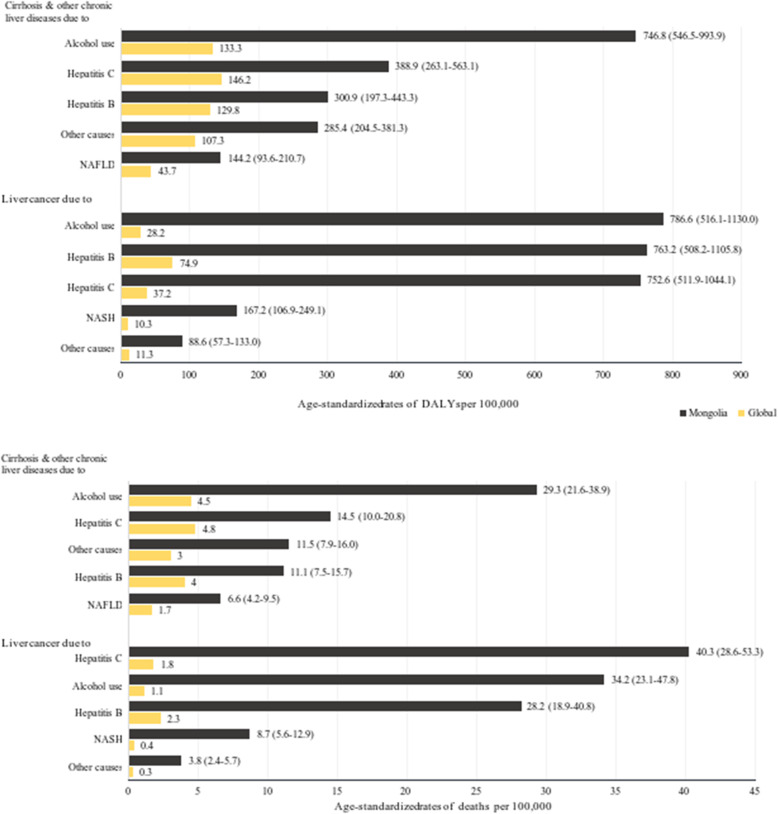
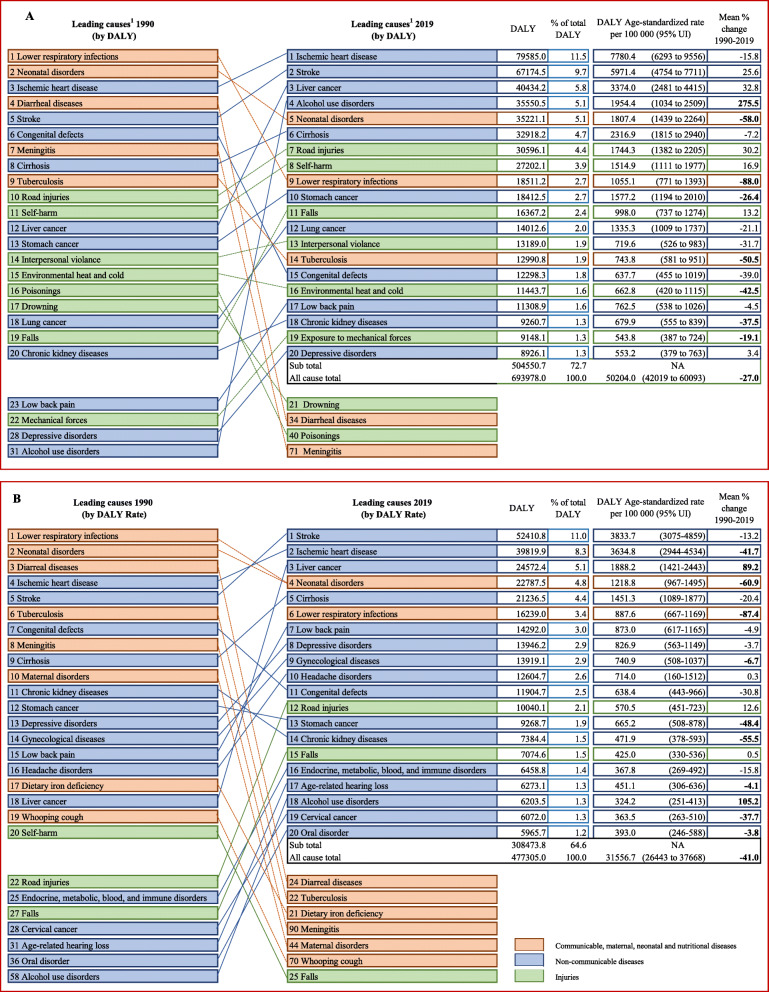
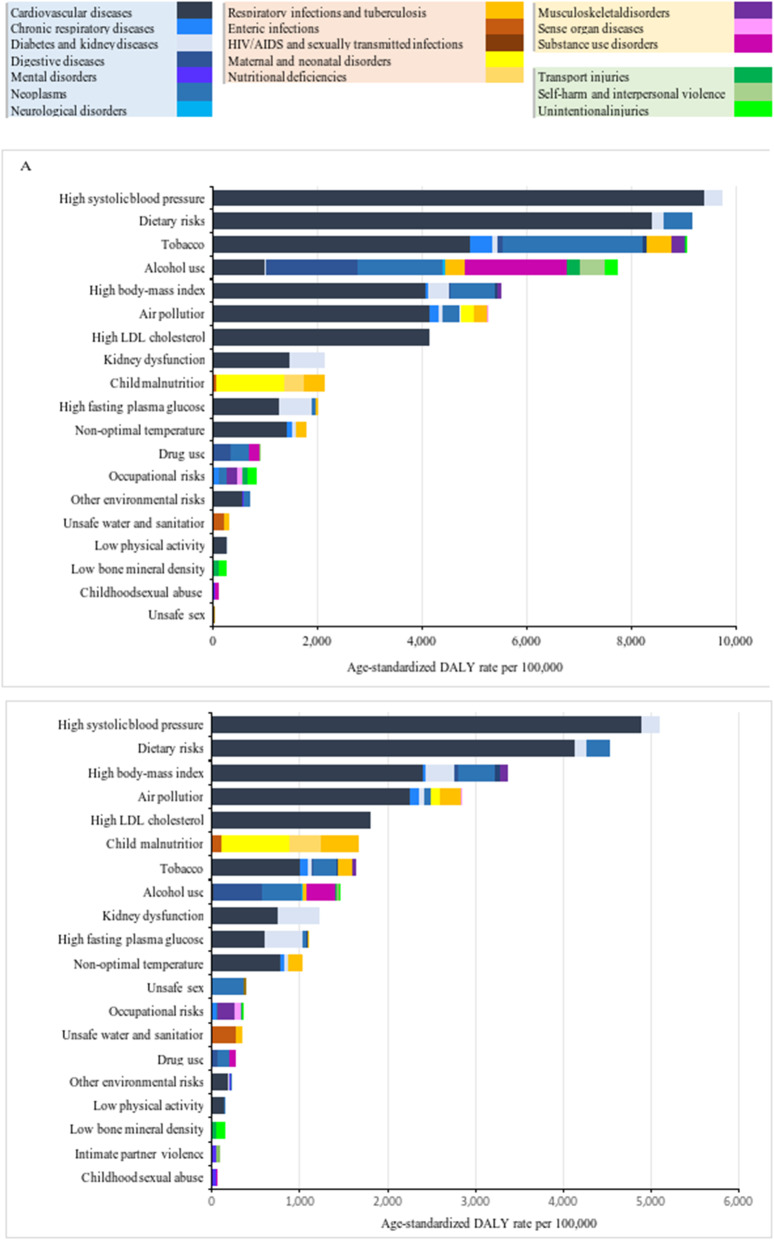
The life expectancy at birth in Mongolia has gradually increased since 1995 and reached 63.8 years for men and 72.7 for women in 2019. The highest increase in the age-standardised death rate between 1990 and 2019 occurred in alcohol use disorders (628.6%; 95% UI 10.0-1109.6) among men, and in liver cancer (129.1%; UI 65.3-222.4) among women. Ischaemic heart disease and stroke showed the highest rates of death, YLLs, and DALYs among both men and women. In 2019, the highest age-standardised rates of DALYs were attributable to high systolic blood pressure and dietary risks.
Although Mongolia saw substantial improvements across many communicable diseases, maternal and neonatal disorders, and under-5 mortality between 1990 and 2019, non-communicable diseases remained leading causes of mortality. The mortality from the most preventable causes such as injury, alcohol use, and dietary risks remain substantially high, suggesting that individual and social efforts are needed to tackle these diseases. Our analyses will support the development of policy priorities and action plans in multiple sectors to improve the overall health of the Mongolian population.
Bill & Melinda Gates Foundation.
在过去几十年中,经济、政治和社会变革直接和间接地影响了蒙古人民的健康。迄今为止,尚未对该国的疾病负担进行全面分析。因此,我们旨在描述 1990 年至 2019 年期间蒙古人口的主要死亡原因和致残状况及其趋势。
我们使用了全球疾病负担(GBD)2019 年研究的数据。在本研究中,我们检查了蒙古出生时的预期寿命、健康预期寿命、20 大死亡原因、生命损失年数(YLL)、失能生命年数(YLD)、残疾调整生命年数(DALY)以及主要危险因素对蒙古 DALY 的贡献。
自 1995 年以来,蒙古的出生预期寿命逐渐增加,2019 年男性达到 63.8 岁,女性达到 72.7 岁。1990 年至 2019 年期间,男性酒精使用障碍的年龄标准化死亡率增幅最大(628.6%;95%UI 10.0-1109.6),女性肝癌增幅最大(129.1%;UI 65.3-222.4)。缺血性心脏病和中风是男性和女性中死亡率、YLL 和 DALY 最高的疾病。2019 年,DALY 的最高年龄标准化率归因于收缩压升高和饮食风险。
尽管蒙古在 1990 年至 2019 年间在许多传染病、孕产妇和新生儿疾病以及 5 岁以下儿童死亡率方面取得了重大进展,但非传染性疾病仍然是主要的死亡原因。可预防的疾病(如伤害、酒精使用和饮食风险)导致的死亡率仍然很高,这表明需要个人和社会努力来解决这些疾病。我们的分析将支持制定多个部门的政策优先事项和行动计划,以改善蒙古人民的整体健康状况。
比尔和梅琳达·盖茨基金会。