Institute of Food Science, Technology and Nutrition (ICTAN-CSIC), Ciudad Universitaria, 28040 Madrid, Spain.
Nutrients. 2022 Jan 4;14(1):210. doi: 10.3390/nu14010210.
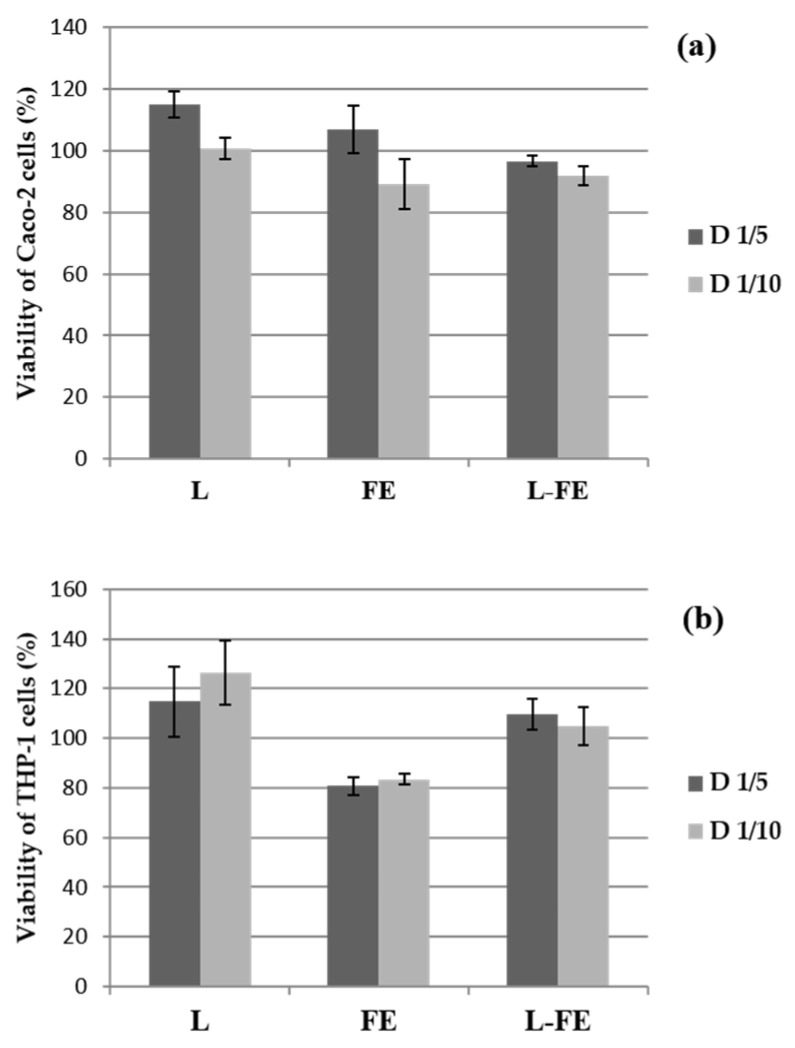
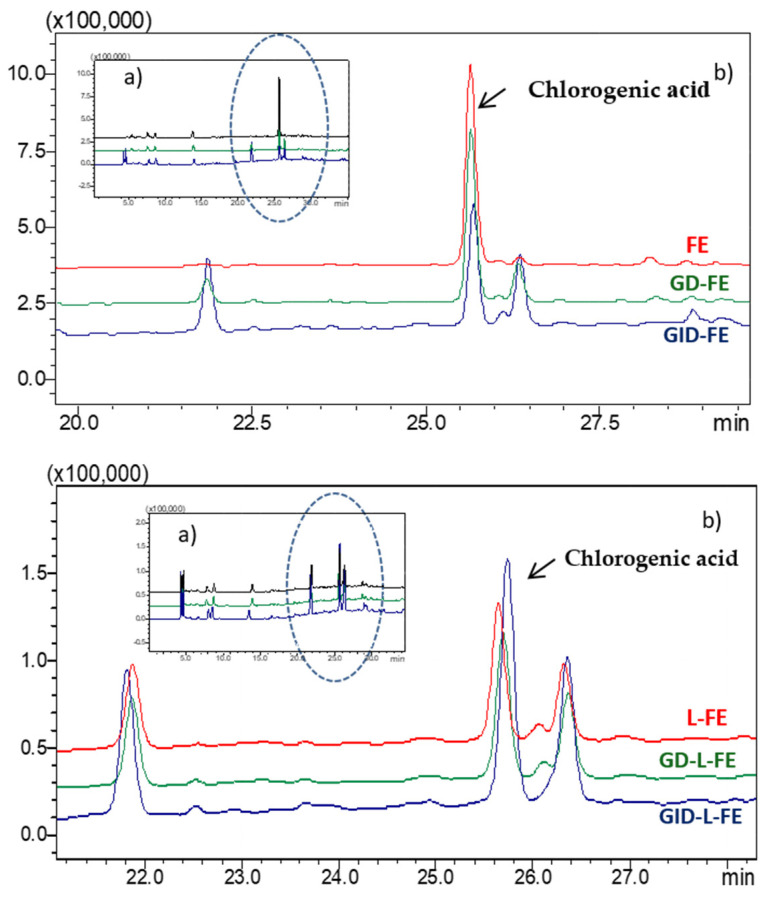
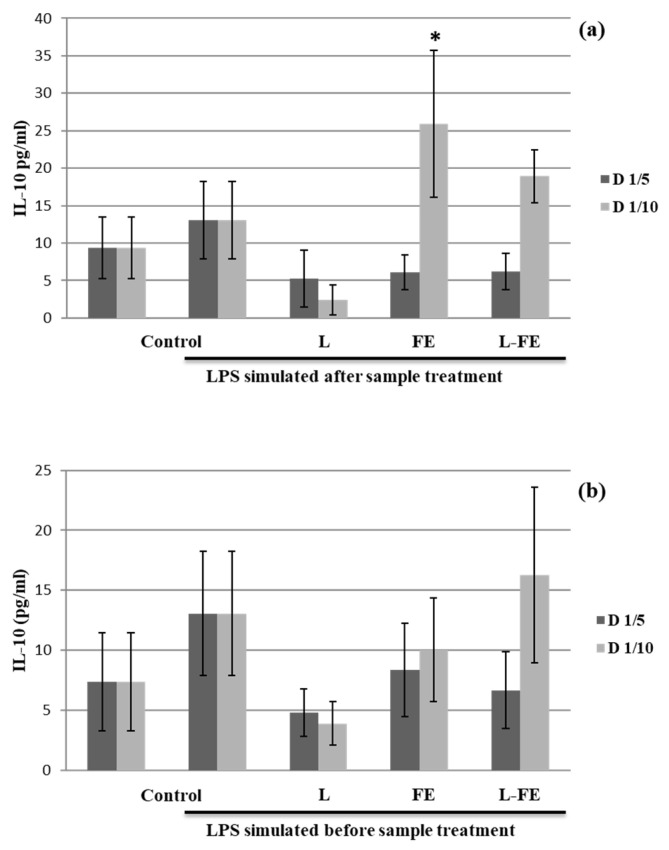
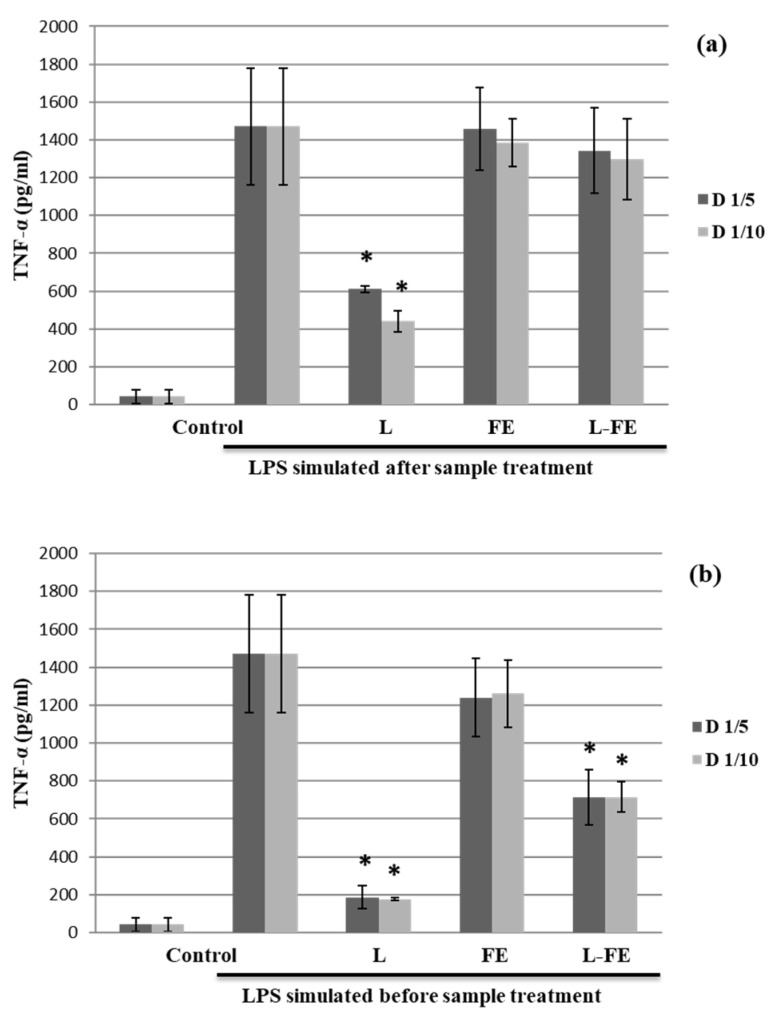
A sea fennel () aqueous extract was prepared and loaded into soybean phosphatidylcholine liposomes. Both the free extract (FE), and the empty (L) and loaded (L-FE) liposomes were shown to be non-cytotoxic to THP-1 and Caco-2 cells. The anti-inflammatory effect was tested on THP-1 cells differentiated into macrophages. FE showed anti-inflammatory activity, revealed by the induced secretion of IL-10 cytokines in macrophages that were subsequently stimulated with LPS. Also, a decrease in TNF-α production by L was observed, evidencing that liposomes reduced the pro-inflammatory mediators' secretion. The liposomes (L) showed protective anti-inflammatory activity and also were able to downregulate the inflammation. Furthermore, L-FE were also found to downregulate the inflammation response, as they were able to decrease TNF-α secretion in macrophages previously exposed to LPS. The simulated in vitro gastrointestinal digestion (GID) of FE diminished the chlorogenic acid content (the main polyphenolic compound of the extract) by 40%, while in L-FE, the amount of this phenolic compound increased with respect to the undigested liposomes. The amount of bioaccessible chlorogenic, however, was similar for FE and L-FE. The percentage of chlorogenic acid absorbed through a Caco-2 cell monolayer after 3 h of incubation, was significantly similar for the extract and the liposomes (~1.5%), without finding significant differences once the extract and liposomes were digested.
一种海茴香()水提物被制备并载入大豆磷脂酰胆碱脂质体中。游离提取物(FE)、空脂质体(L)和载入脂质体(L-FE)均对 THP-1 和 Caco-2 细胞无细胞毒性。在 LPS 刺激分化的巨噬细胞中测试了抗炎作用。FE 表现出抗炎活性,这是通过诱导巨噬细胞分泌白细胞介素-10(IL-10)细胞因子来证明的。此外,L 中 TNF-α 的产生减少,表明脂质体减少了促炎介质的分泌。脂质体(L)显示出保护抗炎活性,并且还能够下调炎症。此外,L-FE 还被发现能够下调炎症反应,因为它们能够减少先前暴露于 LPS 的巨噬细胞中 TNF-α 的分泌。FE 的模拟体外胃肠道消化(GID)使绿原酸含量(提取物的主要多酚化合物)减少了 40%,而在 L-FE 中,与未消化的脂质体相比,这种酚类化合物的含量增加。然而,生物可利用的绿原酸的量对于 FE 和 L-FE 是相似的。孵育 3 小时后,通过 Caco-2 细胞单层吸收的绿原酸百分比对于提取物和脂质体相似(约 1.5%),并且在提取物体和脂质体被消化后没有发现显著差异。