Mustafa Faheem, Chopra Hitesh, Baig Atif Amin, Avula Satya Kumar, Kumari Sony, Mohanta Tapan Kumar, Saravanan Muthupandian, Mishra Awdhesh Kumar, Sharma Nanaocha, Mohanta Yugal Kishore
School of Health Sciences, University of Management and Technology, Lahore 54782, Pakistan.
Unit of Biochemistry, Faculty of Medicine, Universiti Sultan Zainal Abidin, Kuala Terengganu 20400, Malaysia.
J Fungi (Basel). 2022 Feb 21;8(2):211. doi: 10.3390/jof8020211.
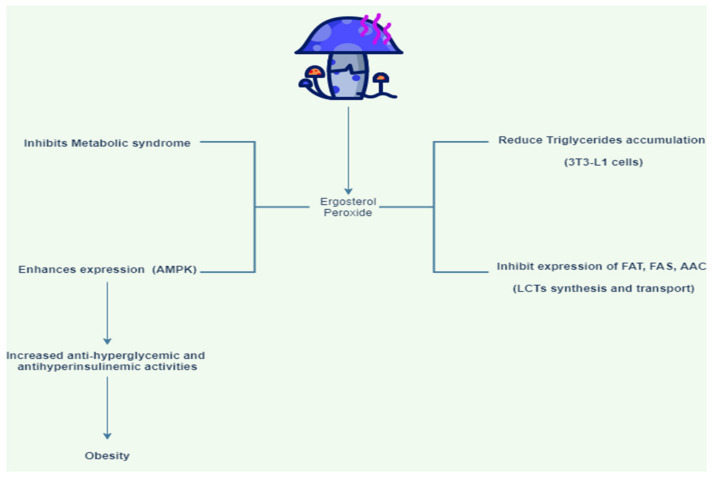
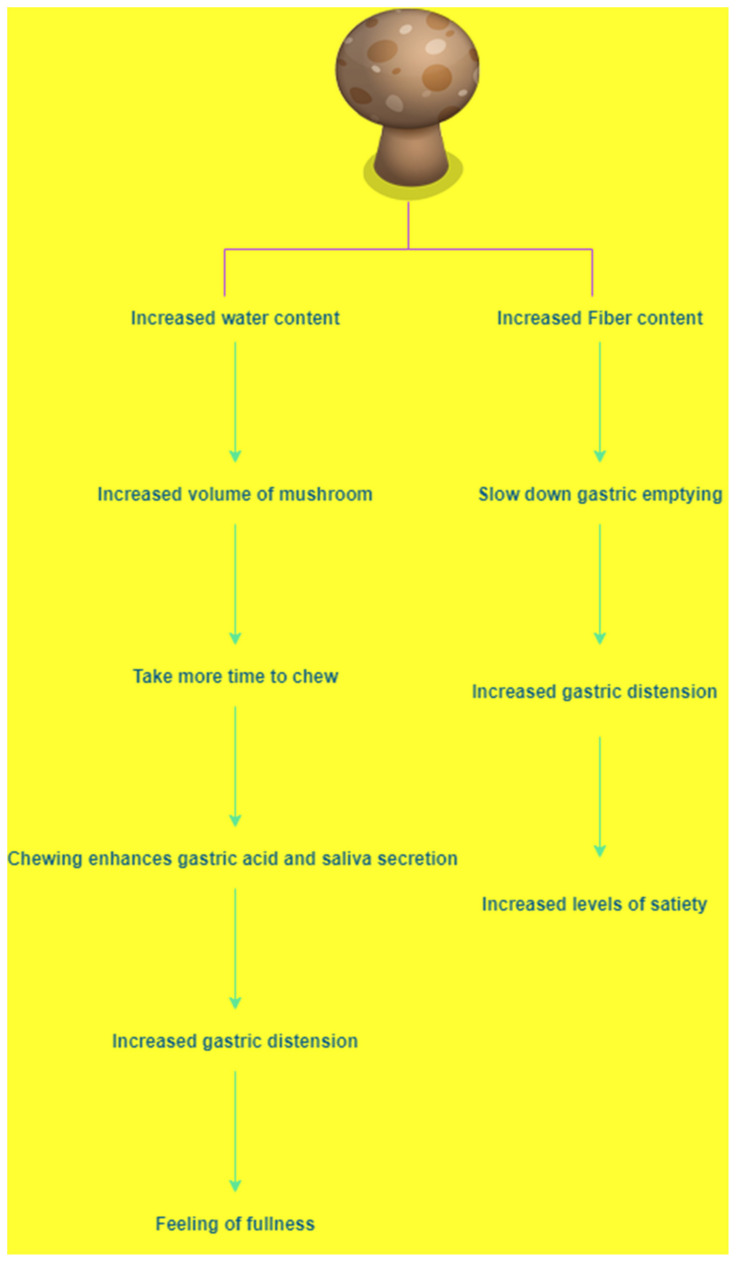
Obesity, usually indicated by a body mass index of more than 30 kg/m, is a worsening global health issue. It leads to chronic diseases, including type II diabetes, hypertension, and cardiovascular diseases. Conventional treatments for obesity include physical activity and maintaining a negative energy balance. However, physical activity alone cannot determine body weight as several other factors play a role in the overall energy balance. Alternatively, weight loss may be achieved by medication and surgery. However, these options can be expensive or have side effects. Therefore, dietary factors, including dietary modifications, nutraceutical preparations, and functional foods have been investigated recently. For example, edible mushrooms have beneficial effects on human health. Polysaccharides (essentially β-D-glucans), chitinous substances, heteroglycans, proteoglycans, peptidoglycans, alkaloids, lactones, lectins, alkaloids, flavonoids, steroids, terpenoids, terpenes, phenols, nucleotides, glycoproteins, proteins, amino acids, antimicrobials, and minerals are the major bioactive compounds in these mushrooms. These bioactive compounds have chemo-preventive, anti-obesity, anti-diabetic, cardioprotective, and neuroprotective properties. Consumption of edible mushrooms reduces plasma triglyceride, total cholesterol, low-density lipoprotein, and plasma glucose levels. Polysaccharides from edible mushrooms suppress mRNA expression in 3T3-L1 adipocytes, contributing to their anti-obesity properties. Therefore, edible mushrooms or their active ingredients may help prevent obesity and other chronic ailments.
肥胖通常以体重指数超过30kg/m²为指标,是一个日益严重的全球健康问题。它会引发包括II型糖尿病、高血压和心血管疾病在内的慢性疾病。肥胖的传统治疗方法包括体育活动和维持能量负平衡。然而,仅靠体育活动并不能决定体重,因为其他几个因素在整体能量平衡中也起作用。另外,减肥可以通过药物和手术来实现。然而,这些选择可能成本高昂或有副作用。因此,最近人们对饮食因素进行了研究,包括饮食调整、营养保健品和功能性食品。例如,食用菌对人体健康有益。多糖(主要是β-D-葡聚糖)、几丁质物质、杂聚糖、蛋白聚糖、肽聚糖、生物碱、内酯、凝集素、生物碱、黄酮类化合物、类固醇、萜类化合物、萜烯、酚类、核苷酸、糖蛋白、蛋白质、氨基酸、抗菌物质和矿物质是这些蘑菇中的主要生物活性化合物。这些生物活性化合物具有化学预防、抗肥胖、抗糖尿病、心脏保护和神经保护特性。食用蘑菇可降低血浆甘油三酯、总胆固醇、低密度脂蛋白和血糖水平。食用菌中的多糖可抑制3T3-L1脂肪细胞中的mRNA表达,这有助于其抗肥胖特性。因此,食用菌或其活性成分可能有助于预防肥胖和其他慢性疾病。