Sinha Surabhi, Thomopoulos Sophia I, Lam Pradeep, Muir Alexandra, Thompson Paul M
Imaging Genetics Center, Stevens Neuroimaging and Informatics Institute, Keck School of Medicine, University of Southern California, Los Angeles, CA, USA.
Proc SPIE Int Soc Opt Eng. 2021 Nov;12088. doi: 10.1117/12.2606155. Epub 2021 Dec 10.
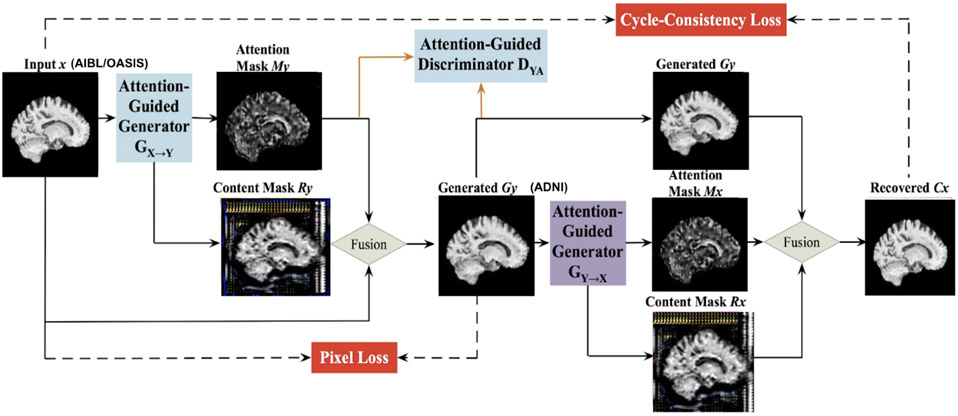
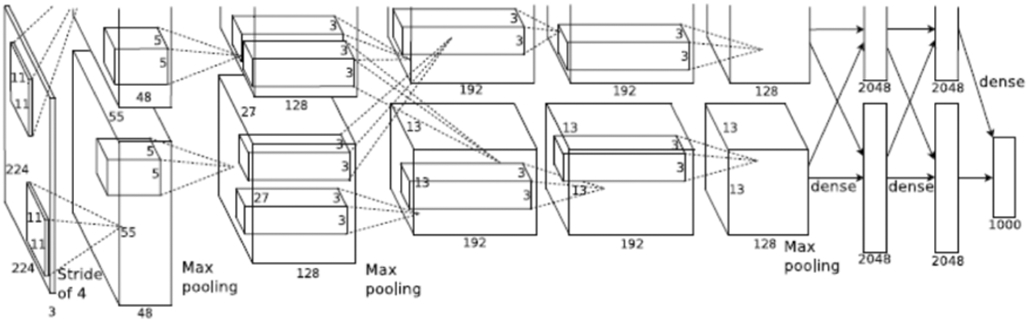
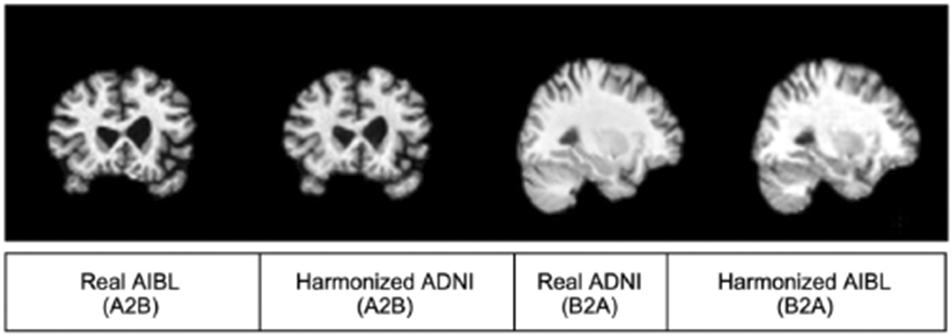
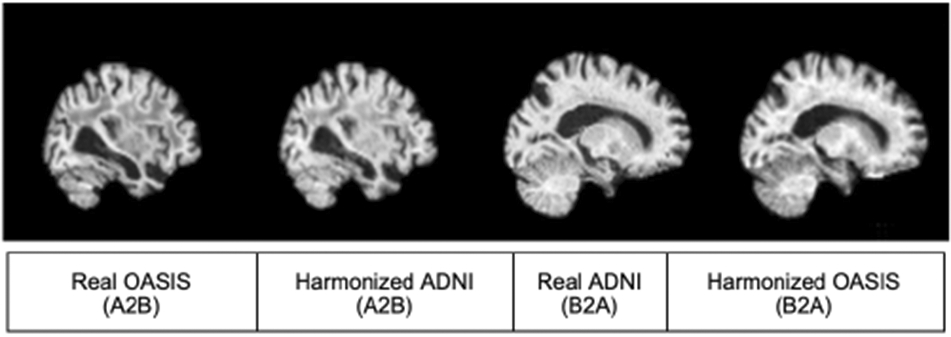
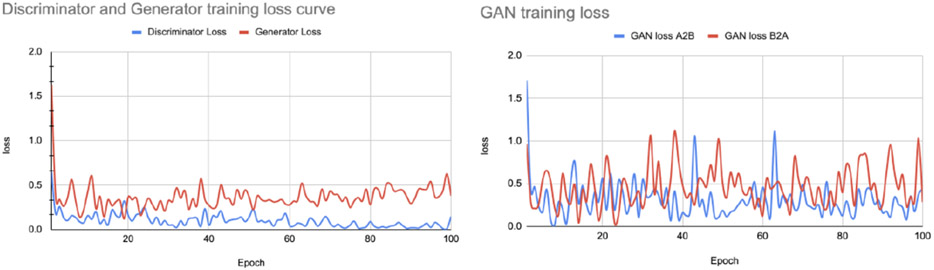
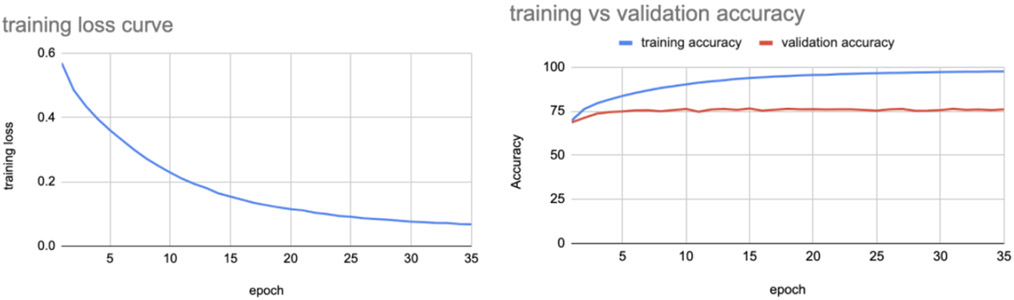
Alzheimer's disease (AD) accounts for 60% of dementia cases worldwide; patients with the disease typically suffer from irreversible memory loss and progressive decline in multiple cognitive domains. With brain imaging techniques such as magnetic resonance imaging (MRI), microscopic brain changes are detectable even before abnormal memory loss is detected clinically. Patterns of brain atrophy can be measured using MRI, which gives us an opportunity to facilitate AD detection using image classification techniques. Even so, MRI scanning protocols and scanners differ across studies. The resulting differences in image contrast and signal to noise make it important to train and test classification models on multiple datasets, and to handle shifts in image characteristics across protocols (also known as or ). Here, we examined whether adversarial domain adaptation can boost the performance of a Convolutional Neural Network (CNN) model designed to classify AD. To test this, we used an Attention-Guided Generative Adversarial Network (GAN) to harmonize images from three publicly available brain MRI datasets - ADNI, AIBL and OASIS - adjusting for scanner-dependent effects. Our AG-GAN optimized a joint objective function that included attention loss, pixel loss, cycle-consistency loss and adversarial loss; the model was trained bidirectionally in an end-to-end fashion. For AD classification, we adapted the popular 2D AlexNet CNN to handle 3D images. Classification based on harmonized MR images significantly outperformed classification based on the three datasets in non-harmonized form, motivating further work on image harmonization using adversarial techniques.
阿尔茨海默病(AD)占全球痴呆病例的60%;该疾病患者通常会遭受不可逆的记忆丧失以及多个认知领域的渐进性衰退。借助磁共振成像(MRI)等脑成像技术,即使在临床检测到异常记忆丧失之前,也能检测到微观的脑部变化。脑萎缩模式可以通过MRI测量,这使我们有机会利用图像分类技术促进AD的检测。即便如此,不同研究中的MRI扫描协议和扫描仪也存在差异。图像对比度和信噪比的差异使得在多个数据集上训练和测试分类模型,并处理不同协议下图像特征的变化(也称为 或 )变得很重要。在此,我们研究了对抗域适应是否可以提高用于AD分类的卷积神经网络(CNN)模型的性能。为了验证这一点,我们使用了注意力引导生成对抗网络(GAN)来协调来自三个公开可用的脑MRI数据集——ADNI、AIBL和OASIS——的图像,以调整与扫描仪相关的影响。我们的AG-GAN优化了一个联合目标函数,该函数包括注意力损失、像素损失、循环一致性损失和对抗损失;该模型以端到端的方式进行双向训练。对于AD分类,我们对流行的二维AlexNet CNN进行了改编以处理三维图像。基于协调后的MR图像的分类明显优于基于三个未协调形式的数据集的分类,这激发了使用对抗技术进行图像协调的进一步研究。