Gulati Richa, Nandi Dhruva, Sarkar Koustav, Venkataraman P, Ramkumar K M, Ranjan Priya, Janardhanan Rajiv
Department of Medical Research, Faculty of Medicine and Health Sciences, SRM Institute of Science and Technology, Kattankulathur, India.
Department of Biotechnology, School of Bioengineering, SRM Institute of Science and Technology, Kattankulathur, India.
Front Mol Biosci. 2022 Jun 23;9:890768. doi: 10.3389/fmolb.2022.890768. eCollection 2022.
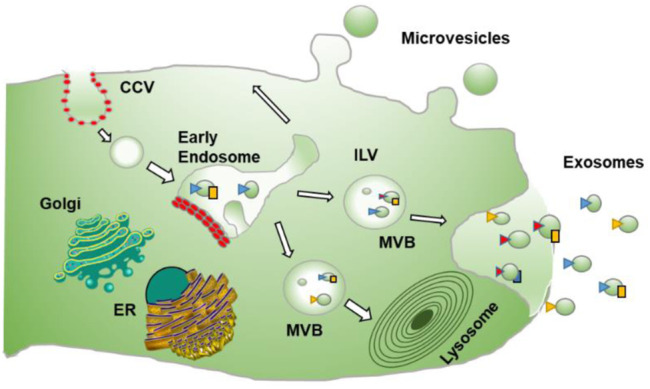
Exosomes are extracellular vesicles produced by various cell types and extensively distributed in physiological fluids. Because of their significant role in cancer progression, they have been a focal point for the novel cancer therapy approach. Exosomes are highly efficient at transporting proteins, RNAs, and small drugs into cancer cells for therapeutic purposes. In addition to their prominent role as potential biomarkers for transporting targeted information from their progenitor cells, exosomes have also emerged as a new avenue for developing more effective clinical diagnostics and therapeutic techniques, also known as exosome theranostics. Lipids, proteins, and nucleic acids transported by exosomes were investigated as potential biomarkers for cancer diagnosis, prognosis, and future cancer treatment targets. The unique mechanism of exosomes and their therapeutic as well as diagnostic uses, also known as theranostic applications of exosomes in malignancies, are discussed in this review.
外泌体是由多种细胞类型产生的细胞外囊泡,广泛分布于生理体液中。由于它们在癌症进展中发挥着重要作用,已成为新型癌症治疗方法的焦点。外泌体在将蛋白质、RNA和小分子药物运输到癌细胞中用于治疗目的方面效率很高。除了作为从其祖细胞运输靶向信息的潜在生物标志物发挥突出作用外,外泌体还已成为开发更有效的临床诊断和治疗技术的新途径,即外泌体诊疗技术。外泌体运输的脂质、蛋白质和核酸被研究作为癌症诊断、预后和未来癌症治疗靶点的潜在生物标志物。本文综述了外泌体的独特机制及其治疗和诊断用途,即外泌体在恶性肿瘤中的诊疗应用。