Department of Clinical Nutrition, School of Nutrition and Food Science, Isfahan University of Medical Sciences, Isfahan, Iran.
Department of Community Nutrition, School of Nutrition and Food Science, Isfahan University of Medical Sciences, Isfahan, Iran.
Adv Nutr. 2023 May;14(3):465-474. doi: 10.1016/j.advnut.2023.01.005. Epub 2023 Feb 2.
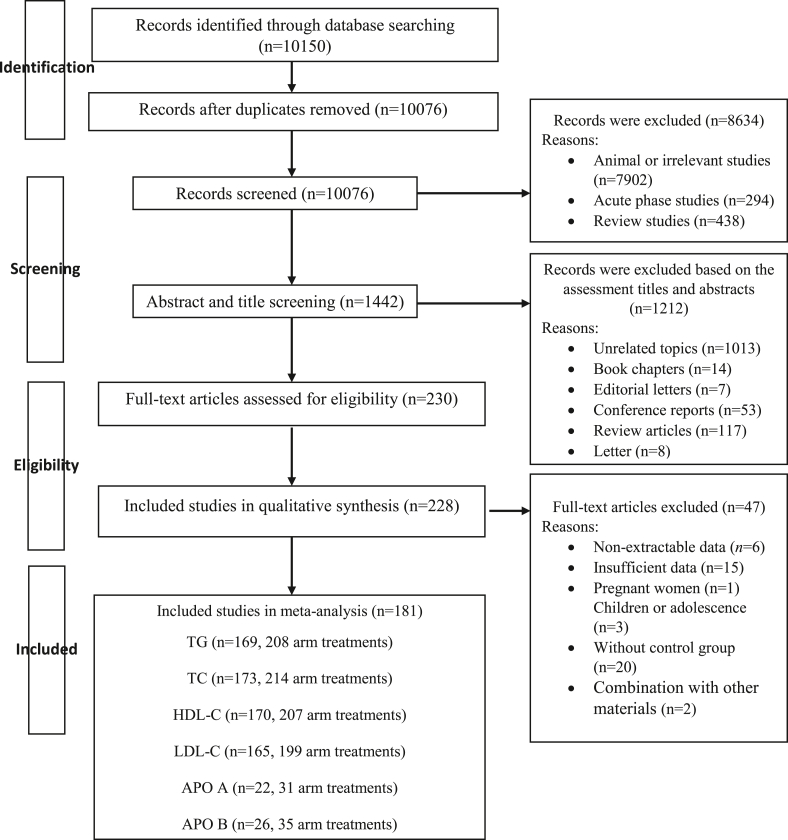
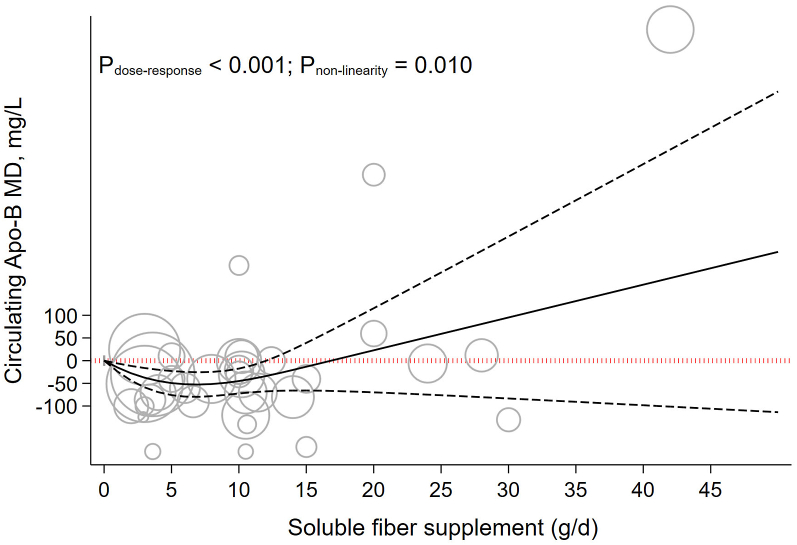
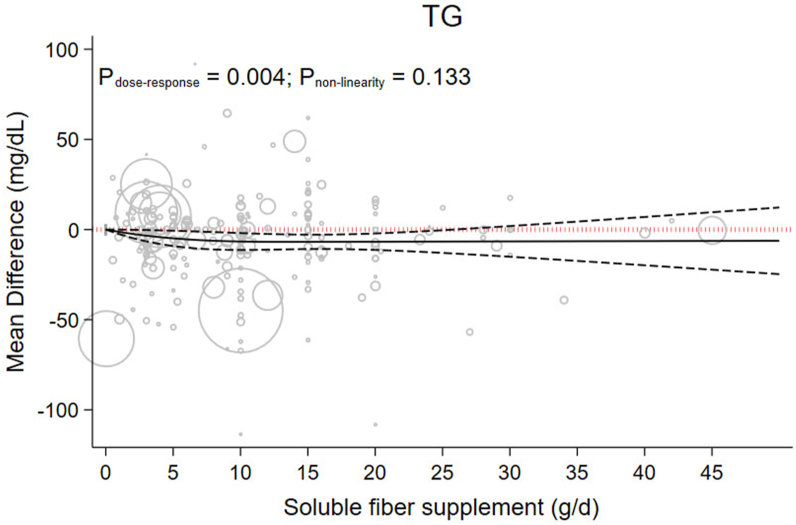
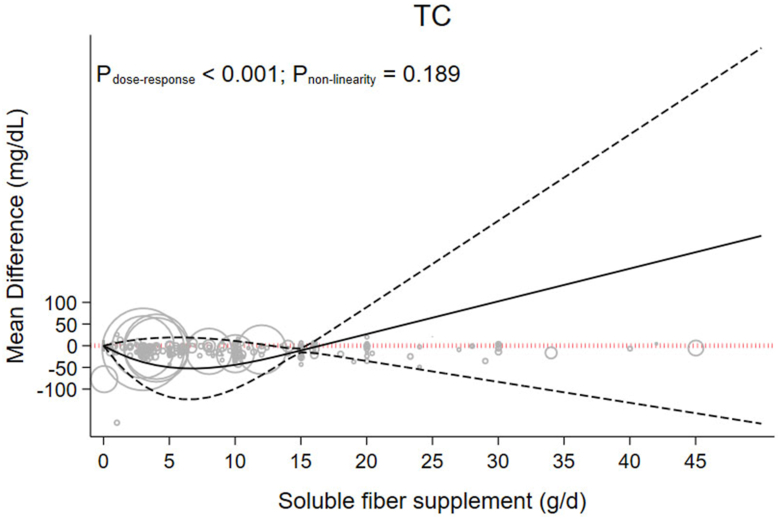
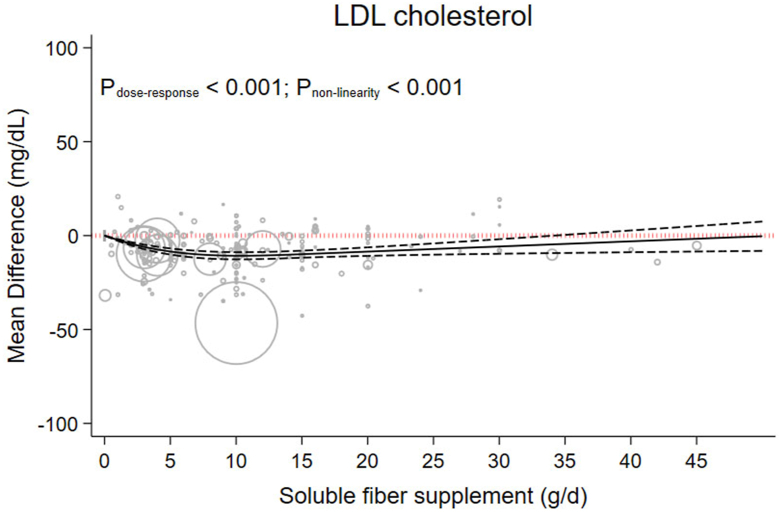
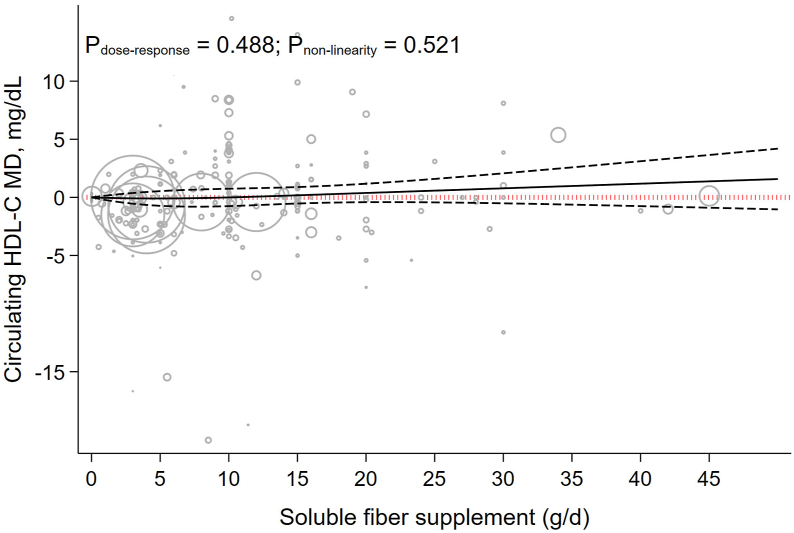
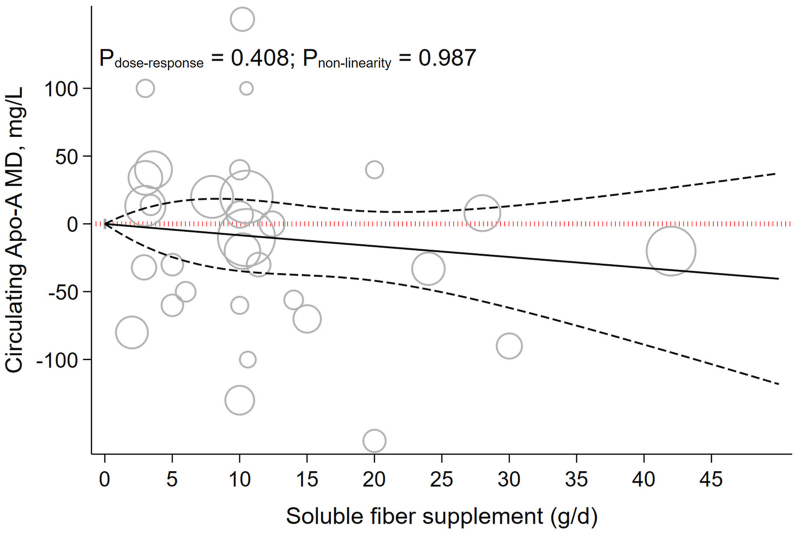
To present a comprehensive synthesis of the effect of soluble fiber supplementation on blood lipid parameters in adults, a systematic search was undertaken in PubMed, Scopus, and ISI Web of Science of relevant articles published before November 2021. Randomized controlled trials (RCTs) evaluating the effects of soluble fibers on blood lipids in adults were included. We estimated the change in blood lipids for each 5 g/d increment in soluble fiber supplementation in each trial and then calculated the mean difference (MD) and 95% CI using a random-effects model. We estimated dose-dependent effects using a dose-response meta-analysis of differences in means. The risk of bias and certainty of the evidence was evaluated using the Cochrane risk of bias tool and the Grading Recommendations Assessment, Development, and Evaluation methodology, respectively. A total of 181 RCTs with 220 treatment arms (14,505 participants: 7348 cases and 7157 controls) were included. There was a significant reduction in LDL cholesterol (MD: -8.28 mg/dL, 95% CI: -11.38, -5.18), total cholesterol (TC) (MD: -10.82 mg/dL, 95% CI: -12.98, -8.67), TGs (MD: -5.55 mg/dL, 95% CI: -10.31, -0.79), and apolipoprotein B (Apo-B) (MD: -44.99 mg/L, 95% CI: -62.87, -27.12) after soluble fiber supplementation in the overall analysis. Each 5 g/d increase in soluble fiber supplementation had a significant reduction in TC (MD: -6.11 mg/dL, 95% CI: -7.61, -4.61) and LDL cholesterol (MD: -5.57 mg/dl, 95% CI: -7.44, -3.69). In a large meta-analysis of RCTs, results suggest that soluble fiber supplementation could contribute to the management of dyslipidemia and the reduction of cardiovascular disease risk.
为了全面综合可溶性纤维补充剂对成年人血脂参数的影响,我们在 PubMed、Scopus 和 ISI Web of Science 中对截至 2021 年 11 月前发表的相关文章进行了系统检索。纳入了评估可溶性纤维对成年人血脂影响的随机对照试验(RCT)。我们估计了每 5 克/d 可溶性纤维补充剂增加时血脂的变化,然后使用随机效应模型计算了平均差值(MD)和 95%置信区间。我们使用均值差异的剂量-反应荟萃分析来估计剂量依赖性效应。使用 Cochrane 偏倚风险工具和 Grading Recommendations Assessment, Development, and Evaluation 方法分别评估了偏倚风险和证据的确定性。共纳入了 181 项 RCT,共 220 个治疗组(14505 名参与者:7348 例病例和 7157 例对照)。可溶性纤维补充后 LDL 胆固醇(MD:-8.28mg/dL,95%CI:-11.38,-5.18)、总胆固醇(TC)(MD:-10.82mg/dL,95%CI:-12.98,-8.67)、三酰甘油(TG)(MD:-5.55mg/dL,95%CI:-10.31,-0.79)和载脂蛋白 B(Apo-B)(MD:-44.99mg/L,95%CI:-62.87,-27.12)均有显著降低。整体分析中,可溶性纤维补充每增加 5 克/d,TC(MD:-6.11mg/dL,95%CI:-7.61,-4.61)和 LDL 胆固醇(MD:-5.57mg/dl,95%CI:-7.44,-3.69)均有显著降低。在一项大规模的 RCT 荟萃分析中,结果表明,可溶性纤维补充可能有助于血脂异常的管理和降低心血管疾病风险。