Xu Hongyu, Xu Ziyue, Long Shengrong, Li Zhengwei, Jiang Jiazhi, Zhou Qiangqiang, Huang Xiaopeng, Wu Xiaohui, Wei Wei, Li Xiang
Department of Neurosurgery, Zhongnan Hospital, Wuhan University, Wuhan, Hubei, China.
Brain Research Center, Zhongnan Hospital, Wuhan University, Wuhan, Hubei, China.
Front Microbiol. 2023 Apr 14;14:1097148. doi: 10.3389/fmicb.2023.1097148. eCollection 2023.
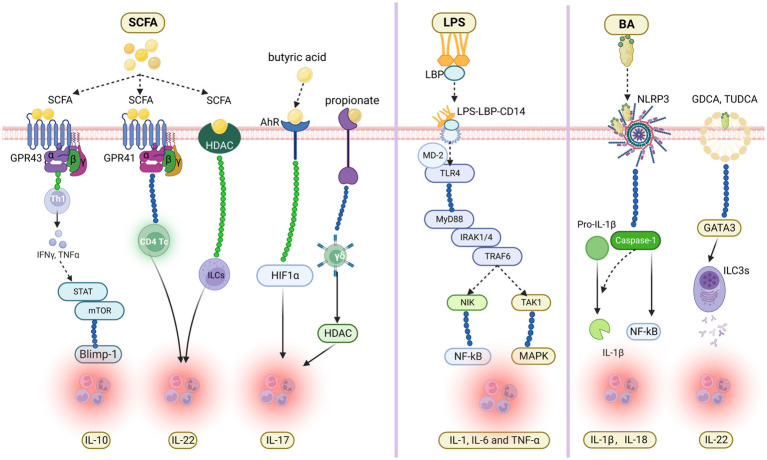
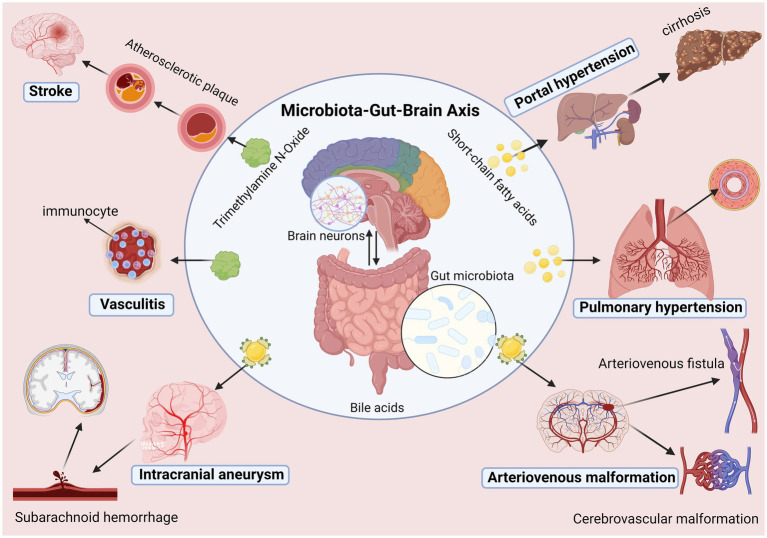
The gut microbiome is critically involved in maintaining normal physiological function in the host. Recent studies have revealed that alterations in the gut microbiome contribute to the development and progression of cerebrovascular disease the microbiota-gut-brain axis (MGBA). As a broad communication network in the human body, MGBA has been demonstrated to have significant interactions with various factors, such as brain structure and function, nervous system diseases, etc. It is also believed that the species and composition of gut microbiota and its metabolites are intrinsically linked to vascular inflammation and immune responses. In fact, in fecal microbiota transplantation (FMT) research, specific gut microbiota and downstream-related metabolites have been proven to not only participate in various physiological processes of human body, but also affect the occurrence and development of cerebrovascular diseases directly or indirectly through systemic inflammatory immune response. Due to the high mortality and disability rate of cerebrovascular diseases, new treatments to improve intestinal dysbacteriosis have gradually attracted widespread attention to better ameliorate the poor prognosis of cerebrovascular diseases in a non-invasive way. This review summarizes the latest advances in the gut microbiome and cerebrovascular disease research and reveals the profound impact of gut microbiota dysbiosis and its metabolites on cerebrovascular diseases. At the same time, we elucidated molecular mechanisms whereby gut microbial metabolites regulate the expression of specific interleukins in inflammatory immune responses. Moreover, we further discuss the feasibility of novel therapeutic strategies targeting the gut microbiota to improve the outcome of patients with cerebrovascular diseases. Finally, we provide new insights for standardized diagnosis and treatment of cerebrovascular diseases.
肠道微生物群在维持宿主正常生理功能中起着关键作用。最近的研究表明,肠道微生物群的改变会导致脑血管疾病的发生和发展,即微生物-肠道-脑轴(MGBA)。作为人体中的一个广泛通讯网络,MGBA已被证明与各种因素有显著相互作用,如脑结构和功能、神经系统疾病等。人们还认为,肠道微生物群的种类和组成及其代谢产物与血管炎症和免疫反应有着内在联系。事实上,在粪便微生物群移植(FMT)研究中,特定的肠道微生物群和下游相关代谢产物已被证明不仅参与人体的各种生理过程,还通过全身炎症免疫反应直接或间接影响脑血管疾病的发生和发展。由于脑血管疾病的高死亡率和致残率,改善肠道菌群失调的新疗法逐渐引起广泛关注,以便以非侵入性方式更好地改善脑血管疾病的不良预后。本综述总结了肠道微生物群与脑血管疾病研究的最新进展,揭示了肠道微生物群失调及其代谢产物对脑血管疾病的深远影响。同时,我们阐明了肠道微生物代谢产物在炎症免疫反应中调节特定白细胞介素表达的分子机制。此外,我们进一步讨论了针对肠道微生物群的新型治疗策略改善脑血管疾病患者预后的可行性。最后,我们为脑血管疾病的标准化诊断和治疗提供了新的见解。