Division of Anesthesia and Pain Medicine, Istituto Nazionale Tumori IRCCS Fondazione G. Pascale, Naples 80131, Italy.
SSD-Innovative Therapies for Abdominal Metastases, Istituto Nazionale Tumori di Napoli IRCCS "G. Pascale", Via M. Semmola, Naples 80131, Italy.
Pain Res Manag. 2023 Jun 28;2023:6018736. doi: 10.1155/2023/6018736. eCollection 2023.
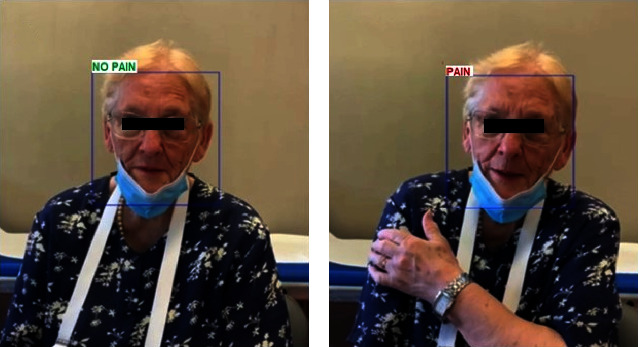
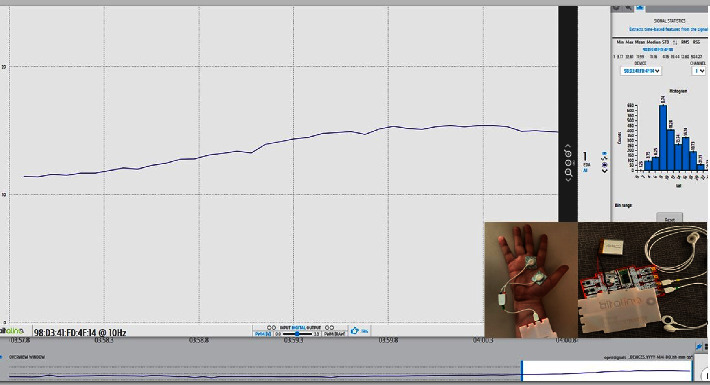
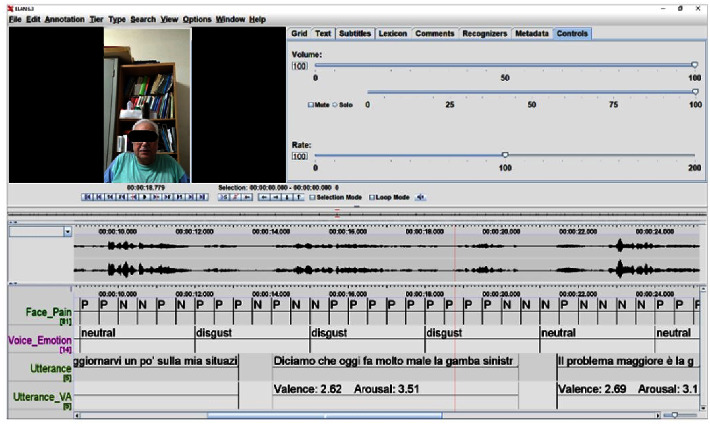
Although proper pain evaluation is mandatory for establishing the appropriate therapy, self-reported pain level assessment has several limitations. Data-driven artificial intelligence (AI) methods can be employed for research on automatic pain assessment (APA). The goal is the development of objective, standardized, and generalizable instruments useful for pain assessment in different clinical contexts. The purpose of this article is to discuss the state of the art of research and perspectives on APA applications in both research and clinical scenarios. Principles of AI functioning will be addressed. For narrative purposes, AI-based methods are grouped into behavioral-based approaches and neurophysiology-based pain detection methods. Since pain is generally accompanied by spontaneous facial behaviors, several approaches for APA are based on image classification and feature extraction. Language features through natural language strategies, body postures, and respiratory-derived elements are other investigated behavioral-based approaches. Neurophysiology-based pain detection is obtained through electroencephalography, electromyography, electrodermal activity, and other biosignals. Recent approaches involve multimode strategies by combining behaviors with neurophysiological findings. Concerning methods, early studies were conducted by machine learning algorithms such as support vector machine, decision tree, and random forest classifiers. More recently, artificial neural networks such as convolutional and recurrent neural network algorithms are implemented, even in combination. Collaboration programs involving clinicians and computer scientists must be aimed at structuring and processing robust datasets that can be used in various settings, from acute to different chronic pain conditions. Finally, it is crucial to apply the concepts of explainability and ethics when examining AI applications for pain research and management.
虽然进行适当的疼痛评估对于确定适当的治疗方法是强制性的,但自我报告的疼痛水平评估存在一些局限性。可以使用基于数据的人工智能 (AI) 方法进行自动疼痛评估 (APA) 的研究。目标是开发客观、标准化和可推广的工具,用于不同临床情况下的疼痛评估。本文旨在讨论 APA 在研究和临床场景中的应用的研究现状和观点。将介绍 AI 功能的原则。为了叙述的目的,基于 AI 的方法分为基于行为的方法和基于神经生理学的疼痛检测方法。由于疼痛通常伴随着自发的面部行为,因此有几种 APA 方法基于图像分类和特征提取。通过自然语言策略、身体姿势和呼吸衍生元素等语言特征是其他研究的基于行为的方法。基于神经生理学的疼痛检测是通过脑电图、肌电图、皮肤电活动和其他生物信号获得的。最近的方法涉及通过结合行为与神经生理发现的多模态策略。就方法而言,早期的研究是通过机器学习算法(如支持向量机、决策树和随机森林分类器)进行的。最近,甚至还实现了人工神经网络(如卷积神经网络和递归神经网络算法),甚至还进行了组合。涉及临床医生和计算机科学家的合作项目必须旨在构建和处理稳健的数据集,这些数据集可用于各种设置,从急性到不同的慢性疼痛状况。最后,在研究和管理疼痛时,应用 AI 应用的可解释性和道德概念至关重要。