Silva Amanda Vieira, Gomes Déborah Dos Santos, Victor Rayssa de Sousa, Santana Lisiane Navarro de Lima, Neves Gelmires Araújo, Menezes Romualdo Rodrigues
Graduate Program in Materials Science and Engineering, Federal University of Campina Grande, Campina Grande 58429-900, PB, Brazil.
Laboratory of Materials Technology (LTM), Federal University of Campina Grande, Campina Grande 58429-900, PB, Brazil.
Materials (Basel). 2023 Dec 15;16(24):7654. doi: 10.3390/ma16247654.
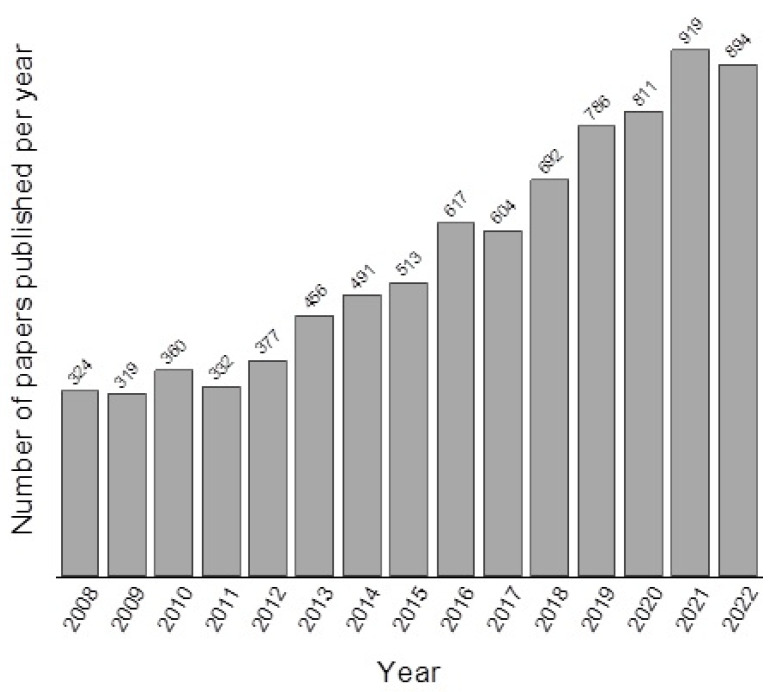
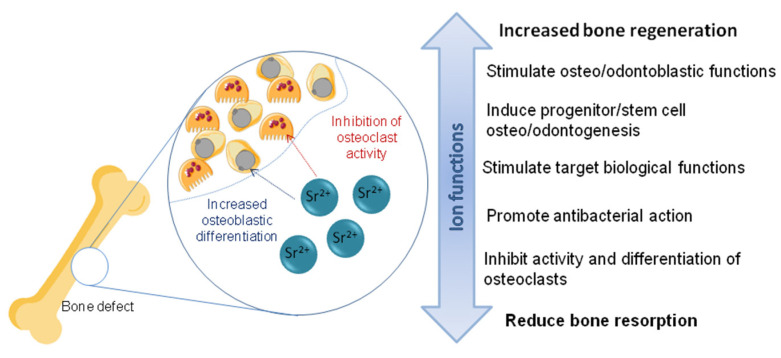
Bioactive glasses (BGs) can potentially be applied in biomedicine, mainly for bone repair and replacement, given their unique ability to connect to natural bone tissue and stimulate bone regeneration. Since their discovery, several glass compositions have been developed to improve the properties and clinical abilities of traditional bioactive glass. Different inorganic ions, such as strontium (Sr), have been incorporated in BG due to their ability to perform therapeutic functions. Sr has been gaining prominence due to its ability to stimulate osteogenesis, providing an appropriate environment to improve bone regeneration, in addition to its antibacterial potential. However, as there are still points in the literature that are not well consolidated, such as the influence of ionic concentrations and the BG production technique, this review aims to collect information on the state of the art of the biological behavior of BGs containing Sr. It also aims to gather data on different types of BGs doped with different concentrations of Sr, and to highlight the manufacturing techniques used in order to analyze the influence of the incorporation of this ion for bone regeneration purposes.
生物活性玻璃(BGs)因其与天然骨组织连接并刺激骨再生的独特能力,在生物医学领域具有潜在应用价值,主要用于骨修复和置换。自其被发现以来,人们已开发出多种玻璃成分以改善传统生物活性玻璃的性能和临床应用能力。不同的无机离子,如锶(Sr),因其具有治疗功能而被引入生物活性玻璃中。Sr因其能够刺激成骨作用、提供促进骨再生的适宜环境以及具有抗菌潜力而备受关注。然而,由于文献中仍有一些观点尚未得到充分证实,如离子浓度的影响和生物活性玻璃的生产技术,本综述旨在收集有关含Sr生物活性玻璃生物学行为的最新信息。它还旨在收集不同类型、不同Sr浓度掺杂的生物活性玻璃的数据,并突出所使用的制造技术,以便分析该离子掺入对骨再生目的的影响。