Department of Biomedical Informatics, School of Basic Medical Sciences, Peking University, 38 Xueyuan Road, Beijing 100191, China.
State Key Laboratory of Vascular Homeostasis and Remodeling, Peking University, 38 Xueyuan Road, Beijing 100191, China.
Brief Bioinform. 2024 Mar 27;25(3). doi: 10.1093/bib/bbae130.
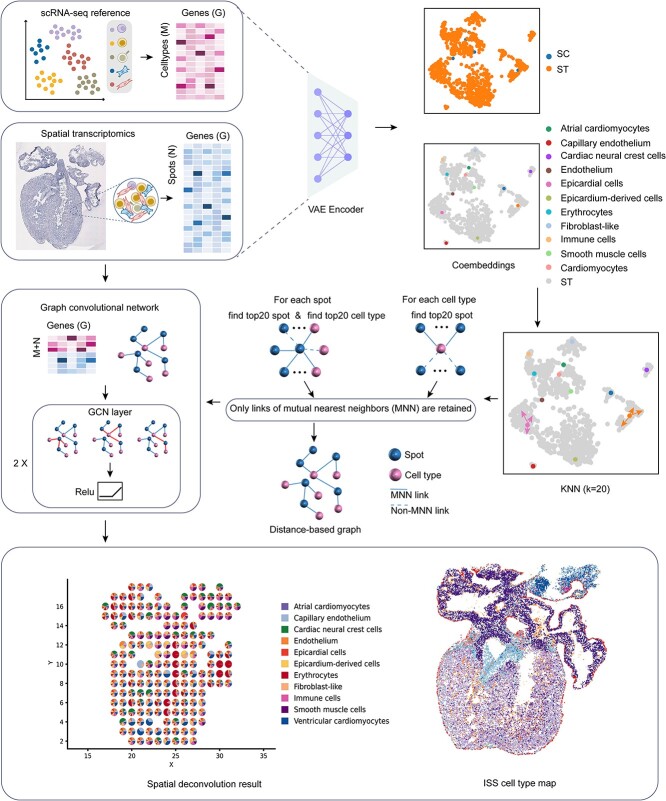
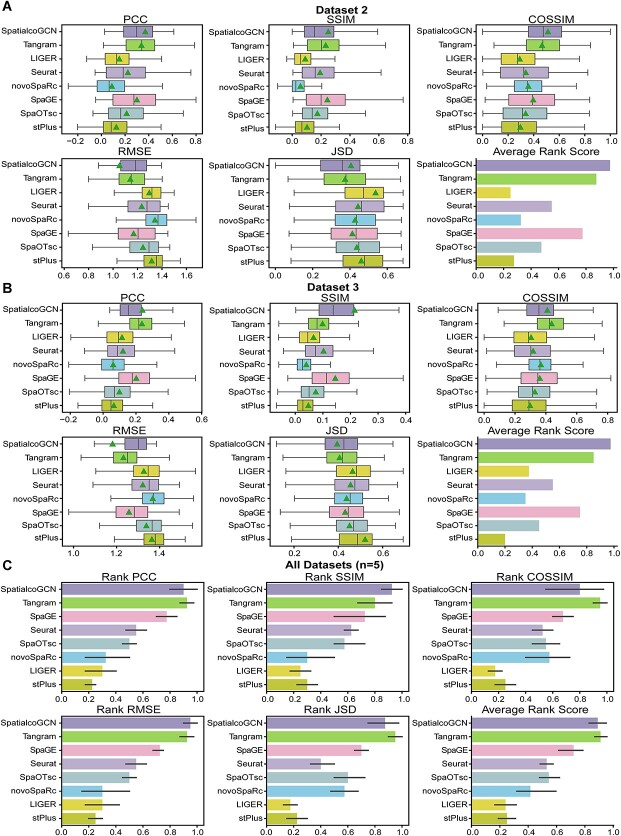
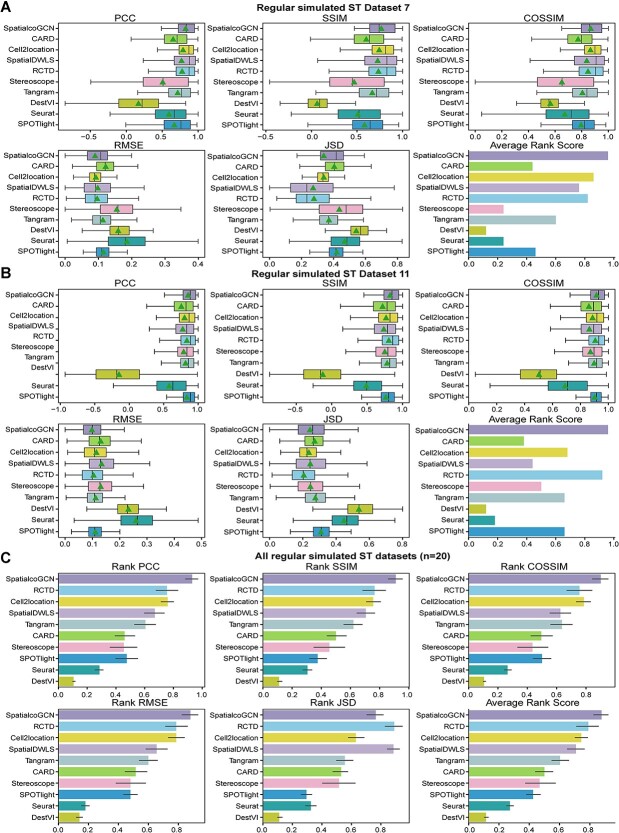
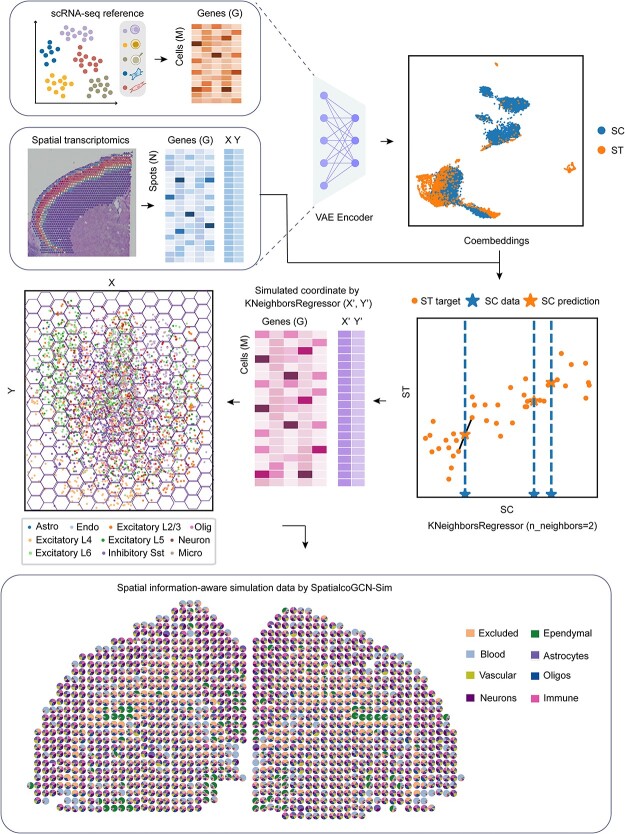
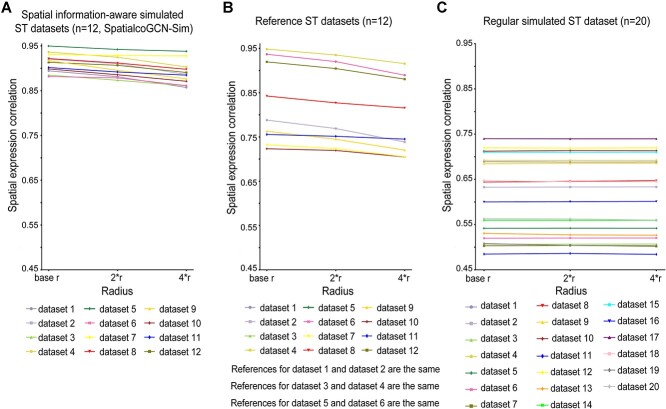
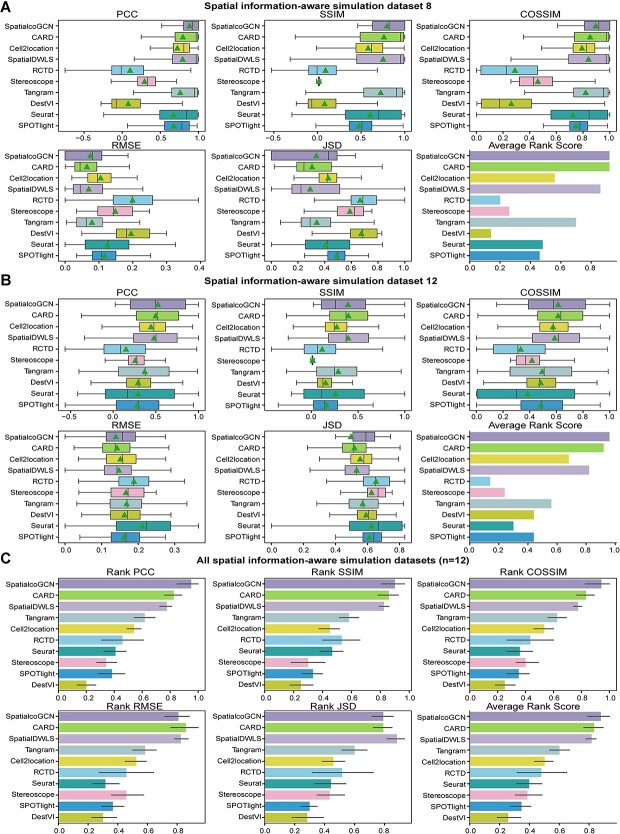
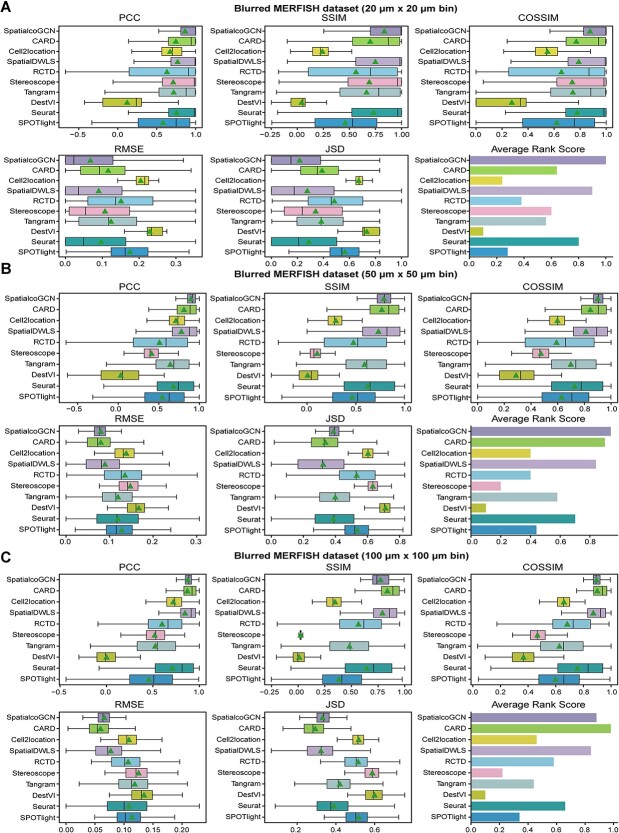
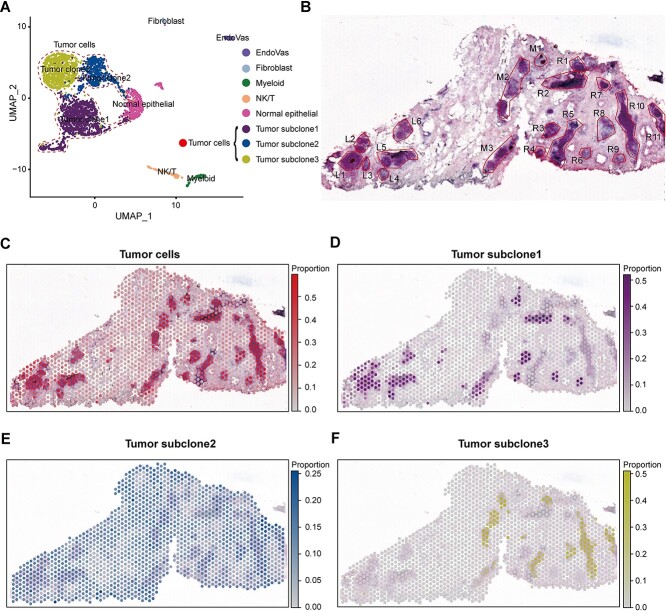
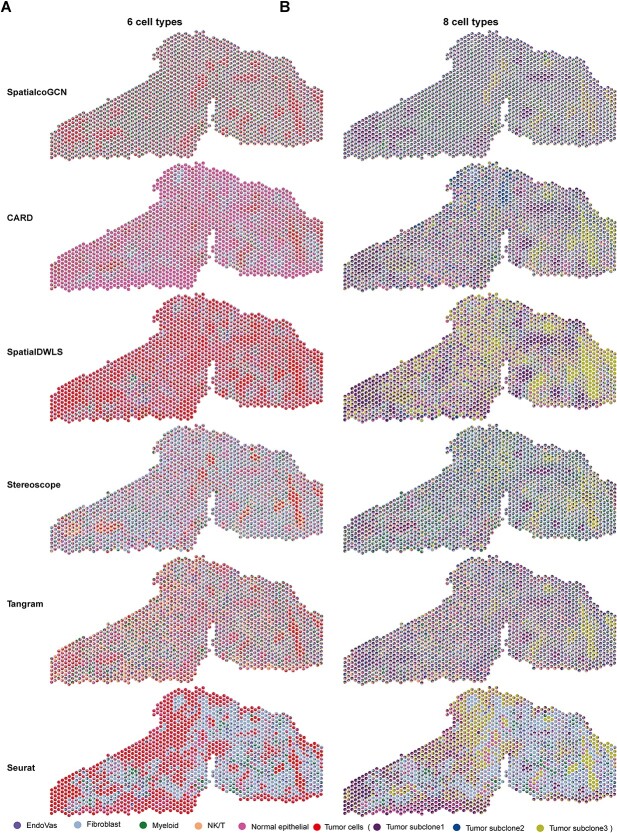
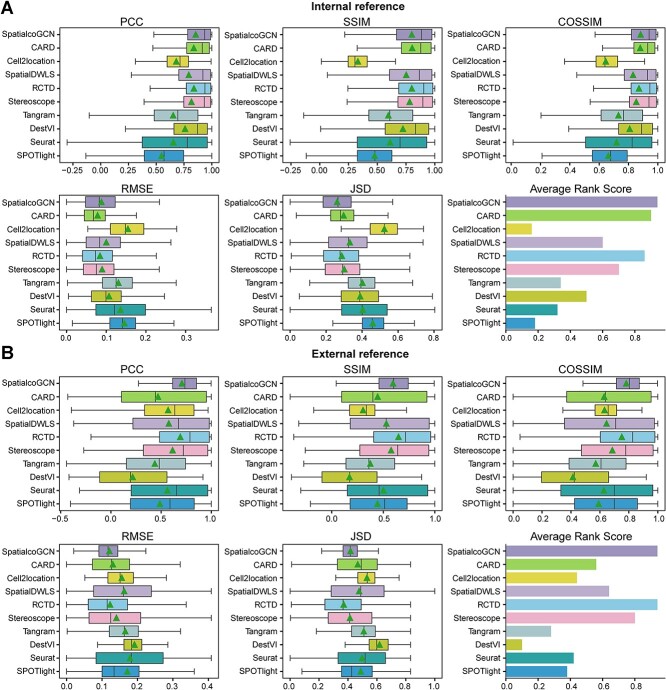
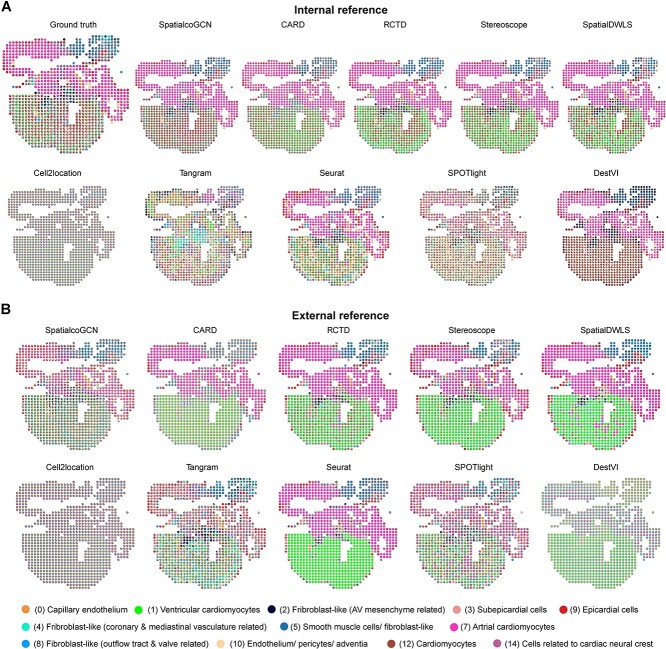
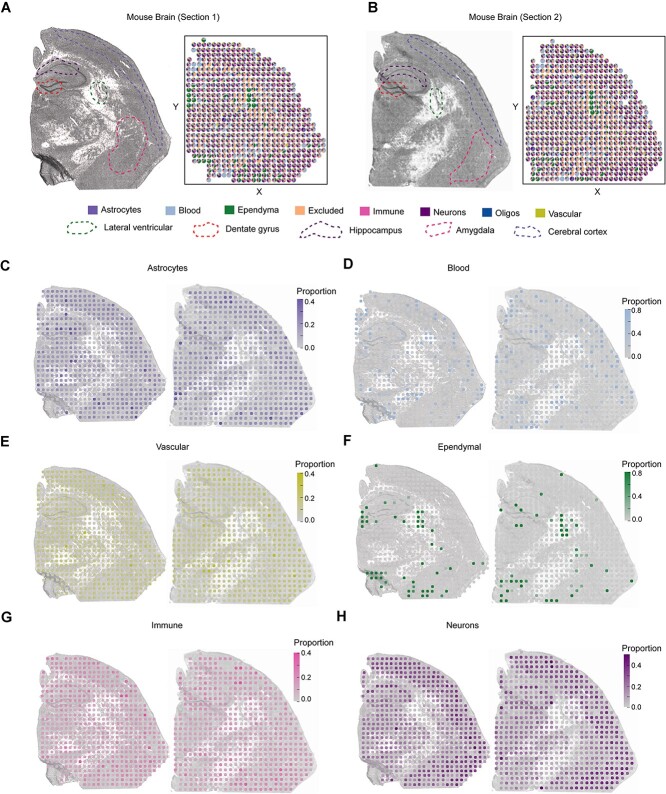
Spatial transcriptomics (ST) data have emerged as a pivotal approach to comprehending the function and interplay of cells within intricate tissues. Nonetheless, analyses of ST data are restricted by the low spatial resolution and limited number of ribonucleic acid transcripts that can be detected with several popular ST techniques. In this study, we propose that both of the above issues can be significantly improved by introducing a deep graph co-embedding framework. First, we establish a self-supervised, co-graph convolution network-based deep learning model termed SpatialcoGCN, which leverages single-cell data to deconvolve the cell mixtures in spatial data. Evaluations of SpatialcoGCN on a series of simulated ST data and real ST datasets from human ductal carcinoma in situ, developing human heart and mouse brain suggest that SpatialcoGCN could outperform other state-of-the-art cell type deconvolution methods in estimating per-spot cell composition. Moreover, with competitive accuracy, SpatialcoGCN could also recover the spatial distribution of transcripts that are not detected by raw ST data. With a similar co-embedding framework, we further established a spatial information-aware ST data simulation method, SpatialcoGCN-Sim. SpatialcoGCN-Sim could generate simulated ST data with high similarity to real datasets. Together, our approaches provide efficient tools for studying the spatial organization of heterogeneous cells within complex tissues.
空间转录组学(ST)数据已成为理解复杂组织中细胞功能和相互作用的重要方法。然而,几种流行的 ST 技术的空间分辨率低且可检测的核糖核酸转录本数量有限,这限制了对 ST 数据的分析。在本研究中,我们提出通过引入深度图协同嵌入框架可以显著改善这两个问题。首先,我们建立了一个基于自监督、共图卷积网络的深度学习模型,称为 SpatialcoGCN,它利用单细胞数据来对空间数据中的细胞混合物进行反卷积。在一系列模拟 ST 数据和来自人原位导管癌、发育中的人类心脏和小鼠大脑的真实 ST 数据集上对 SpatialcoGCN 的评估表明,SpatialcoGCN 可以在估计每个斑点的细胞组成方面优于其他最先进的细胞类型去卷积方法。此外,SpatialcoGCN 还可以以具有竞争力的准确性恢复原始 ST 数据未检测到的转录本的空间分布。我们还使用类似的协同嵌入框架进一步建立了一种空间信息感知的 ST 数据模拟方法,SpatialcoGCN-Sim。SpatialcoGCN-Sim 可以生成与真实数据集高度相似的模拟 ST 数据。总之,我们的方法为研究复杂组织中异质细胞的空间组织提供了有效的工具。