Popovic T, Bopp C, Olsvik O, Wachsmuth K
Foodborne and Diarrheal Diseases Branch, National Center for Infectious Diseases, Centers for Disease Control and Prevention, Atlanta, Georgia 30333.
J Clin Microbiol. 1993 Sep;31(9):2474-82. doi: 10.1128/jcm.31.9.2474-2482.1993.
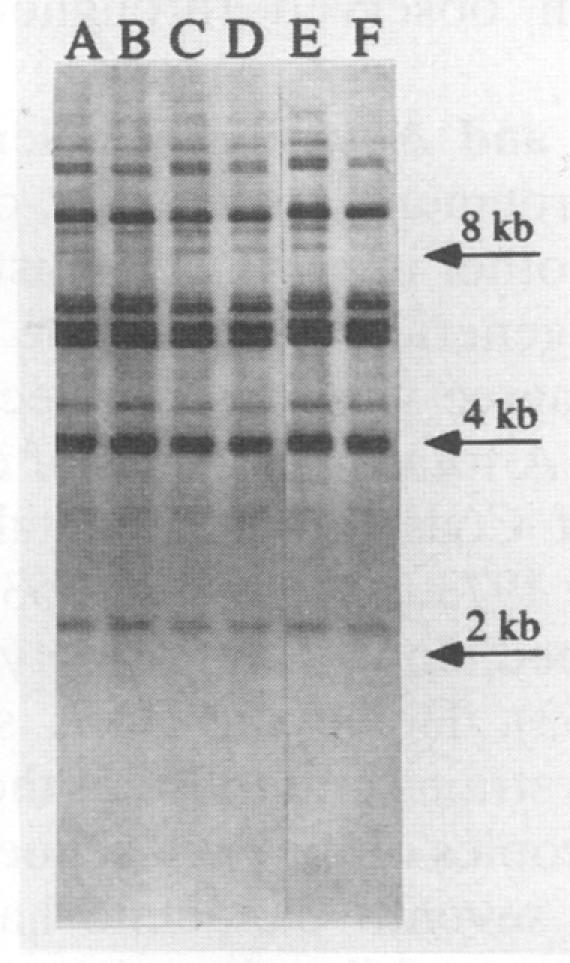
A standardized scheme of 27 different BglI ribotypes and subtypes of Vibrio cholerae O1 strains is proposed on the basis of data from 214 human and environmental strains isolated in 35 countries and 14 U.S. states over the past 60 years. The ribotype patterns obtained are reproducible and stable over time. Seven different but very similar ribotypes (1a to 1g) were observed among 16 strains of the classical biotype. Twenty ribotypes and subtypes were identified among 198 V. cholerae O1 strains of the El Tor biotype. Six different patterns were found among the strains causing the current seventh pandemic. Strains of ribotype 8 originated only in central African countries, while those of ribotype 3 originated mainly in Asia and the Pacific Islands. The most widely distributed strains were those of ribotype 6, which was subdivided into three very similar but still distinguishable subtypes. The present Latin American epidemic is caused by strains of ribotype 5. Strains of this ribotype were isolated from several other geographic locations but can be differentiated from the Latin American strains by other molecular methods. Strains associated with two documented environmental reservoirs exhibited three distinct ribotype patterns; those isolated from patients who ate food from the U.S. Gulf waters were all of ribotype 2, while the strains related to the northeast Australian rivers were of ribotypes 9 and 10. Nontoxigenic V. cholerae O1 strains originating in Latin America and the U.S. Gulf Coast did not form a specific cluster of ribotypes. Ribotyping in combination with other well-defined methods can assist in epidemiologic investigations, helping to trace the movement of strains and to identify their geographic origins.
基于过去60年里从35个国家和美国14个州分离出的214株人类和环境菌株的数据,提出了一种针对霍乱弧菌O1菌株的27种不同BglI核糖型和亚型的标准化方案。所获得的核糖型模式随时间推移具有可重复性和稳定性。在16株古典生物型菌株中观察到7种不同但非常相似的核糖型(1a至1g)。在198株埃尔托生物型霍乱弧菌O1菌株中鉴定出20种核糖型和亚型。在引发当前第七次大流行的菌株中发现了6种不同模式。8型核糖型菌株仅起源于非洲中部国家,而3型核糖型菌株主要起源于亚洲和太平洋岛屿。分布最广泛的菌株是6型核糖型,它又细分为三种非常相似但仍可区分的亚型。目前拉丁美洲的疫情是由5型核糖型菌株引起的。该核糖型菌株从其他几个地理位置分离得到,但可通过其他分子方法与拉丁美洲菌株区分开来。与两个有记录的环境宿主相关的菌株呈现出三种不同的核糖型模式;从食用美国湾海水域食物的患者中分离出的菌株均为2型核糖型,而与澳大利亚东北部河流相关的菌株为9型和10型核糖型。源自拉丁美洲和美国墨西哥湾沿岸的非产毒霍乱弧菌O1菌株未形成特定的核糖型簇。核糖分型与其他明确的方法相结合可有助于流行病学调查,帮助追踪菌株的传播并确定其地理起源。