Janssens Charlotte, Havlík Petr, Krisztin Tamás, Baker Justin, Frank Stefan, Hasegawa Tomoko, Leclère David, Ohrel Sara, Ragnauth Shaun, Schmid Erwin, Valin Hugo, Van Lipzig Nicole, Maertens Miet
Department of Earth and Environmental Sciences, University of Leuven (KU Leuven), Heverlee, Belgium.
Ecosystems Services and Management Program, International Institute for Applied System Analysis (IIASA), Laxenburg, Austria.
Nat Clim Chang. 2020 Jul 20;10:829-835. doi: 10.1038/s41558-020-0847-4.
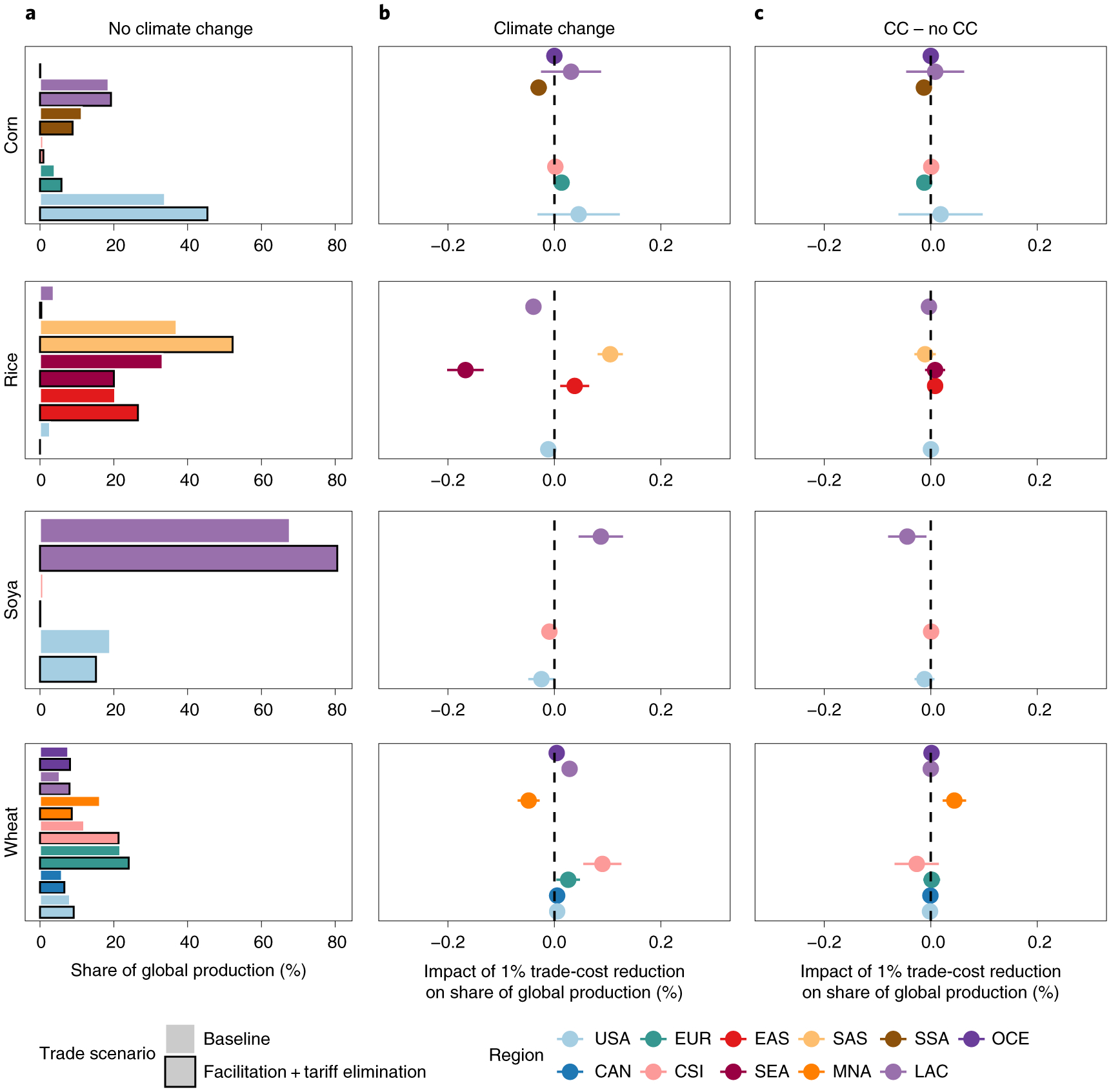
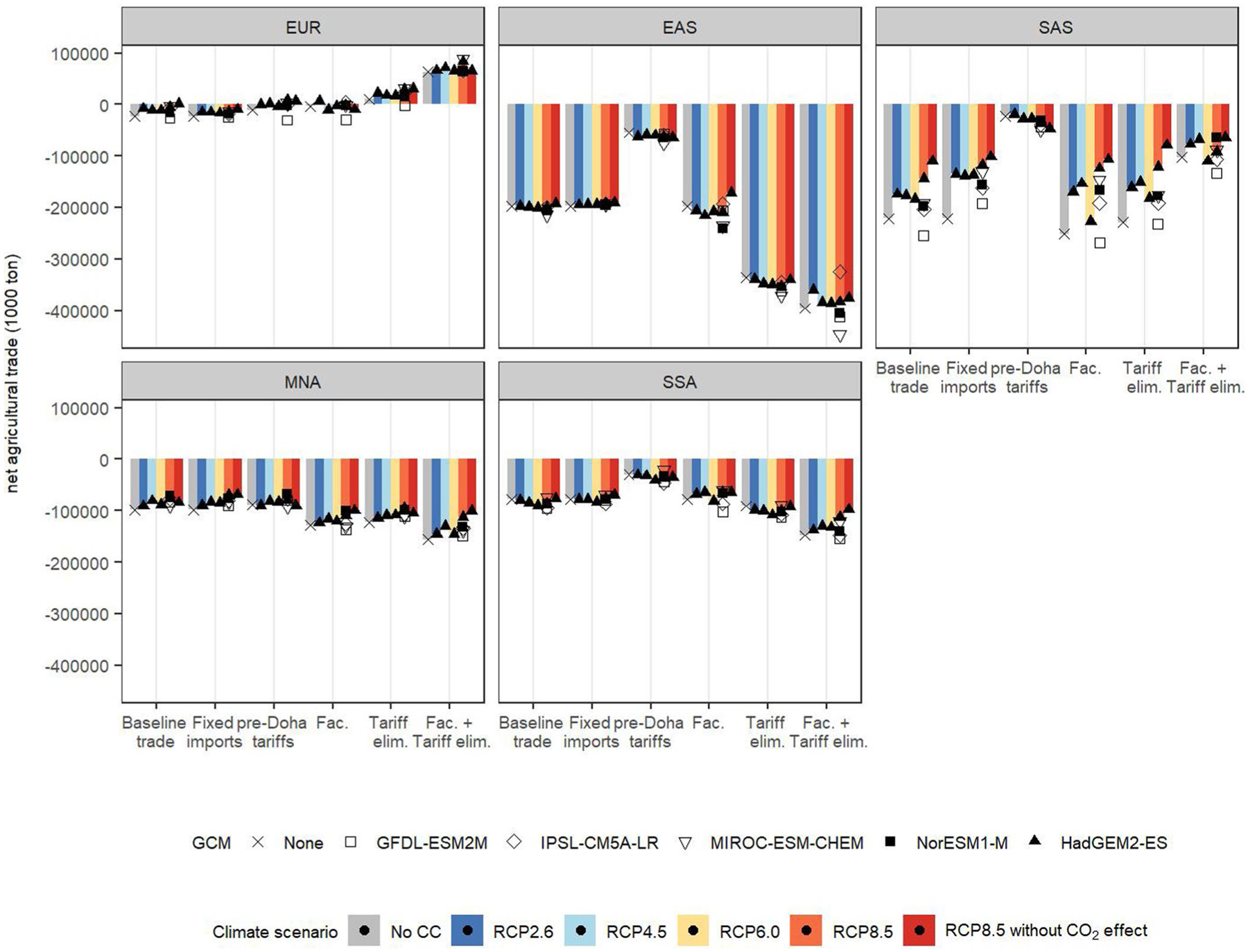
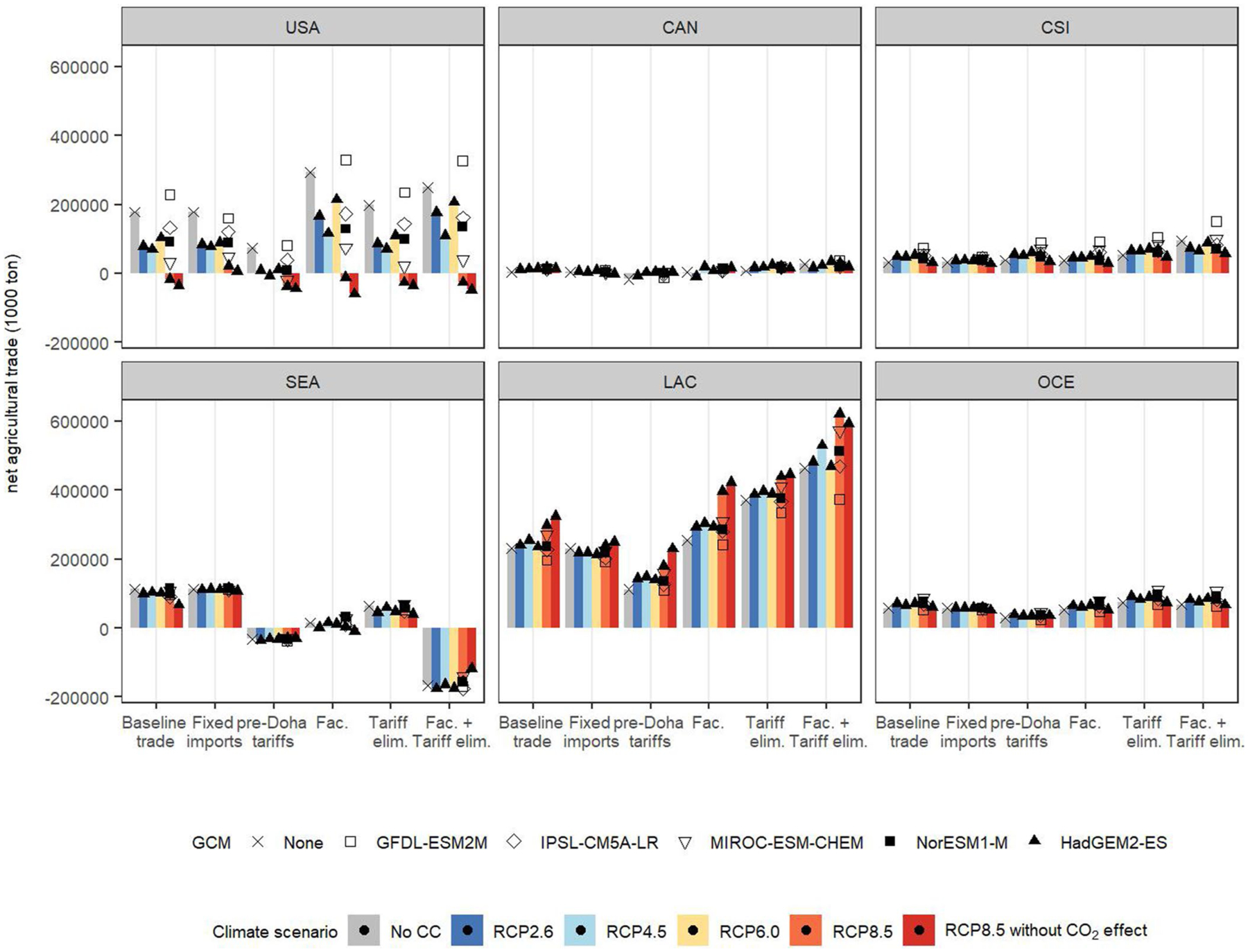
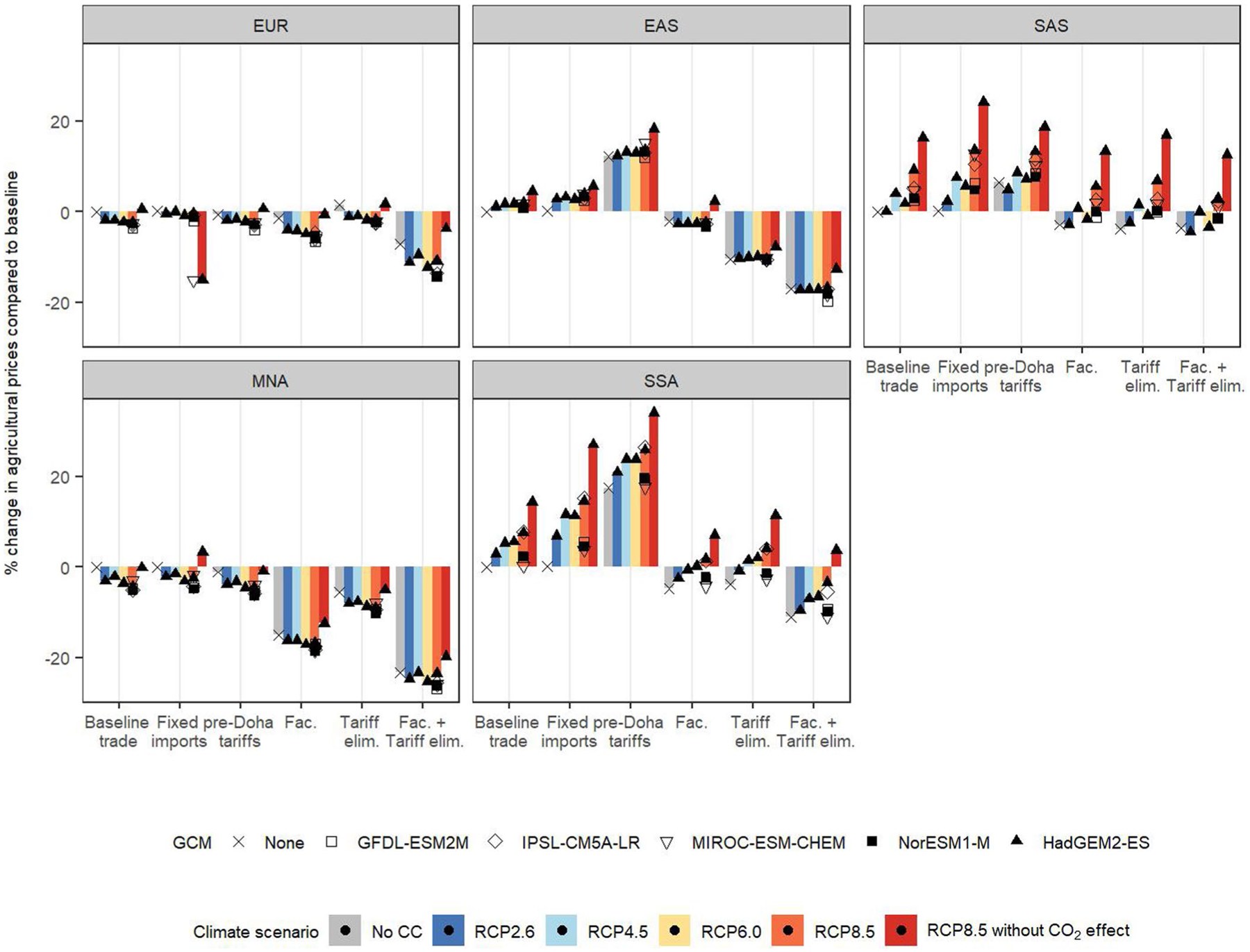
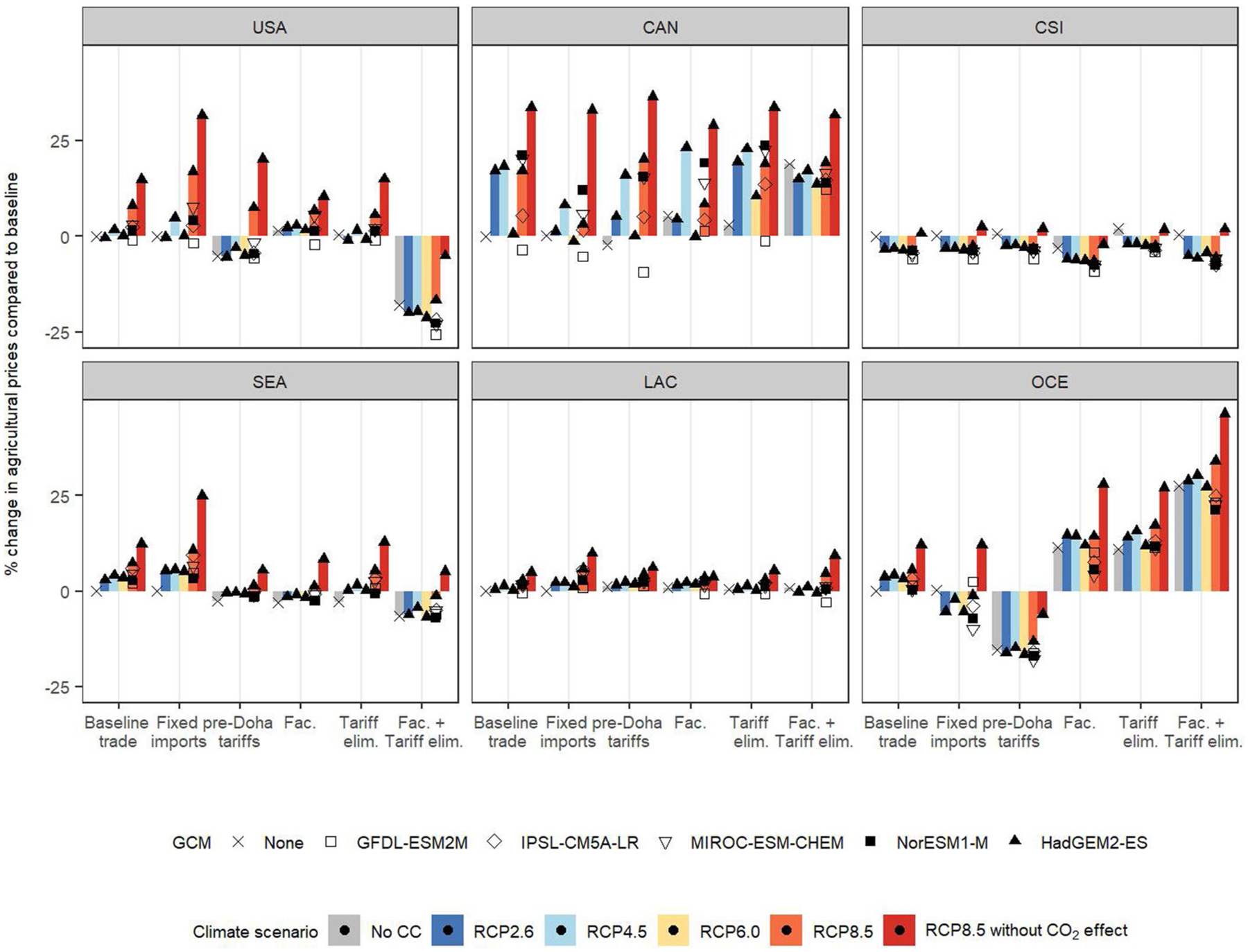
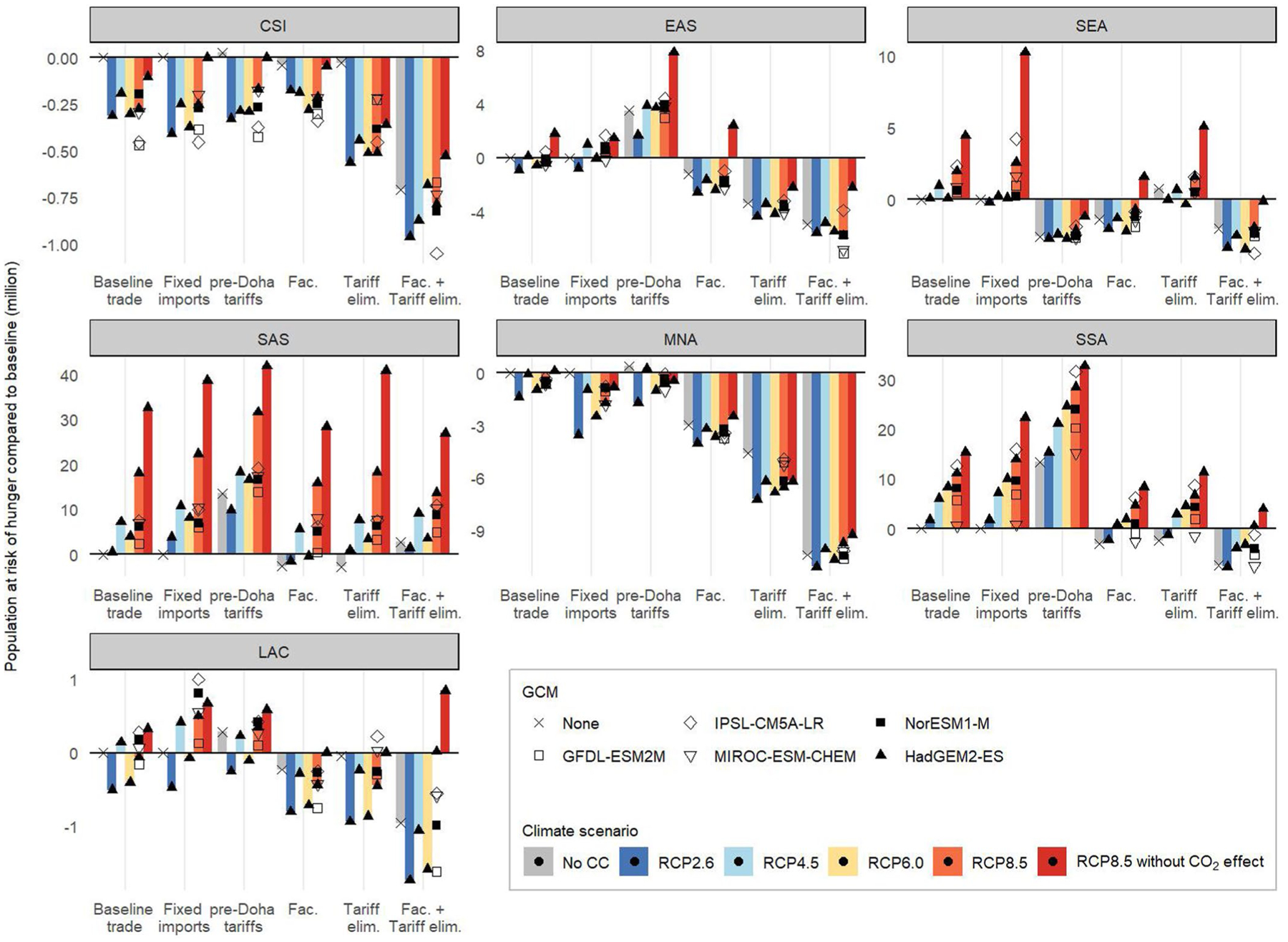
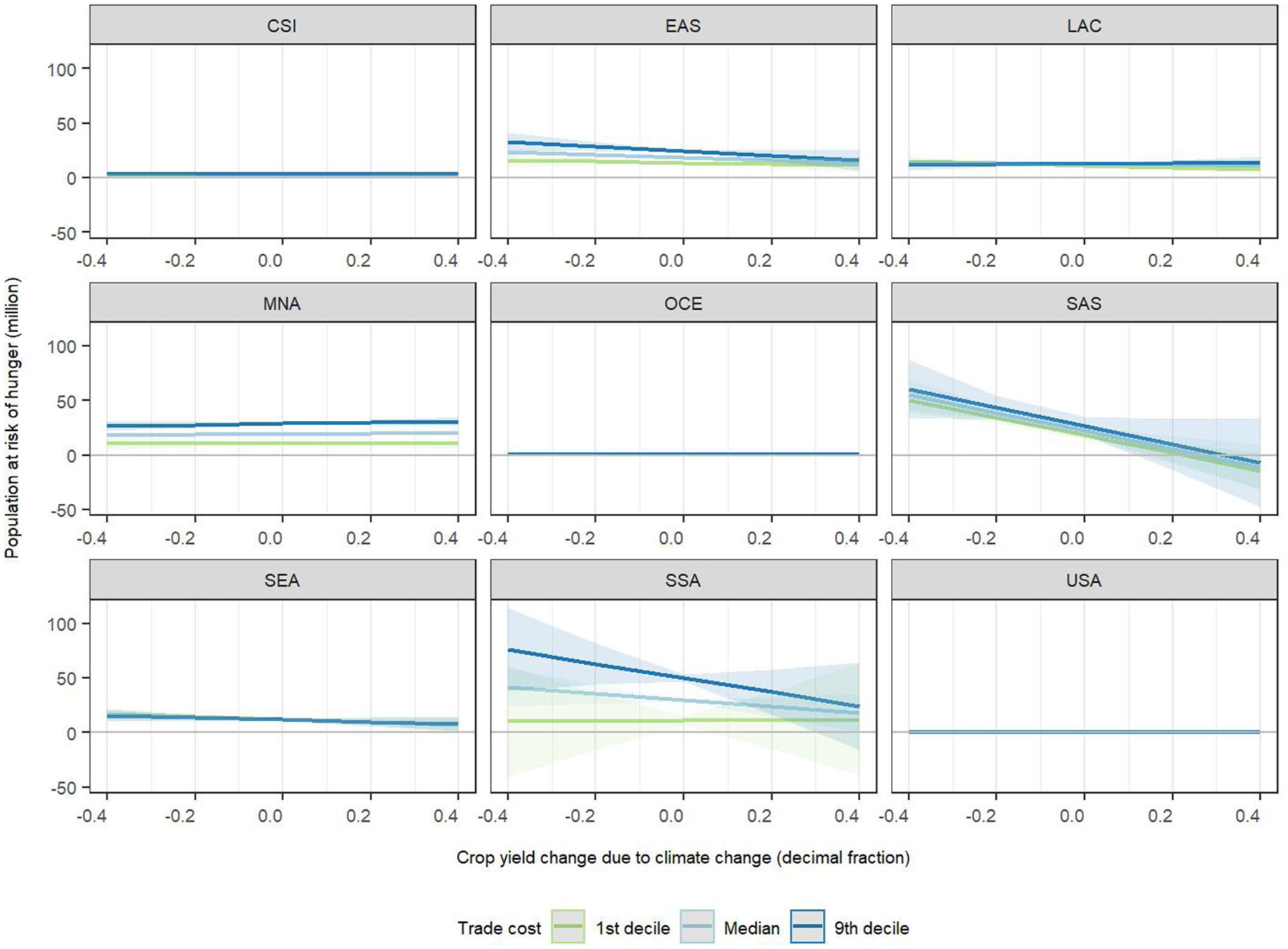
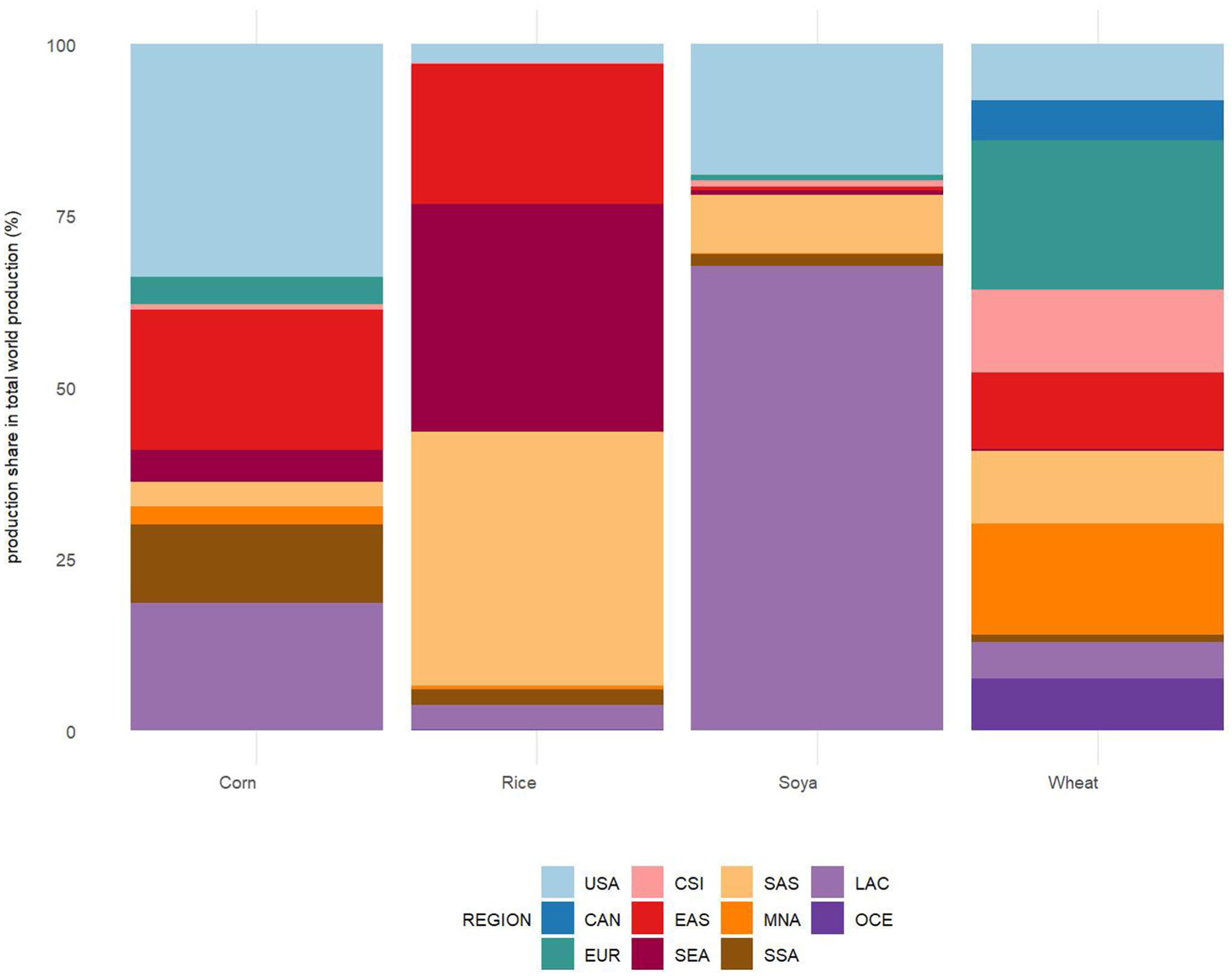
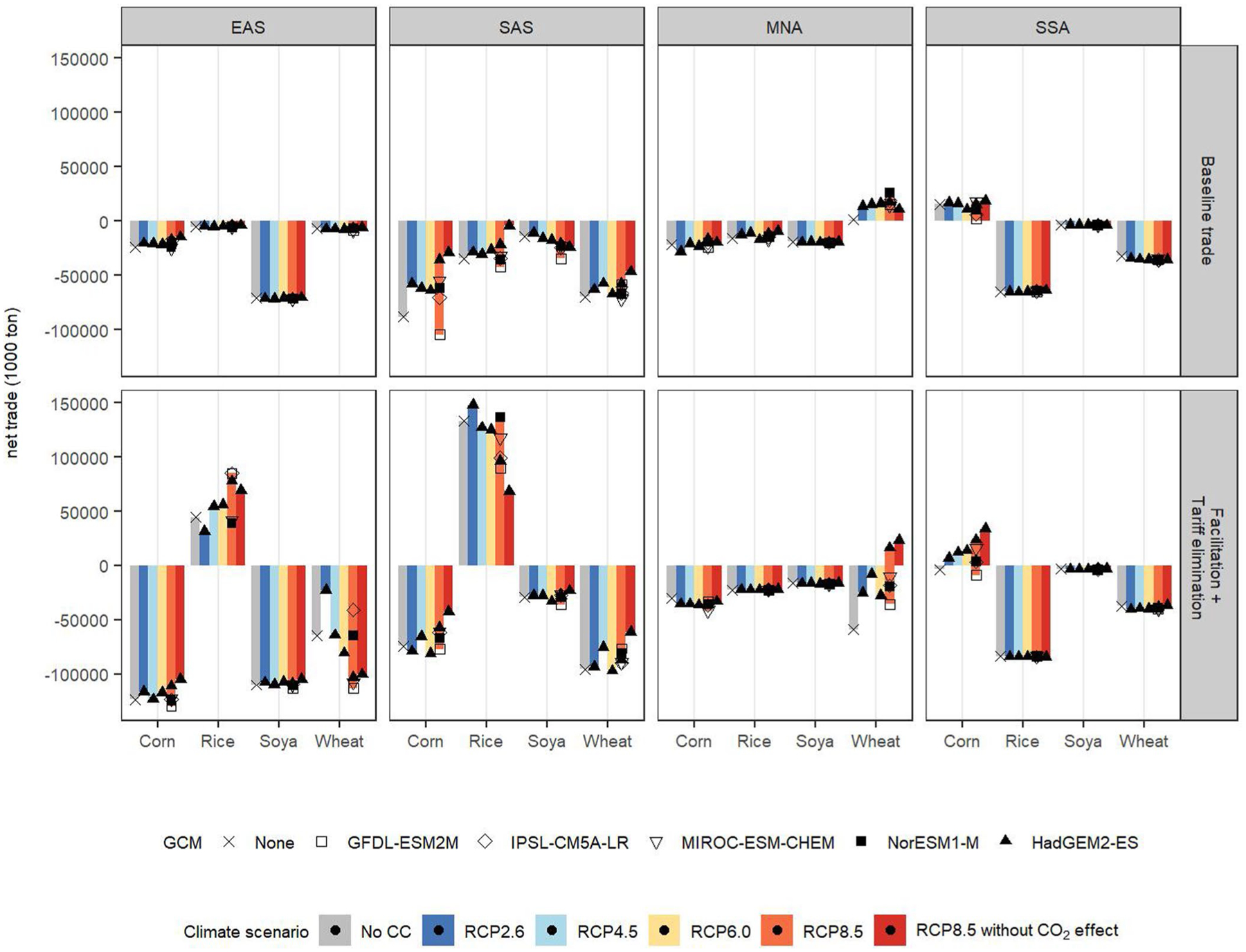
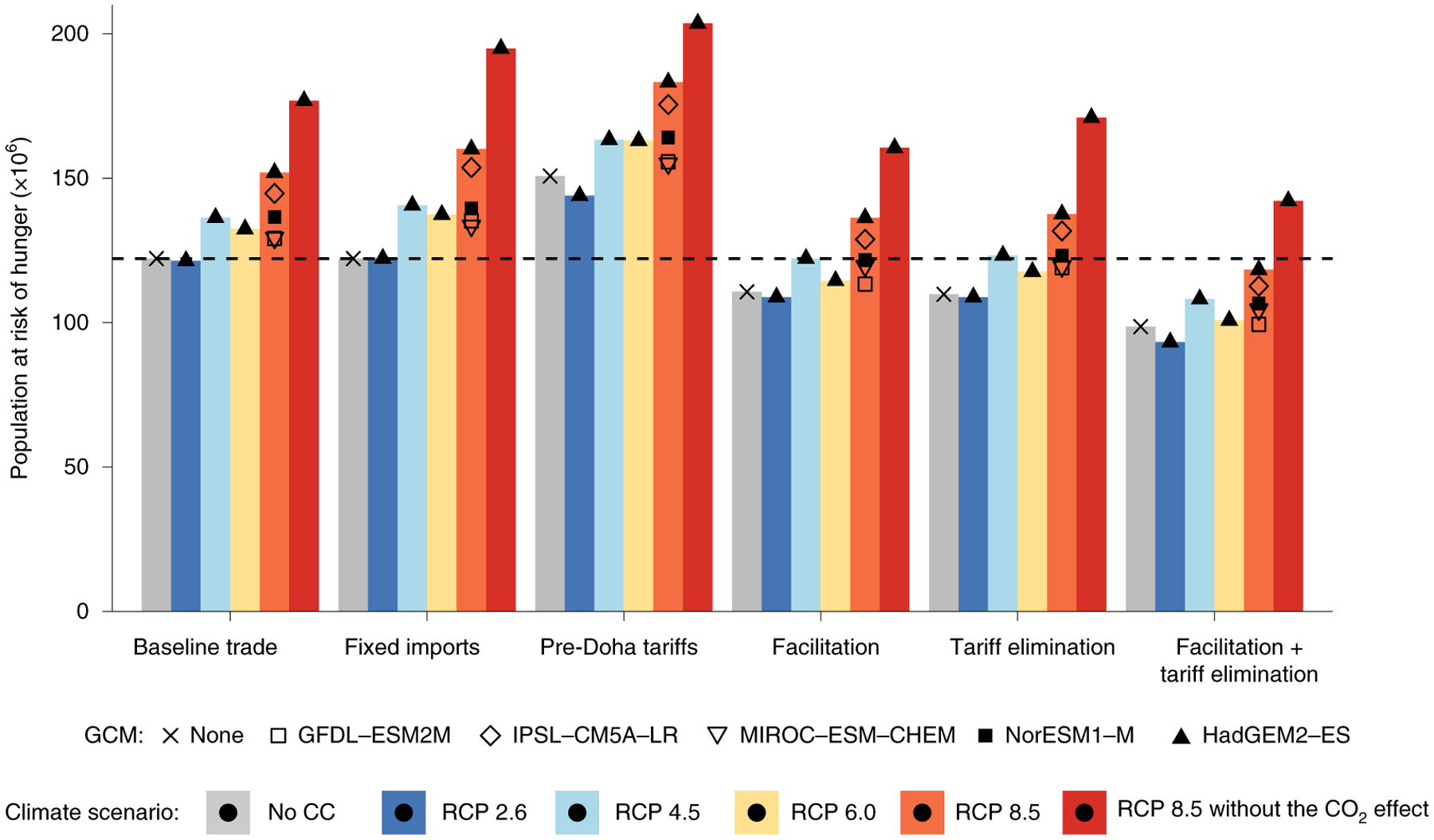
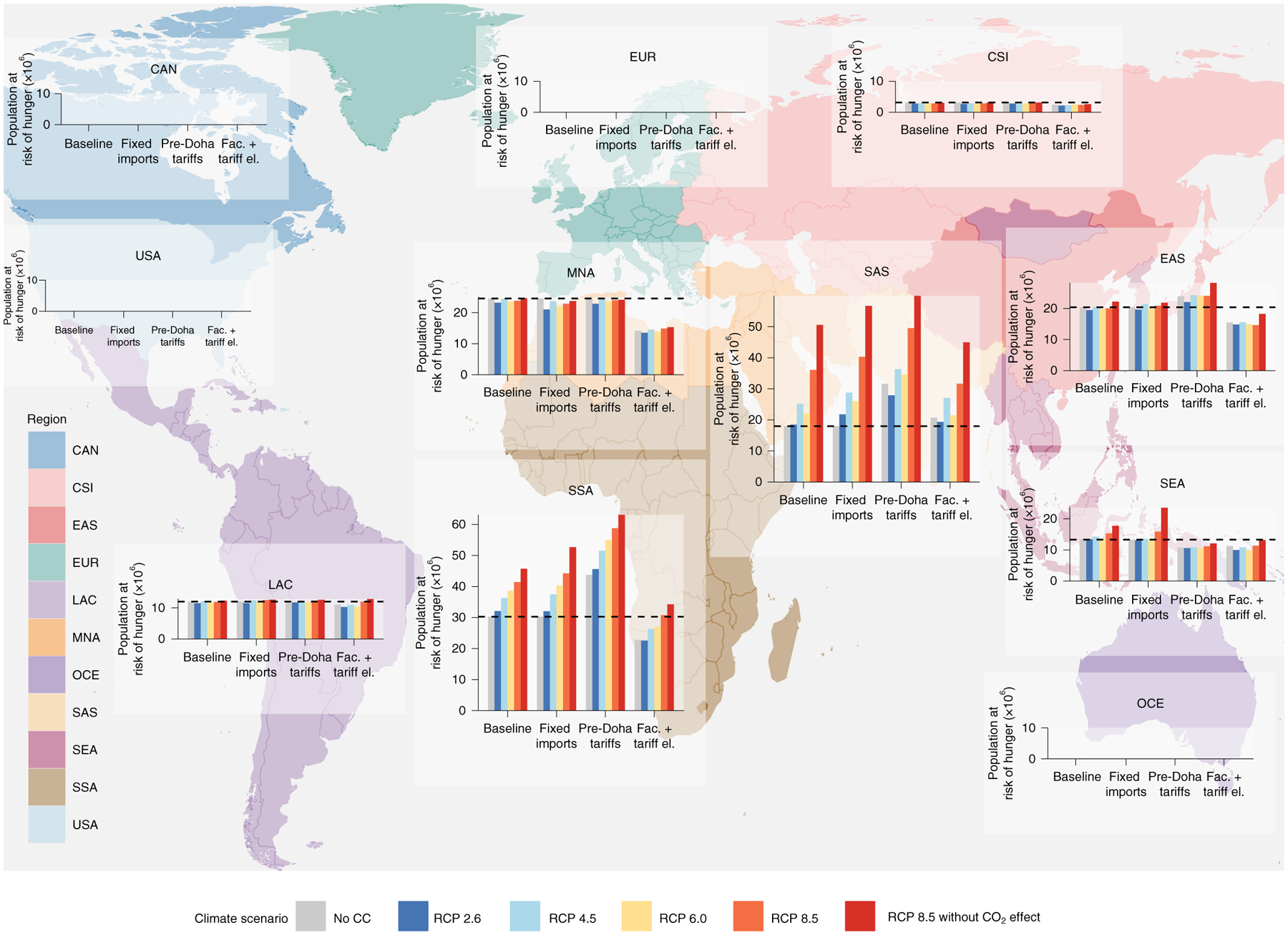
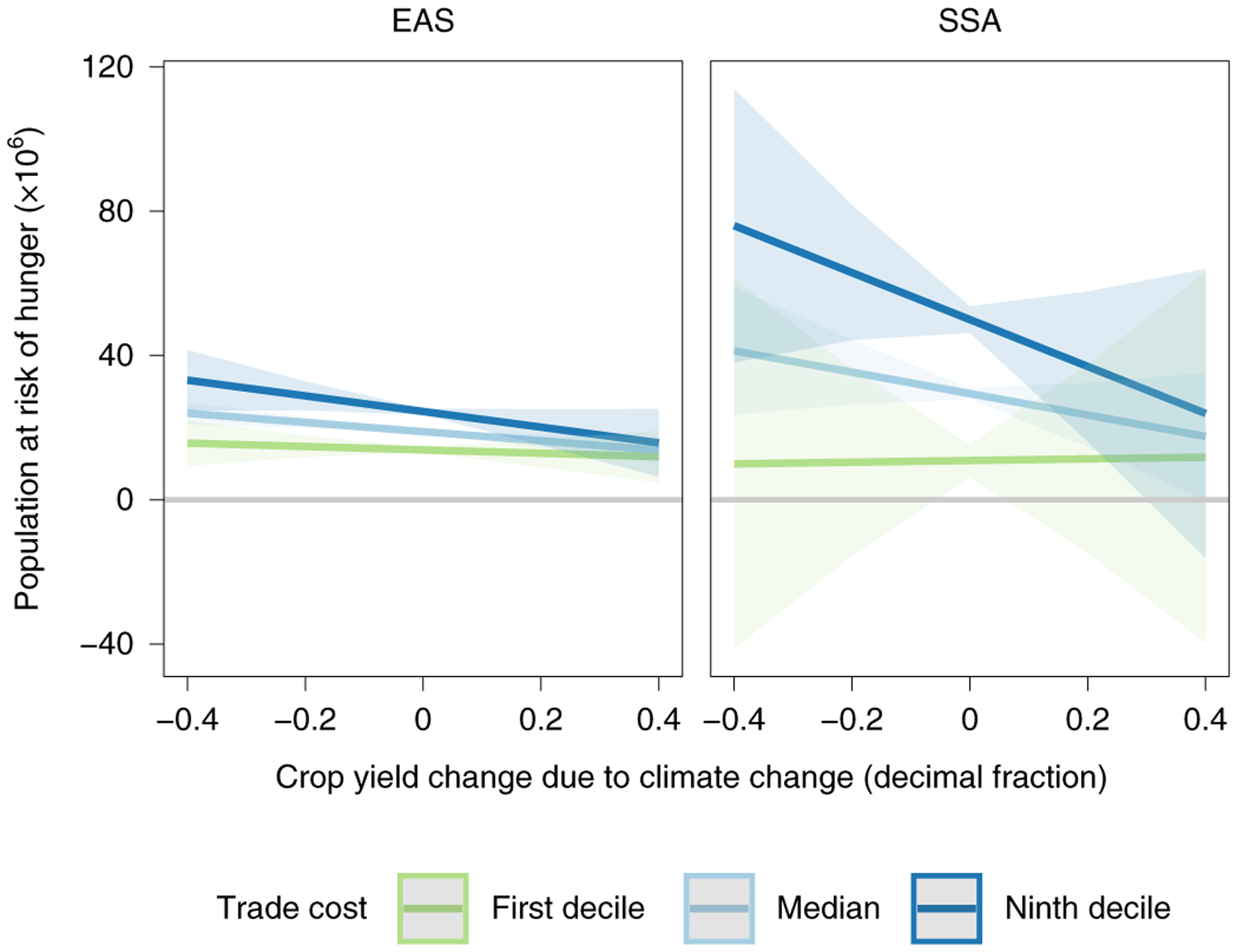
International trade enables us to exploit regional differences in climate change impacts and is increasingly regarded as a potential adaptation mechanism. Here, we focus on hunger reduction through international trade under alternative trade scenarios for a wide range of climate futures. Under the current level of trade integration, climate change would lead to up to 55 million people who are undernourished in 2050. Without adaptation through trade, the impacts of global climate change would increase to 73 million people who are undernourished (+33%). Reduction in tariffs as well as institutional and infrastructural barriers would decrease the negative impact to 20 million (-64%) people. We assess the adaptation effect of trade and climate-induced specialization patterns. The adaptation effect is strongest for hunger-affected import-dependent regions. However, in hunger-affected export-oriented regions, partial trade integration can lead to increased exports at the expense of domestic food availability. Although trade integration is a key component of adaptation, it needs sensitive implementation to benefit all regions.
国际贸易使我们能够利用气候变化影响方面的区域差异,并且越来越被视为一种潜在的适应机制。在此,我们关注在多种气候未来情景下,通过国际贸易实现减少饥饿的目标。在当前贸易一体化水平下,气候变化将导致到2050年多达5500万人营养不良。若不通过贸易进行适应,全球气候变化的影响将使营养不良人口增加到7300万(增加33%)。降低关税以及消除制度和基础设施障碍将使负面影响减少到2000万(减少64%)人。我们评估了贸易和气候导致的专业化模式的适应效果。适应效果在受饥饿影响的进口依赖型地区最为显著。然而,在受饥饿影响的出口导向型地区,部分贸易一体化可能会以牺牲国内粮食供应为代价导致出口增加。尽管贸易一体化是适应的关键组成部分,但需要谨慎实施才能使所有地区受益。