• 文献检索
  • 文档翻译
  • 深度研究
  • 学术资讯
  • Suppr Zotero 插件Zotero 插件
  • 邀请有礼
  • 套餐&价格
  • 历史记录
应用&插件
Suppr Zotero 插件Zotero 插件浏览器插件Mac 客户端Windows 客户端微信小程序
定价
高级版会员购买积分包购买API积分包
服务
文献检索文档翻译深度研究API 文档MCP 服务
关于我们
关于 Suppr公司介绍联系我们用户协议隐私条款
关注我们

Suppr 超能文献

核心技术专利:CN118964589B侵权必究
粤ICP备2023148730 号-1Suppr @ 2026

文献检索

告别复杂PubMed语法,用中文像聊天一样搜索,搜遍4000万医学文献。AI智能推荐,让科研检索更轻松。

立即免费搜索

文件翻译

保留排版,准确专业,支持PDF/Word/PPT等文件格式,支持 12+语言互译。

免费翻译文档

深度研究

AI帮你快速写综述,25分钟生成高质量综述,智能提取关键信息,辅助科研写作。

立即免费体验

使用无监督机器学习和 MRI 数据识别多发性硬化症亚型。

Identifying multiple sclerosis subtypes using unsupervised machine learning and MRI data.

机构信息

Queen Square Multiple Sclerosis Centre, Department of Neuroinflammation, UCL Queen Square Institute of Neurology, Faculty of Brain Sciences, University College London, London, UK.

Centre for Medical Image Computing (CMIC), Department of Computer Science, Faculty of Engineering Sciences, University College London, London, UK.

出版信息

Nat Commun. 2021 Apr 6;12(1):2078. doi: 10.1038/s41467-021-22265-2.

DOI:10.1038/s41467-021-22265-2
PMID:33824310
原文链接:https://pmc.ncbi.nlm.nih.gov/articles/PMC8024377/
Abstract

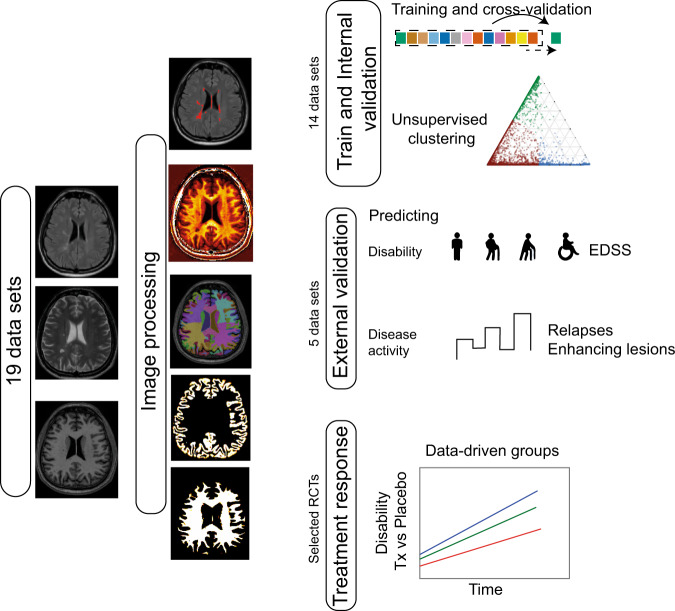
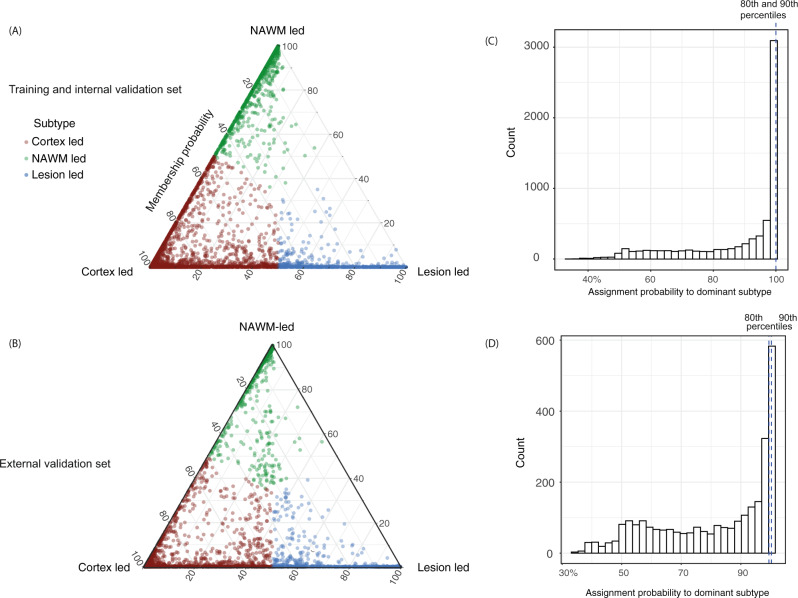
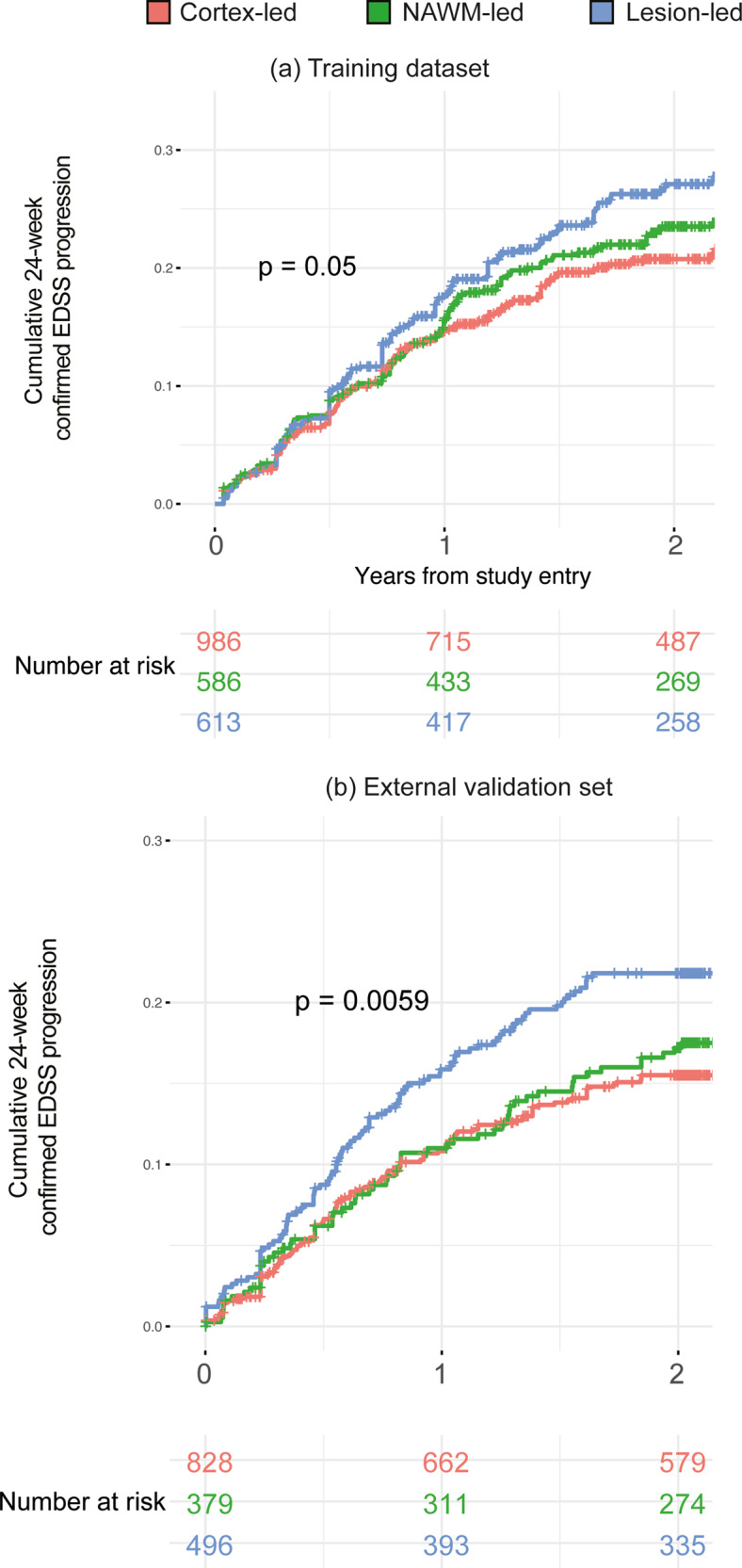
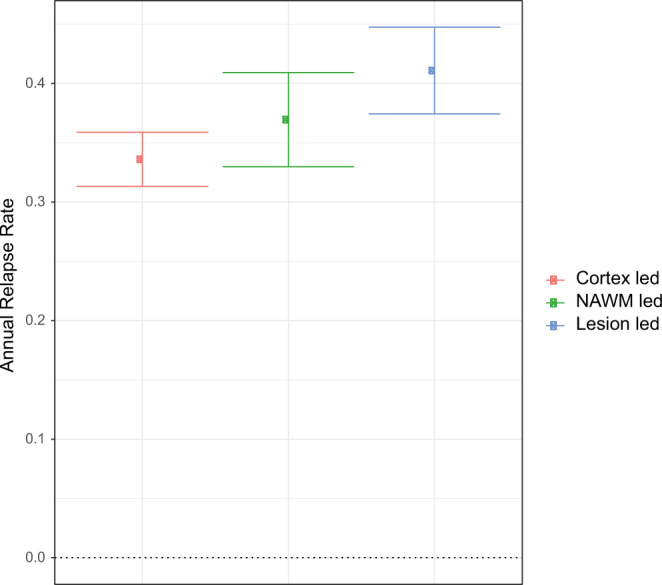
Multiple sclerosis (MS) can be divided into four phenotypes based on clinical evolution. The pathophysiological boundaries of these phenotypes are unclear, limiting treatment stratification. Machine learning can identify groups with similar features using multidimensional data. Here, to classify MS subtypes based on pathological features, we apply unsupervised machine learning to brain MRI scans acquired in previously published studies. We use a training dataset from 6322 MS patients to define MRI-based subtypes and an independent cohort of 3068 patients for validation. Based on the earliest abnormalities, we define MS subtypes as cortex-led, normal-appearing white matter-led, and lesion-led. People with the lesion-led subtype have the highest risk of confirmed disability progression (CDP) and the highest relapse rate. People with the lesion-led MS subtype show positive treatment response in selected clinical trials. Our findings suggest that MRI-based subtypes predict MS disability progression and response to treatment and may be used to define groups of patients in interventional trials.

摘要

多发性硬化症 (MS) 可根据临床演变分为四种表型。这些表型的病理生理界限尚不清楚,限制了治疗分层。机器学习可以使用多维数据识别具有相似特征的组。在这里,为了根据病理特征对 MS 亚型进行分类,我们将无监督机器学习应用于先前发表的研究中获得的脑 MRI 扫描。我们使用来自 6322 名 MS 患者的训练数据集来定义基于 MRI 的亚型,并使用 3068 名患者的独立队列进行验证。基于最早的异常,我们将 MS 亚型定义为皮质主导型、正常表现的白质主导型和病变主导型。病变主导型患者发生确诊残疾进展 (CDP) 的风险最高,复发率也最高。在选定的临床试验中,病变主导型 MS 患者显示出积极的治疗反应。我们的研究结果表明,基于 MRI 的亚型可预测 MS 残疾进展和对治疗的反应,并且可能用于在干预性试验中定义患者群体。
https://cdn.ncbi.nlm.nih.gov/pmc/blobs/c9ed/8024377/b00d6a2e11aa/41467_2021_22265_Fig7_HTML.jpg
https://cdn.ncbi.nlm.nih.gov/pmc/blobs/c9ed/8024377/e55bdee8a066/41467_2021_22265_Fig1_HTML.jpg
https://cdn.ncbi.nlm.nih.gov/pmc/blobs/c9ed/8024377/64f571cf3bcd/41467_2021_22265_Fig2_HTML.jpg
https://cdn.ncbi.nlm.nih.gov/pmc/blobs/c9ed/8024377/23cfb9f2c213/41467_2021_22265_Fig3_HTML.jpg
https://cdn.ncbi.nlm.nih.gov/pmc/blobs/c9ed/8024377/dec411ad6577/41467_2021_22265_Fig4_HTML.jpg
https://cdn.ncbi.nlm.nih.gov/pmc/blobs/c9ed/8024377/48cf3be623dc/41467_2021_22265_Fig5_HTML.jpg
https://cdn.ncbi.nlm.nih.gov/pmc/blobs/c9ed/8024377/75a1a7423ee7/41467_2021_22265_Fig6_HTML.jpg
https://cdn.ncbi.nlm.nih.gov/pmc/blobs/c9ed/8024377/b00d6a2e11aa/41467_2021_22265_Fig7_HTML.jpg
https://cdn.ncbi.nlm.nih.gov/pmc/blobs/c9ed/8024377/e55bdee8a066/41467_2021_22265_Fig1_HTML.jpg
https://cdn.ncbi.nlm.nih.gov/pmc/blobs/c9ed/8024377/64f571cf3bcd/41467_2021_22265_Fig2_HTML.jpg
https://cdn.ncbi.nlm.nih.gov/pmc/blobs/c9ed/8024377/23cfb9f2c213/41467_2021_22265_Fig3_HTML.jpg
https://cdn.ncbi.nlm.nih.gov/pmc/blobs/c9ed/8024377/dec411ad6577/41467_2021_22265_Fig4_HTML.jpg
https://cdn.ncbi.nlm.nih.gov/pmc/blobs/c9ed/8024377/48cf3be623dc/41467_2021_22265_Fig5_HTML.jpg
https://cdn.ncbi.nlm.nih.gov/pmc/blobs/c9ed/8024377/75a1a7423ee7/41467_2021_22265_Fig6_HTML.jpg
https://cdn.ncbi.nlm.nih.gov/pmc/blobs/c9ed/8024377/b00d6a2e11aa/41467_2021_22265_Fig7_HTML.jpg

相似文献

1
Identifying multiple sclerosis subtypes using unsupervised machine learning and MRI data.使用无监督机器学习和 MRI 数据识别多发性硬化症亚型。
Nat Commun. 2021 Apr 6;12(1):2078. doi: 10.1038/s41467-021-22265-2.
2
Stratification of multiple sclerosis patients using unsupervised machine learning: a single-visit MRI-driven approach.使用无监督机器学习对多发性硬化症患者进行分层:单次就诊 MRI 驱动方法。
Eur Radiol. 2022 Aug;32(8):5382-5391. doi: 10.1007/s00330-022-08610-z. Epub 2022 Mar 14.
3
Exploring subtypes of multiple sclerosis through unsupervised machine learning of automated fiber quantification.通过自动纤维定量的无监督机器学习探索多发性硬化症的亚型。
Jpn J Radiol. 2024 Jun;42(6):581-589. doi: 10.1007/s11604-024-01535-1. Epub 2024 Feb 27.
4
Limited One-time Sampling Irregularity Map (LOTS-IM) for Automatic Unsupervised Assessment of White Matter Hyperintensities and Multiple Sclerosis Lesions in Structural Brain Magnetic Resonance Images.用于结构磁共振成像中白质高信号和多发性硬化病变自动无监督评估的有限一次性采样不规则图(LOTS-IM)。
Comput Med Imaging Graph. 2020 Jan;79:101685. doi: 10.1016/j.compmedimag.2019.101685. Epub 2019 Nov 27.
5
Identification of Depression Subtypes in Parkinson's Disease Patients via Structural MRI Whole-Brain Radiomics: An Unsupervised Machine Learning Study.通过结构MRI全脑放射组学识别帕金森病患者的抑郁亚型:一项无监督机器学习研究
CNS Neurosci Ther. 2025 Feb;31(2):e70182. doi: 10.1111/cns.70182.
6
Evaluation of machine learning-based classification of clinical impairment and prediction of clinical worsening in multiple sclerosis.基于机器学习的临床损伤分类评估及多发性硬化临床恶化预测。
J Neurol. 2024 Aug;271(8):5577-5589. doi: 10.1007/s00415-024-12507-w. Epub 2024 Jun 23.
7
Deep learning of joint myelin and T1w MRI features in normal-appearing brain tissue to distinguish between multiple sclerosis patients and healthy controls.基于联合脑白质和 T1wMRI 特征的深度学习区分多发性硬化患者与健康对照者。
Neuroimage Clin. 2017 Oct 14;17:169-178. doi: 10.1016/j.nicl.2017.10.015. eCollection 2018.
8
Global and Regional Deep Learning Models for Multiple Sclerosis Stratification From MRI.全球和区域深度学习模型在 MRI 下对多发性硬化症的分层。
J Magn Reson Imaging. 2024 Jul;60(1):258-267. doi: 10.1002/jmri.29046. Epub 2023 Oct 6.
9
Normal appearing brain white matter changes in relapsing multiple sclerosis: Texture image and classification analysis in serial MRI scans.复发型多发性硬化症中正常表现的脑白质改变:系列 MRI 扫描的纹理图像和分类分析。
Magn Reson Imaging. 2020 Nov;73:192-202. doi: 10.1016/j.mri.2020.08.022. Epub 2020 Sep 2.
10
Spatial distribution of multiple sclerosis lesions in the cervical spinal cord.颈髓多发性硬化病灶的空间分布。
Brain. 2019 Mar 1;142(3):633-646. doi: 10.1093/brain/awy352.

引用本文的文献

1
Large-scale online assessment uncovers a distinct Multiple Sclerosis subtype with selective cognitive impairment.大规模在线评估发现一种具有选择性认知障碍的独特多发性硬化症亚型。
Nat Commun. 2025 Sep 3;16(1):6938. doi: 10.1038/s41467-025-62156-4.
2
Spatiotemporal subtypes of brain and spinal cord atrophy in neuromyelitis optica spectrum disorders and multiple sclerosis.视神经脊髓炎谱系障碍和多发性硬化症中脑和脊髓萎缩的时空亚型。
BMC Med. 2025 Sep 2;23(1):514. doi: 10.1186/s12916-025-04366-7.
3
AI-driven reclassification of multiple sclerosis progression.

本文引用的文献

1
Efficacy of three neuroprotective drugs in secondary progressive multiple sclerosis (MS-SMART): a phase 2b, multiarm, double-blind, randomised placebo-controlled trial.三种神经保护药物在继发进展型多发性硬化症(MS-SMART)中的疗效:一项 2b 期、多臂、双盲、随机安慰剂对照试验。
Lancet Neurol. 2020 Mar;19(3):214-225. doi: 10.1016/S1474-4422(19)30485-5. Epub 2020 Jan 22.
2
Association between pathological and MRI findings in multiple sclerosis.多发性硬化的病理与 MRI 表现的相关性。
Lancet Neurol. 2019 Feb;18(2):198-210. doi: 10.1016/S1474-4422(18)30451-4.
3
Uncovering the heterogeneity and temporal complexity of neurodegenerative diseases with Subtype and Stage Inference.
人工智能驱动的多发性硬化症病情进展重新分类
Nat Med. 2025 Aug 20. doi: 10.1038/s41591-025-03901-6.
4
Brain Latent Progression: Individual-based spatiotemporal disease progression on 3D Brain MRIs via latent diffusion.脑潜在进展:基于个体的三维脑磁共振成像上通过潜在扩散的时空疾病进展
Med Image Anal. 2025 Jul 31;106:103734. doi: 10.1016/j.media.2025.103734.
5
False-positive tolerant model misconduct mitigation in distributed federated learning on electronic health record data across clinical institutions.跨临床机构的电子健康记录数据分布式联邦学习中假阳性容忍模型不当行为缓解
Sci Rep. 2025 Jul 2;15(1):23310. doi: 10.1038/s41598-025-04069-2.
6
Decoding the hepatic fibrosis-hepatocellular carcinoma axis: from mechanisms to therapeutic opportunities.解读肝纤维化-肝细胞癌轴:从机制到治疗机遇
Hepatol Int. 2025 Jul 1. doi: 10.1007/s12072-025-10838-y.
7
Comprehensive Anatomical Staging Predicts Clinical Progression in Mild Cognitive Impairment: A Data-Driven Approach.综合解剖分期预测轻度认知障碍的临床进展:一种数据驱动的方法。
Int J Mol Sci. 2025 Jun 9;26(12):5514. doi: 10.3390/ijms26125514.
8
Development of a Diagnostic Prediction Model for Post-Stroke Cognitive Impairment in Acute Large Vessel Occlusion Stroke Using Multimodal MRI and PET/CT: A Study Protocol.使用多模态MRI和PET/CT开发急性大血管闭塞性卒中后认知障碍的诊断预测模型:一项研究方案
Brain Behav. 2025 Jun;15(6):e70613. doi: 10.1002/brb3.70613.
9
Semi-Supervised Learning for Predicting Multiple Sclerosis.用于预测多发性硬化症的半监督学习
J Pers Med. 2025 Apr 24;15(5):167. doi: 10.3390/jpm15050167.
10
Neuroimaging-based data-driven subtypes of spatiotemporal atrophy due to Parkinson's disease.基于神经影像学的帕金森病所致时空萎缩的数据驱动亚型
Brain Commun. 2025 Apr 16;7(2):fcaf146. doi: 10.1093/braincomms/fcaf146. eCollection 2025.
利用亚型和阶段推断揭示神经退行性疾病的异质性和时间复杂性。
Nat Commun. 2018 Oct 15;9(1):4273. doi: 10.1038/s41467-018-05892-0.
4
Classification, Ontology, and Precision Medicine.分类、本体论与精准医学。
N Engl J Med. 2018 Oct 11;379(15):1452-1462. doi: 10.1056/NEJMra1615014.
5
Evaluation of no evidence of progression or active disease (NEPAD) in patients with primary progressive multiple sclerosis in the ORATORIO trial.评估原发性进展型多发性硬化症患者在 ORATORIO 试验中的无进展或活动疾病(NEPAD)。
Ann Neurol. 2018 Oct;84(4):527-536. doi: 10.1002/ana.25313.
6
ICD-11: a brave attempt at classifying a new world.《国际疾病分类第11版》:对一个新世界进行分类的大胆尝试。
Lancet. 2018 Jun 23;391(10139):2476. doi: 10.1016/S0140-6736(18)31370-9.
7
Progression of regional grey matter atrophy in multiple sclerosis.多发性硬化症患者的区域性灰质萎缩进展。
Brain. 2018 Jun 1;141(6):1665-1677. doi: 10.1093/brain/awy088.
8
Multiple sclerosis.多发性硬化症。
Lancet. 2018 Apr 21;391(10130):1622-1636. doi: 10.1016/S0140-6736(18)30481-1. Epub 2018 Mar 23.
9
Effect of natalizumab on disease progression in secondary progressive multiple sclerosis (ASCEND): a phase 3, randomised, double-blind, placebo-controlled trial with an open-label extension.那他珠单抗治疗继发进展型多发性硬化症的疗效(ASCEND):一项开放标签扩展的 3 期、随机、双盲、安慰剂对照试验。
Lancet Neurol. 2018 May;17(5):405-415. doi: 10.1016/S1474-4422(18)30069-3. Epub 2018 Mar 12.
10
Deep gray matter volume loss drives disability worsening in multiple sclerosis.深部灰质体积损失导致多发性硬化症残疾恶化。
Ann Neurol. 2018 Feb;83(2):210-222. doi: 10.1002/ana.25145. Epub 2018 Feb 6.