Department of Computer Science and Technology, Harbin Institute of Technology, Harbin, China.
General Hospital of Heilongjiang Province Land Reclamation Bureau, Harbin, China.
BMC Bioinformatics. 2022 Mar 7;23(Suppl 1):88. doi: 10.1186/s12859-022-04612-2.
Drug-drug interactions (DDIs) are the reactions between drugs. They are compartmentalized into three types: synergistic, antagonistic and no reaction. As a rapidly developing technology, predicting DDIs-associated events is getting more and more attention and application in drug development and disease diagnosis fields. In this work, we study not only whether the two drugs interact, but also specific interaction types. And we propose a learning-based method using convolution neural networks to learn feature representations and predict DDIs.
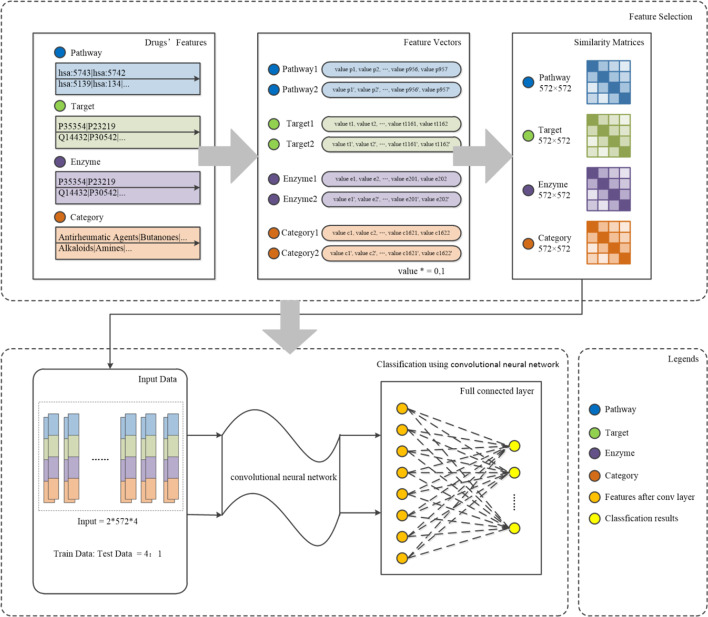
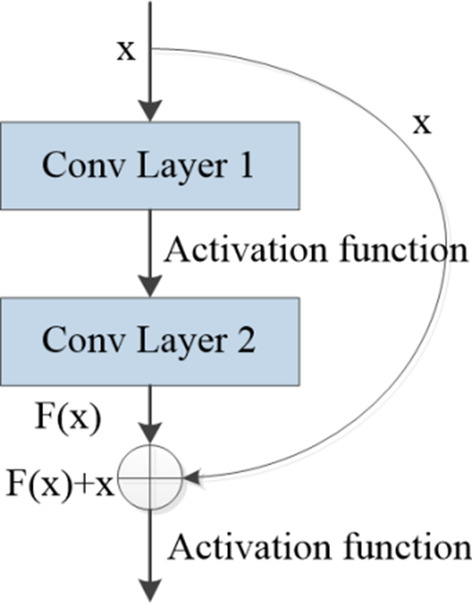
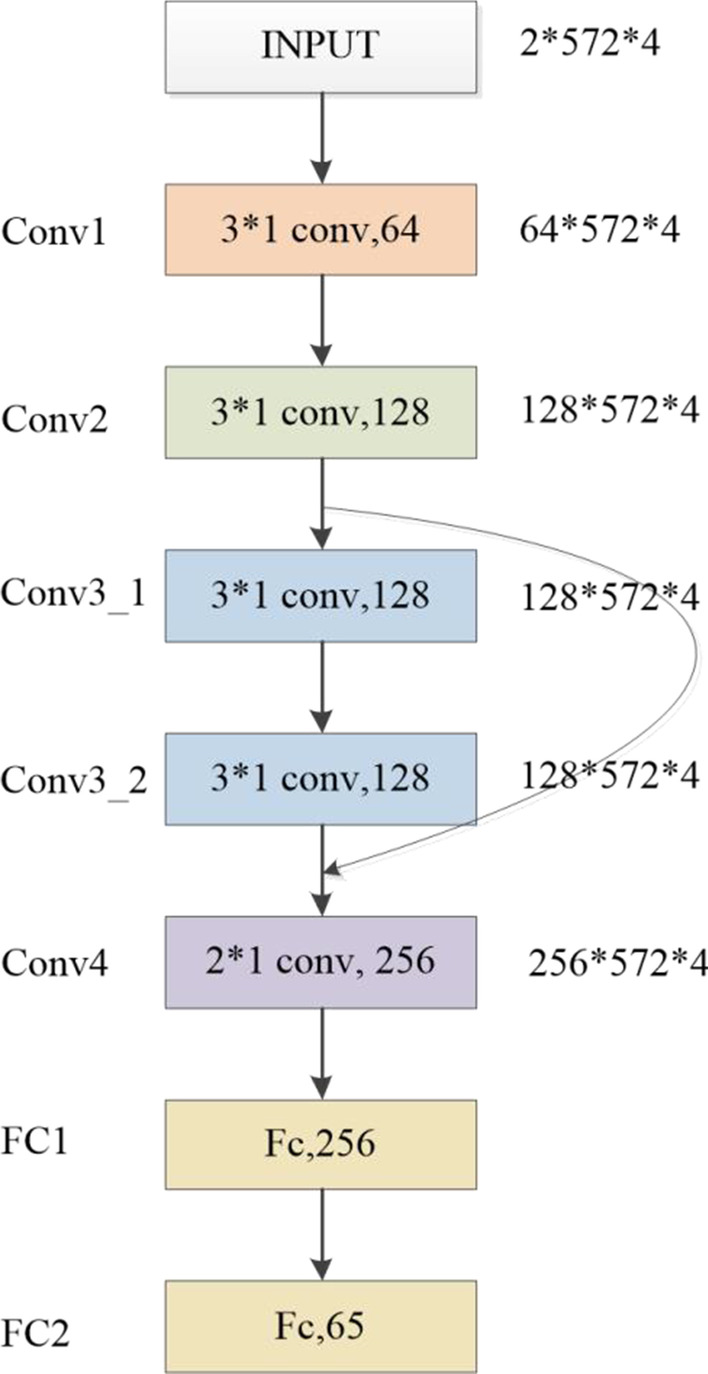
In this paper, we proposed a novel algorithm using a CNN architecture, named CNN-DDI, to predict drug-drug interactions. First, we extract feature interactions from drug categories, targets, pathways and enzymes as feature vectors and employ the Jaccard similarity as the measurement of drugs similarity. Then, based on the representation of features, we build a new convolution neural network as the DDIs' predictor.
The experimental results indicate that drug categories is effective as a new feature type applied to CNN-DDI method. And using multiple features is more informative and more effective than single feature. It can be concluded that CNN-DDI has more superiority than other existing algorithms on task of predicting DDIs.
药物-药物相互作用(DDIs)是指药物之间的相互反应。它们分为三种类型:协同作用、拮抗作用和无反应。作为一项快速发展的技术,预测与 DDI 相关的事件在药物开发和疾病诊断领域越来越受到关注和应用。在这项工作中,我们不仅研究了两种药物是否相互作用,还研究了特定的相互作用类型。我们提出了一种基于学习的方法,使用卷积神经网络来学习特征表示并预测 DDI。
本文提出了一种使用卷积神经网络架构的新算法,称为 CNN-DDI,用于预测药物-药物相互作用。首先,我们从药物类别、靶点、途径和酶中提取特征相互作用作为特征向量,并采用杰卡德相似性作为药物相似性的度量。然后,基于特征的表示,我们构建了一个新的卷积神经网络作为 DDI 的预测器。
实验结果表明,药物类别作为一种新的特征类型应用于 CNN-DDI 方法是有效的。使用多个特征比单个特征更具信息量和有效性。可以得出结论,CNN-DDI 在预测 DDI 任务上比其他现有算法具有更大的优势。