• 文献检索
  • 文档翻译
  • 深度研究
  • 学术资讯
  • Suppr Zotero 插件Zotero 插件
  • 邀请有礼
  • 套餐&价格
  • 历史记录
应用&插件
Suppr Zotero 插件Zotero 插件浏览器插件Mac 客户端Windows 客户端微信小程序
定价
高级版会员购买积分包购买API积分包
服务
文献检索文档翻译深度研究API 文档MCP 服务
关于我们
关于 Suppr公司介绍联系我们用户协议隐私条款
关注我们

Suppr 超能文献

核心技术专利:CN118964589B侵权必究
粤ICP备2023148730 号-1Suppr @ 2026

文献检索

告别复杂PubMed语法,用中文像聊天一样搜索,搜遍4000万医学文献。AI智能推荐,让科研检索更轻松。

立即免费搜索

文件翻译

保留排版,准确专业,支持PDF/Word/PPT等文件格式,支持 12+语言互译。

免费翻译文档

深度研究

AI帮你快速写综述,25分钟生成高质量综述,智能提取关键信息,辅助科研写作。

立即免费体验

新冠疫情肺部X光影像可解释诊断与严重程度评估的多任务注意力网络(Covid-MANet)

Covid-MANet: Multi-task attention network for explainable diagnosis and severity assessment of COVID-19 from CXR images.

作者信息

Sharma Ajay, Mishra Pramod Kumar

机构信息

Department of Computer Science, Institute of Science, Banaras Hindu University, Varanasi 221005, India.

出版信息

Pattern Recognit. 2022 Nov;131:108826. doi: 10.1016/j.patcog.2022.108826. Epub 2022 Jun 6.

DOI:10.1016/j.patcog.2022.108826
PMID:35698723
原文链接:https://pmc.ncbi.nlm.nih.gov/articles/PMC9170279/
Abstract

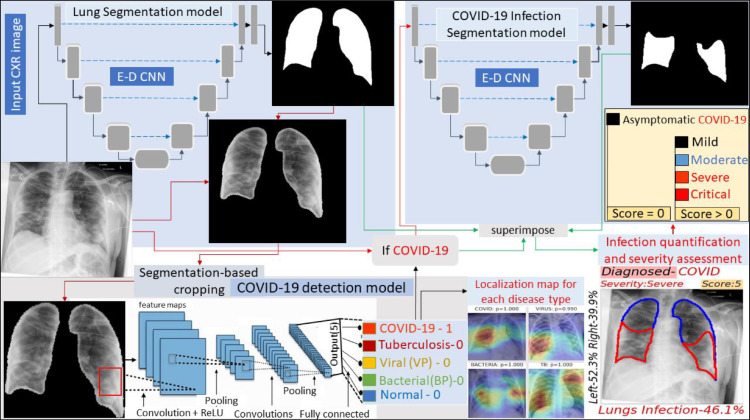
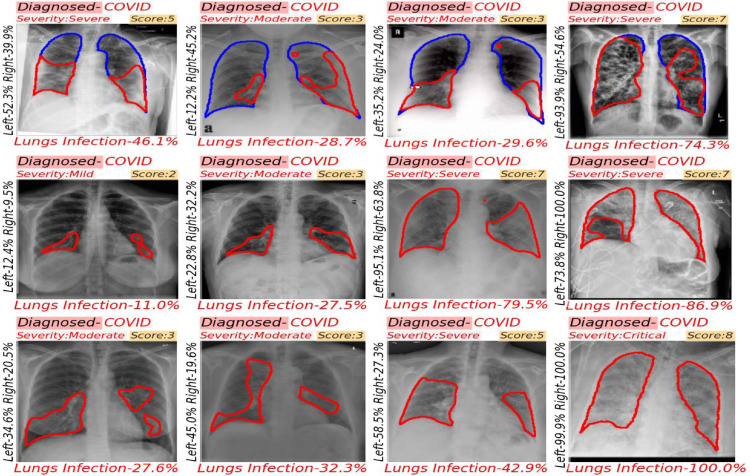
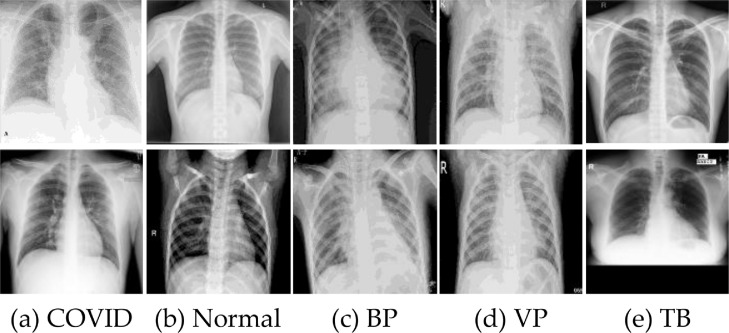
The devastating outbreak of Coronavirus Disease (COVID-19) cases in early 2020 led the world to face health crises. Subsequently, the exponential reproduction rate of COVID-19 disease can only be reduced by early diagnosis of COVID-19 infection cases correctly. The initial research findings reported that radiological examinations using CT and CXR modality have successfully reduced false negatives by RT-PCR test. This research study aims to develop an explainable diagnosis system for the detection and infection region quantification of COVID-19 disease. The existing research studies successfully explored deep learning approaches with higher performance measures but lacked generalization and interpretability for COVID-19 diagnosis. In this study, we address these issues by the Covid-MANet network, an automated end-to-end multi-task attention network that works for 5 classes in three stages for COVID-19 infection screening. The first stage of the Covid-MANet network localizes attention of the model to the relevant lungs region for disease recognition. The second stage of the Covid-MANet network differentiates COVID-19 cases from bacterial pneumonia, viral pneumonia, normal and tuberculosis cases, respectively. To improve the interpretation and explainability, three experiments have been conducted in exploration of the most coherent and appropriate classification approach. Moreover, the multi-scale attention model MA-DenseNet201 proposed for the classification of COVID-19 cases. The final stage of the Covid-MANet network quantifies the proportion of infection and severity of COVID-19 in the lungs. The COVID-19 cases are graded into more specific severity levels such as mild, moderate, severe, and critical as per the score assigned by the RALE scoring system. The MA-DenseNet201 classification model outperforms eight state-of-the-art CNN models, in terms of sensitivity and interpretation with lung localization network. The COVID-19 infection segmentation by UNet with DenseNet121 encoder achieves dice score of 86.15% outperforming UNet, UNet++, AttentionUNet, R2UNet, with VGG16, ResNet50 and DenseNet201 encoder. The proposed network not only classifies images based on the predicted label but also highlights the infection by segmentation/localization of model-focused regions to support explainable decisions. MA-DenseNet201 model with a segmentation-based cropping approach achieves maximum interpretation of 96% with COVID-19 sensitivity of 97.75%. Finally, based on class-varied sensitivity analysis Covid-MANet ensemble network of MA-DenseNet201, ResNet50 and MobileNet achieve 95.05% accuracy and 98.75% COVID-19 sensitivity. The proposed model is externally validated on an unseen dataset, yields 98.17% COVID-19 sensitivity.

摘要

2020年初,新型冠状病毒肺炎(COVID-19)病例的毁灭性爆发使世界面临健康危机。随后,只有通过正确早期诊断COVID-19感染病例,才能降低COVID-19疾病的指数繁殖率。初步研究结果报告称,使用CT和CXR模式的放射学检查已成功减少了RT-PCR检测中的假阴性。本研究旨在开发一种可解释的诊断系统,用于检测和量化COVID-19疾病的感染区域。现有研究成功探索了具有更高性能指标的深度学习方法,但在COVID-19诊断方面缺乏泛化性和可解释性。在本研究中,我们通过Covid-MANet网络解决这些问题,这是一种自动化的端到端多任务注意力网络,在三个阶段对COVID-19感染进行筛查,适用于5个类别。Covid-MANet网络的第一阶段将模型的注意力定位到相关肺部区域以进行疾病识别。Covid-MANet网络的第二阶段分别将COVID-19病例与细菌性肺炎、病毒性肺炎、正常病例和肺结核病例区分开来。为了提高解释性和可解释性,进行了三个实验以探索最连贯和合适的分类方法。此外,还提出了用于COVID-19病例分类的多尺度注意力模型MA-DenseNet201。Covid-MANet网络的最后阶段量化肺部COVID-19的感染比例和严重程度。根据RALE评分系统分配的分数,将COVID-19病例分为更具体的严重程度级别,如轻度、中度、重度和危重度。MA-DenseNet201分类模型在敏感性和肺部定位网络的可解释性方面优于八个最先进的CNN模型。使用DenseNet121编码器的UNet对COVID-19感染进行分割,骰子分数达到86.15%,优于使用VGG16、ResNet50和DenseNet201编码器的UNet、UNet++、AttentionUNet、R2UNet。所提出的网络不仅根据预测标签对图像进行分类,还通过对模型关注区域的分割/定位突出显示感染情况,以支持可解释的决策。采用基于分割的裁剪方法的MA-DenseNet201模型在COVID-19敏感性为97.75%时,最大解释率达到96%。最后,基于类别可变敏感性分析,MA-DenseNet201、ResNet50和MobileNet的Covid-MANet集成网络实现了95.05%的准确率和98.75%的COVID-19敏感性。所提出的模型在一个未见数据集上进行了外部验证,COVID-19敏感性为98.17%。
https://cdn.ncbi.nlm.nih.gov/pmc/blobs/dac0/9170279/3c66854da144/gr13_lrg.jpg
https://cdn.ncbi.nlm.nih.gov/pmc/blobs/dac0/9170279/cad3fa42b630/gr1_lrg.jpg
https://cdn.ncbi.nlm.nih.gov/pmc/blobs/dac0/9170279/4aab8bdab69e/gr2_lrg.jpg
https://cdn.ncbi.nlm.nih.gov/pmc/blobs/dac0/9170279/dafdd9ee9296/gr3_lrg.jpg
https://cdn.ncbi.nlm.nih.gov/pmc/blobs/dac0/9170279/e6017964f9a5/gr4_lrg.jpg
https://cdn.ncbi.nlm.nih.gov/pmc/blobs/dac0/9170279/663c2af148af/gr5_lrg.jpg
https://cdn.ncbi.nlm.nih.gov/pmc/blobs/dac0/9170279/5b00732cd124/gr6_lrg.jpg
https://cdn.ncbi.nlm.nih.gov/pmc/blobs/dac0/9170279/28dabf7d20a7/gr7_lrg.jpg
https://cdn.ncbi.nlm.nih.gov/pmc/blobs/dac0/9170279/e46daae7c0ad/gr8_lrg.jpg
https://cdn.ncbi.nlm.nih.gov/pmc/blobs/dac0/9170279/e242126a15db/gr9_lrg.jpg
https://cdn.ncbi.nlm.nih.gov/pmc/blobs/dac0/9170279/5306d9ec41fd/gr10_lrg.jpg
https://cdn.ncbi.nlm.nih.gov/pmc/blobs/dac0/9170279/a0dc1e04e03f/gr11_lrg.jpg
https://cdn.ncbi.nlm.nih.gov/pmc/blobs/dac0/9170279/0c4d9c690d13/gr12_lrg.jpg
https://cdn.ncbi.nlm.nih.gov/pmc/blobs/dac0/9170279/3c66854da144/gr13_lrg.jpg
https://cdn.ncbi.nlm.nih.gov/pmc/blobs/dac0/9170279/cad3fa42b630/gr1_lrg.jpg
https://cdn.ncbi.nlm.nih.gov/pmc/blobs/dac0/9170279/4aab8bdab69e/gr2_lrg.jpg
https://cdn.ncbi.nlm.nih.gov/pmc/blobs/dac0/9170279/dafdd9ee9296/gr3_lrg.jpg
https://cdn.ncbi.nlm.nih.gov/pmc/blobs/dac0/9170279/e6017964f9a5/gr4_lrg.jpg
https://cdn.ncbi.nlm.nih.gov/pmc/blobs/dac0/9170279/663c2af148af/gr5_lrg.jpg
https://cdn.ncbi.nlm.nih.gov/pmc/blobs/dac0/9170279/5b00732cd124/gr6_lrg.jpg
https://cdn.ncbi.nlm.nih.gov/pmc/blobs/dac0/9170279/28dabf7d20a7/gr7_lrg.jpg
https://cdn.ncbi.nlm.nih.gov/pmc/blobs/dac0/9170279/e46daae7c0ad/gr8_lrg.jpg
https://cdn.ncbi.nlm.nih.gov/pmc/blobs/dac0/9170279/e242126a15db/gr9_lrg.jpg
https://cdn.ncbi.nlm.nih.gov/pmc/blobs/dac0/9170279/5306d9ec41fd/gr10_lrg.jpg
https://cdn.ncbi.nlm.nih.gov/pmc/blobs/dac0/9170279/a0dc1e04e03f/gr11_lrg.jpg
https://cdn.ncbi.nlm.nih.gov/pmc/blobs/dac0/9170279/0c4d9c690d13/gr12_lrg.jpg
https://cdn.ncbi.nlm.nih.gov/pmc/blobs/dac0/9170279/3c66854da144/gr13_lrg.jpg

相似文献

1
Covid-MANet: Multi-task attention network for explainable diagnosis and severity assessment of COVID-19 from CXR images.新冠疫情肺部X光影像可解释诊断与严重程度评估的多任务注意力网络(Covid-MANet)
Pattern Recognit. 2022 Nov;131:108826. doi: 10.1016/j.patcog.2022.108826. Epub 2022 Jun 6.
2
MANet: A two-stage deep learning method for classification of COVID-19 from Chest X-ray images.MANet:一种用于从胸部X光图像中对新冠肺炎进行分类的两阶段深度学习方法。
Neurocomputing (Amst). 2021 Jul 5;443:96-105. doi: 10.1016/j.neucom.2021.03.034. Epub 2021 Mar 18.
3
A hybrid explainable ensemble transformer encoder for pneumonia identification from chest X-ray images.一种用于从胸部 X 光图像中识别肺炎的混合可解释集成式变压器编码器。
J Adv Res. 2023 Jun;48:191-211. doi: 10.1016/j.jare.2022.08.021. Epub 2022 Sep 7.
4
Segmentation-Based Classification Deep Learning Model Embedded with Explainable AI for COVID-19 Detection in Chest X-ray Scans.基于分割的分类深度学习模型,嵌入可解释人工智能用于胸部X光扫描中的新冠肺炎检测
Diagnostics (Basel). 2022 Sep 2;12(9):2132. doi: 10.3390/diagnostics12092132.
5
Image enhancement techniques on deep learning approaches for automated diagnosis of COVID-19 features using CXR images.基于深度学习方法的图像增强技术在使用胸部X光图像自动诊断新冠病毒特征中的应用
Multimed Tools Appl. 2022;81(29):42649-42690. doi: 10.1007/s11042-022-13486-8. Epub 2022 Aug 1.
6
Detection and Severity Classification of COVID-19 in CT Images Using Deep Learning.基于深度学习的CT图像中新型冠状病毒肺炎的检测与严重程度分类
Diagnostics (Basel). 2021 May 17;11(5):893. doi: 10.3390/diagnostics11050893.
7
PulDi-COVID: Chronic obstructive pulmonary (lung) diseases with COVID-19 classification using ensemble deep convolutional neural network from chest X-ray images to minimize severity and mortality rates.PulDi-COVID:利用胸部X光图像的集成深度卷积神经网络对患有COVID-19的慢性阻塞性肺疾病进行分类,以降低严重程度和死亡率。
Biomed Signal Process Control. 2023 Mar;81:104445. doi: 10.1016/j.bspc.2022.104445. Epub 2022 Nov 30.
8
Exploring the effect of image enhancement techniques on COVID-19 detection using chest X-ray images.探讨使用胸部 X 光图像的图像增强技术对 COVID-19 检测的影响。
Comput Biol Med. 2021 May;132:104319. doi: 10.1016/j.compbiomed.2021.104319. Epub 2021 Mar 11.
9
Deep Learning for Reliable Classification of COVID-19, MERS, and SARS from Chest X-ray Images.基于胸部X光图像的深度学习对COVID-19、中东呼吸综合征和严重急性呼吸综合征进行可靠分类
Cognit Comput. 2022;14(5):1752-1772. doi: 10.1007/s12559-021-09955-1. Epub 2022 Jan 11.
10
Explainable multi-instance and multi-task learning for COVID-19 diagnosis and lesion segmentation in CT images.用于CT图像中COVID-19诊断和病变分割的可解释多实例多任务学习
Knowl Based Syst. 2022 Sep 27;252:109278. doi: 10.1016/j.knosys.2022.109278. Epub 2022 Jun 27.

引用本文的文献

1
Designing a computer-assisted diagnosis system for cardiomegaly detection and radiology report generation.设计用于心脏肥大检测和放射学报告生成的计算机辅助诊断系统。
PLOS Digit Health. 2025 May 20;4(5):e0000835. doi: 10.1371/journal.pdig.0000835. eCollection 2025 May.
2
EF-net: Accurate edge segmentation for segmenting COVID-19 lung infections from CT images.EF-net:用于从CT图像中分割新冠肺炎肺部感染的精确边缘分割方法。
Heliyon. 2024 Nov 20;10(23):e40580. doi: 10.1016/j.heliyon.2024.e40580. eCollection 2024 Dec 15.
3
A multistage framework for respiratory disease detection and assessing severity in chest X-ray images.

本文引用的文献

1
State-of-the-art techniques using pre-operative brain MRI scans for survival prediction of glioblastoma multiforme patients and future research directions.使用术前脑部磁共振成像扫描预测多形性胶质母细胞瘤患者生存率的先进技术及未来研究方向。
Clin Transl Imaging. 2022;10(4):355-389. doi: 10.1007/s40336-022-00487-8. Epub 2022 Mar 3.
2
Modality specific U-Net variants for biomedical image segmentation: a survey.用于生物医学图像分割的特定模态U-Net变体:一项综述。
Artif Intell Rev. 2022;55(7):5845-5889. doi: 10.1007/s10462-022-10152-1. Epub 2022 Mar 1.
3
Clinical and Laboratory Approach to Diagnose COVID-19 Using Machine Learning.
用于胸部 X 射线图像中呼吸疾病检测和严重程度评估的多阶段框架。
Sci Rep. 2024 May 29;14(1):12380. doi: 10.1038/s41598-024-60861-6.
4
Automated Pulmonary Tuberculosis Severity Assessment on Chest X-rays.基于胸部 X 光片的自动肺结核严重程度评估。
J Imaging Inform Med. 2024 Oct;37(5):2173-2185. doi: 10.1007/s10278-024-01052-7. Epub 2024 Apr 8.
5
Analysis of vaccine responses after anti-CD20 maintenance in B-cell lymphoma in the Balearic Islands. A single reference center experience.巴利阿里群岛抗 CD20 维持治疗后对 B 细胞淋巴瘤疫苗反应的分析。单参考中心经验。
Front Immunol. 2023 Nov 1;14:1267485. doi: 10.3389/fimmu.2023.1267485. eCollection 2023.
6
E pluribus unum interpretable convolutional neural networks.可解释的卷积神经网络。
Sci Rep. 2023 Jul 14;13(1):11421. doi: 10.1038/s41598-023-38459-1.
7
MTMC-AUR2CNet: Multi-textural multi-class attention recurrent residual convolutional neural network for COVID-19 classification using chest X-ray images.MTMC-AUR2CNet:用于使用胸部X光图像进行新冠肺炎分类的多纹理多类别注意力循环残差卷积神经网络
Biomed Signal Process Control. 2023 Aug;85:104857. doi: 10.1016/j.bspc.2023.104857. Epub 2023 Mar 21.
8
Image enhancement techniques on deep learning approaches for automated diagnosis of COVID-19 features using CXR images.基于深度学习方法的图像增强技术在使用胸部X光图像自动诊断新冠病毒特征中的应用
Multimed Tools Appl. 2022;81(29):42649-42690. doi: 10.1007/s11042-022-13486-8. Epub 2022 Aug 1.
使用机器学习诊断新冠病毒病的临床与实验室方法
Interdiscip Sci. 2022 Jun;14(2):452-470. doi: 10.1007/s12539-021-00499-4. Epub 2022 Feb 8.
4
A fuzzy-enhanced deep learning approach for early detection of Covid-19 pneumonia from portable chest X-ray images.一种用于从便携式胸部X光图像中早期检测新冠病毒肺炎的模糊增强深度学习方法。
Neurocomputing (Amst). 2022 Apr 7;481:202-215. doi: 10.1016/j.neucom.2022.01.055. Epub 2022 Jan 21.
5
COVID-19 Detection Through Transfer Learning Using Multimodal Imaging Data.利用多模态成像数据通过迁移学习进行新冠病毒疾病检测
IEEE Access. 2020 Aug 14;8:149808-149824. doi: 10.1109/ACCESS.2020.3016780. eCollection 2020.
6
Validation of expert system enhanced deep learning algorithm for automated screening for COVID-Pneumonia on chest X-rays.验证专家系统增强的深度学习算法在胸部 X 光片上自动筛查 COVID-肺炎的性能。
Sci Rep. 2021 Dec 1;11(1):23210. doi: 10.1038/s41598-021-02003-w.
7
India perspective: CNN-LSTM hybrid deep learning model-based COVID-19 prediction and current status of medical resource availability.印度视角:基于CNN-LSTM混合深度学习模型的新冠疫情预测及医疗资源可及性现状
Soft comput. 2022;26(2):645-664. doi: 10.1007/s00500-021-06490-x. Epub 2021 Nov 19.
8
Artificial Intelligence Applied to Chest X-Ray Images for the Automatic Detection of COVID-19. A Thoughtful Evaluation Approach.应用于胸部X光图像以自动检测新冠病毒的人工智能。一种深思熟虑的评估方法。
IEEE Access. 2020 Dec 14;8:226811-226827. doi: 10.1109/ACCESS.2020.3044858. eCollection 2020.
9
COVID-19 infection localization and severity grading from chest X-ray images.通过胸部X光图像进行COVID-19感染定位及严重程度分级
Comput Biol Med. 2021 Dec;139:105002. doi: 10.1016/j.compbiomed.2021.105002. Epub 2021 Oct 30.
10
A Comprehensive Survey of COVID-19 Detection Using Medical Images.利用医学图像进行COVID-19检测的综合调查。
SN Comput Sci. 2021;2(6):434. doi: 10.1007/s42979-021-00823-1. Epub 2021 Aug 28.