School of Computer Science and Engineering, Central South University, Changsha 410083, China.
Department of Spine Surgery, The Second Xiangya Hospital, Central South University, Changsha 410011, China.
Comput Intell Neurosci. 2022 Jun 6;2022:7973404. doi: 10.1155/2022/7973404. eCollection 2022.
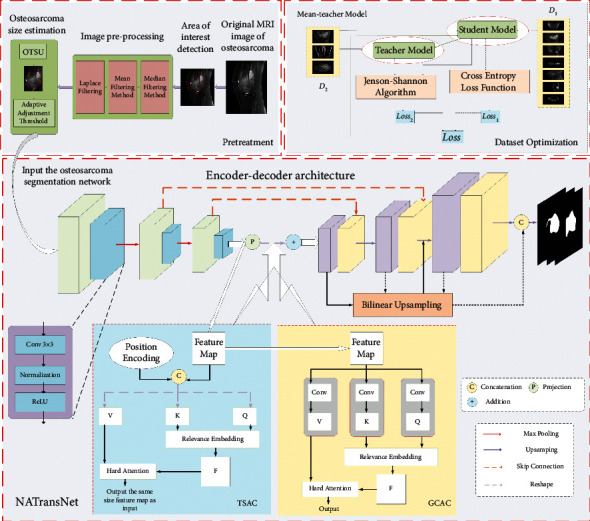
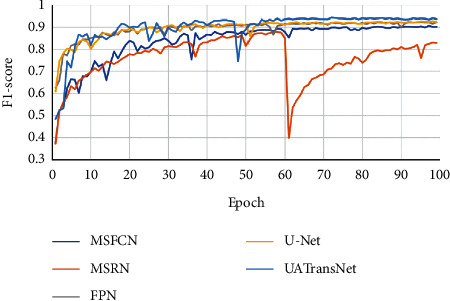
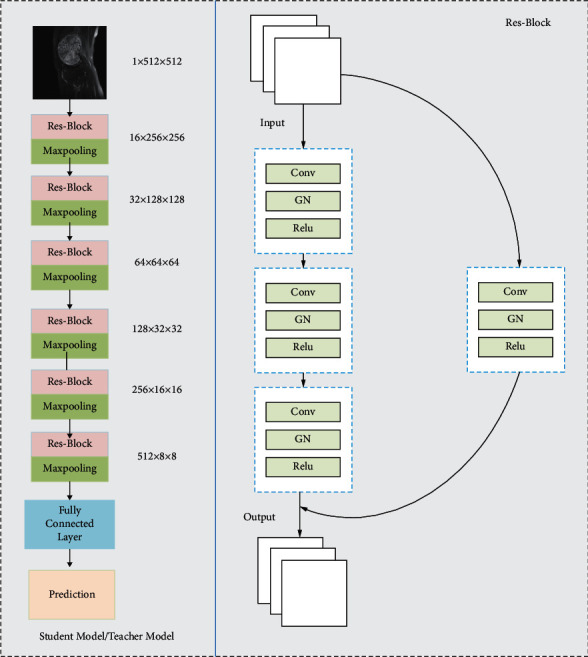
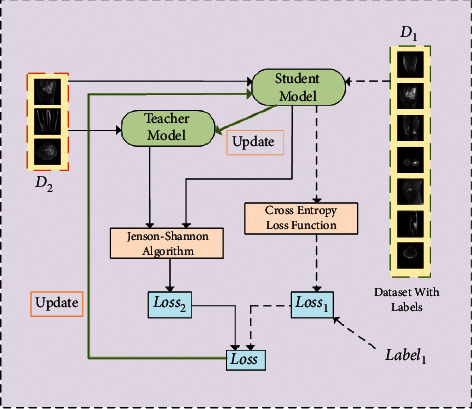
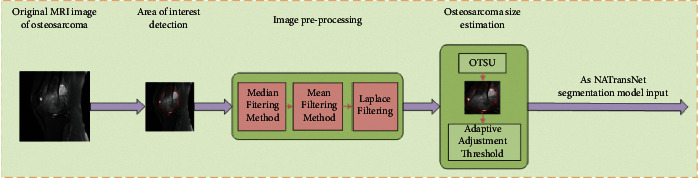
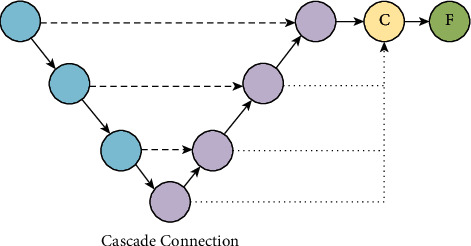
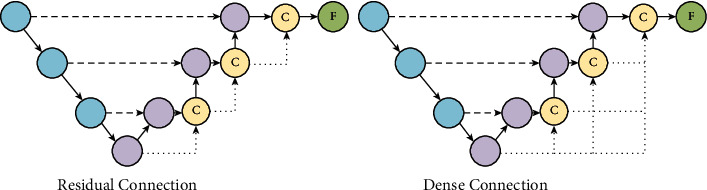
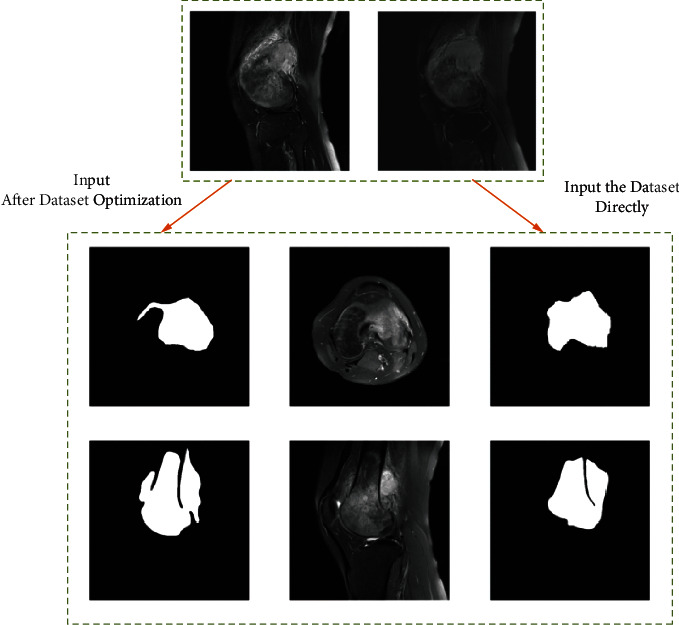
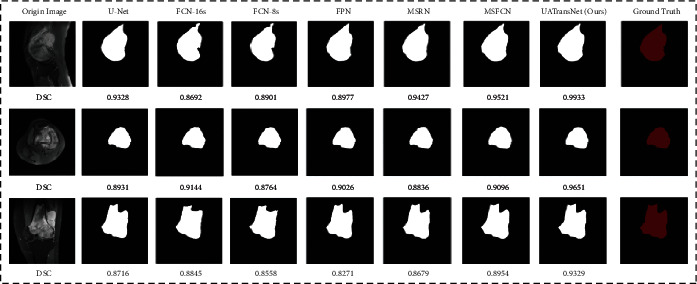
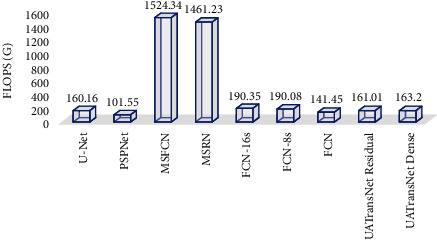
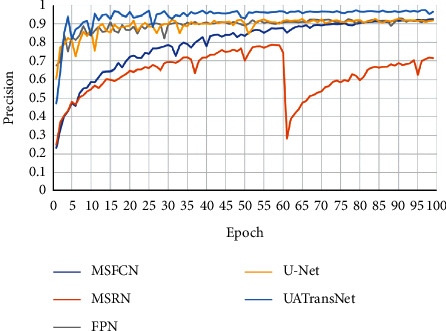
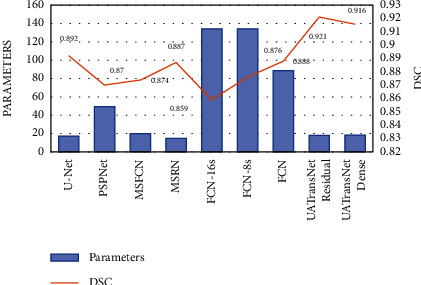
Osteosarcoma is one of the most common primary malignancies of bone in the pediatric and adolescent populations. The morphology and size of osteosarcoma MRI images often show great variability and randomness with different patients. In developing countries, with large populations and lack of medical resources, it is difficult to effectively address the difficulties of early diagnosis of osteosarcoma with limited physician manpower alone. In addition, with the proposal of precision medicine, existing MRI image segmentation models for osteosarcoma face the challenges of insufficient segmentation accuracy and high resource consumption. Inspired by transformer's self-attention mechanism, this paper proposes a lightweight osteosarcoma image segmentation architecture, UATransNet, by adding a multilevel guided self-aware attention module (MGAM) to the encoder-decoder architecture of U-Net. We successively perform dataset classification optimization and remove MRI image irrelevant background. Then, UATransNet is designed with transformer self-attention component (TSAC) and global context aggregation component (GCAC) at the bottom of the encoder-decoder architecture to perform integration of local features and global dependencies and aggregation of contexts to learned features. In addition, we apply dense residual learning to the convolution module and combined with multiscale jump connections, to improve the feature extraction capability. In this paper, we experimentally evaluate more than 80,000 osteosarcoma MRI images and show that our UATransNet yields more accurate segmentation performance. The IOU and DSC values of osteosarcoma are 0.922 ± 0.03 and 0.921 ± 0.04, respectively, and provide intuitive and accurate efficient decision information support for physicians.
骨肉瘤是儿童和青少年人群中最常见的原发性骨恶性肿瘤之一。骨肉瘤 MRI 图像的形态和大小在不同患者中常常表现出很大的可变性和随机性。在发展中国家,由于人口众多且医疗资源匮乏,仅靠有限的医生人力很难有效地解决骨肉瘤早期诊断的困难。此外,随着精准医学的提出,现有的骨肉瘤 MRI 图像分割模型面临着分割精度不足和资源消耗高的挑战。
受 Transformer 自注意力机制的启发,本文通过在 U-Net 的编解码器结构中添加多级引导自感知注意力模块(MGAM),提出了一种轻量级骨肉瘤图像分割架构 UATransNet。我们依次对数据集进行分类优化并去除 MRI 图像不相关的背景。然后,在编解码器结构的底部设计 UATransNet 的 Transformer 自注意力组件(TSAC)和全局上下文聚合组件(GCAC),以实现局部特征的整合和全局依赖关系的聚合以及上下文到学习特征的聚集。此外,我们在卷积模块中应用密集残差学习,并结合多尺度跳跃连接,以提高特征提取能力。
在本文中,我们对超过 80000 张骨肉瘤 MRI 图像进行了实验评估,结果表明我们的 UATransNet 具有更准确的分割性能。骨肉瘤的 IOUs 和 DSCs 值分别为 0.922±0.03 和 0.921±0.04,为医生提供了直观和准确的高效决策信息支持。