Li Hao, Huang Feiming, Liao Huiping, Li Zhandong, Feng Kaiyan, Huang Tao, Cai Yu-Dong
College of Biological and Food Engineering, Jilin Engineering Normal University, Changchun, China.
School of Life Sciences, Shanghai University, Shanghai, China.
Front Mol Biosci. 2022 Jul 19;9:952626. doi: 10.3389/fmolb.2022.952626. eCollection 2022.
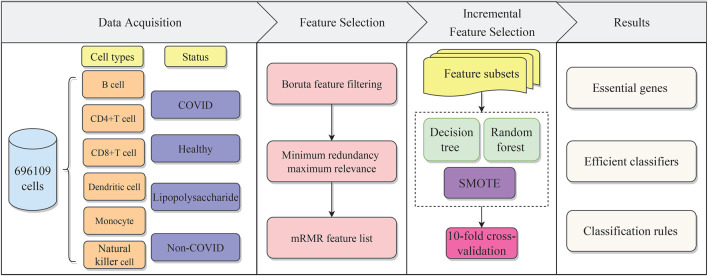
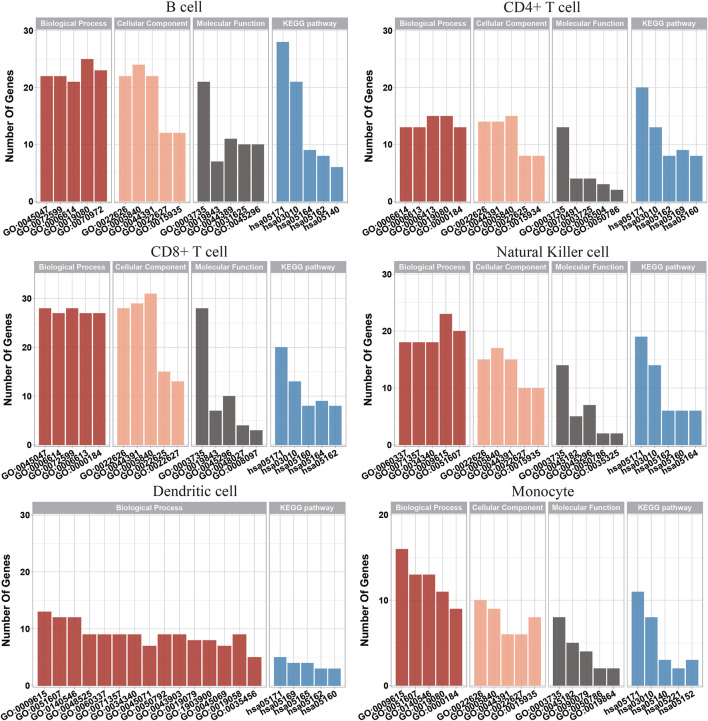
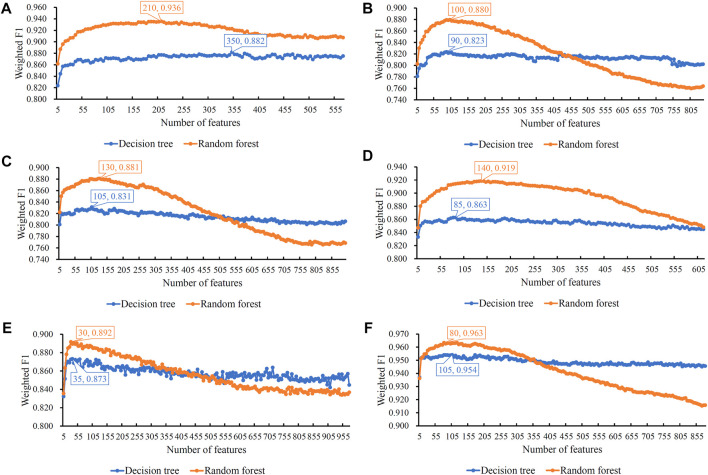
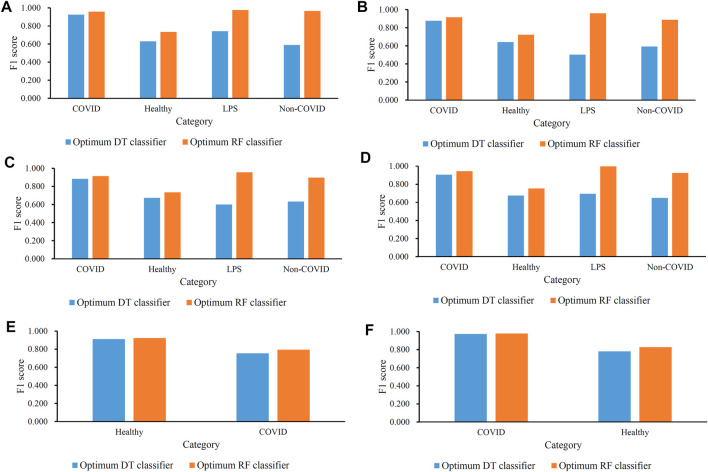
Notably, severe acute respiratory syndrome coronavirus 2 (SARS-CoV-2) has a tight relationship with the immune system. Human resistance to COVID-19 infection comprises two stages. The first stage is immune defense, while the second stage is extensive inflammation. This process is further divided into innate and adaptive immunity during the immune defense phase. These two stages involve various immune cells, including CD4 T cells, CD8 T cells, monocytes, dendritic cells, B cells, and natural killer cells. Various immune cells are involved and make up the complex and unique immune system response to COVID-19, providing characteristics that set it apart from other respiratory infectious diseases. In the present study, we identified cell markers for differentiating COVID-19 from common inflammatory responses, non-COVID-19 severe respiratory diseases, and healthy populations based on single-cell profiling of the gene expression of six immune cell types by using Boruta and mRMR feature selection methods. Some features such as IFI44L in B cells, S100A8 in monocytes, and NCR2 in natural killer cells are involved in the innate immune response of COVID-19. Other features such as ZFP36L2 in CD4 T cells can regulate the inflammatory process of COVID-19. Subsequently, the IFS method was used to determine the best feature subsets and classifiers in the six immune cell types for two classification algorithms. Furthermore, we established the quantitative rules used to distinguish the disease status. The results of this study can provide theoretical support for a more in-depth investigation of COVID-19 pathogenesis and intervention strategies.
值得注意的是,严重急性呼吸综合征冠状病毒2(SARS-CoV-2)与免疫系统关系密切。人类对COVID-19感染的抵抗力包括两个阶段。第一阶段是免疫防御,而第二阶段是广泛炎症。在免疫防御阶段,这个过程进一步分为固有免疫和适应性免疫。这两个阶段涉及多种免疫细胞,包括CD4 T细胞、CD8 T细胞、单核细胞、树突状细胞、B细胞和自然杀伤细胞。多种免疫细胞参与其中,构成了针对COVID-19的复杂而独特的免疫系统反应,赋予了它与其他呼吸道传染病不同的特征。在本研究中,我们基于六种免疫细胞类型基因表达的单细胞分析,使用Boruta和mRMR特征选择方法,确定了用于区分COVID-19与常见炎症反应、非COVID-19严重呼吸道疾病以及健康人群的细胞标志物。一些特征,如B细胞中的IFI44L、单核细胞中的S100A8和自然杀伤细胞中的NCR2,参与了COVID-19的固有免疫反应。其他特征,如CD4 T细胞中的ZFP36L2,可以调节COVID-19的炎症过程。随后,使用IFS方法为两种分类算法确定六种免疫细胞类型中的最佳特征子集和分类器。此外,我们建立了用于区分疾病状态的定量规则。本研究结果可为更深入研究COVID-19发病机制和干预策略提供理论支持。