Mohtasham Amiri Zahra, Tanideh Nader, Seddighi Anahita, Mokhtari Maral, Amini Masood, Shakouri Partovi Alborz, Manafi Amir, Hashemi Seyedeh Sara, Mehrabani Davood
Guilan Road Trauma Research Center, Department of Community Medicine, School of Medicine, Guilan University of Medical Sciences, Rasht, Iran.
Stem Cell and Transgenic Technology Research Center, Shiraz University of Medical Sciences, Shiraz, Iran.
World J Plast Surg. 2017 Sep;6(3):313-318.
Burn is the most devastating condition in emergency medicine leading to chronic disabilities. This study aimed to compare the effect of , silver sulfadiazine and alpha ointments on healing of burn wounds in rat.
Ninety-five rats were divided into 5 groups. Group 1 just underwent burn injury, and groups 2-5 received alpha ointment, silver sulfadiazine (SSD), gel base and extract, respectively. A hot plate was used for induction of a standard 3 degree burn wound. Burn wounds were macroscopically and microscopically evaluated on days 7, 14 and 21 after burn induction.
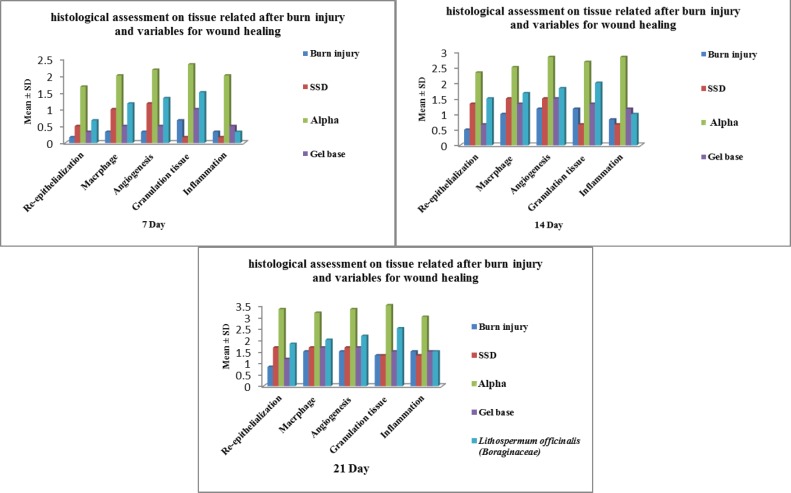
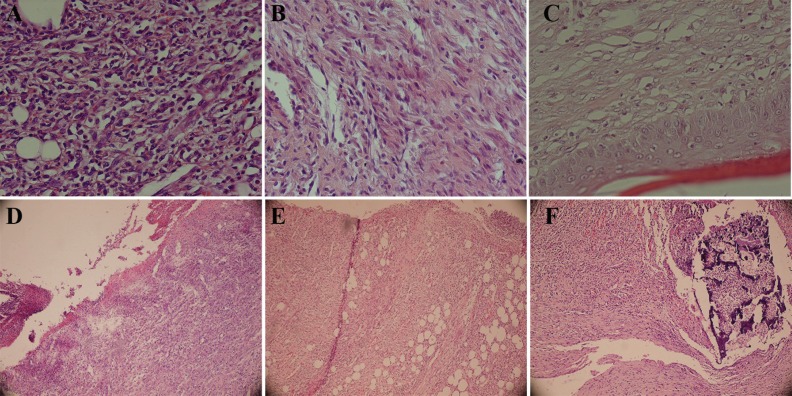
A decrease in the number of inflammatory cells was noted when and SSD were applied while the most inflammatory response was seen after administration of alpha ointment. The number of macrophages alone decreased after burn injury, while the frequency was the most when and alpha ointment were applied. Re-epithelialization, angiogenesis and formation of granulation tissue were the best in relation to and alpha ointment while, the worst results belonged to burn injury group and SSD regarding granulation tissue formation. Considering histological assessment, the best results were observed for scoring of inflammation, re-epithelialization, angiogenesis, formation of granulation tissue and number of macrophage when and alpha ointment were used after burn injury.
It can be concluded that topical application of as a non-toxic, inexpensive and easy to produce herbal can lead to a rapid epithelialization and wound healing and these findings can be added to the literature on burn wound healing.
烧伤是急诊医学中导致慢性残疾的最具毁灭性的病症。本研究旨在比较[未提及的物质]、磺胺嘧啶银和α软膏对大鼠烧伤创面愈合的影响。
将95只大鼠分为5组。第1组仅遭受烧伤,第2 - 5组分别接受α软膏、磺胺嘧啶银(SSD)、凝胶基质和[未提及的提取物]。使用热板诱导标准的三度烧伤创面。在烧伤诱导后第7、14和21天对烧伤创面进行宏观和微观评估。
应用[未提及的物质]和SSD时炎症细胞数量减少,而应用α软膏后观察到最强烈的炎症反应。仅烧伤后巨噬细胞数量减少,而应用[未提及的物质]和α软膏时频率最高。再上皮化、血管生成和肉芽组织形成在[未提及的物质]和α软膏方面最佳,而在肉芽组织形成方面,烧伤组和SSD的结果最差。考虑组织学评估,烧伤后使用[未提及的物质]和α软膏时,在炎症评分、再上皮化、血管生成、肉芽组织形成和巨噬细胞数量方面观察到最佳结果。
可以得出结论,局部应用[未提及的物质]作为一种无毒、廉价且易于生产的草药可导致快速上皮化和伤口愈合,这些发现可补充到烧伤创面愈合的文献中。