Service d'Hématologie Clinique et Thérapie Cellulaire, Hôpital Saint-Antoine, Sorbonne Université, INSERM UMRs 938, Paris, France.
INRAE, MetaGenoPolis, AgroParisTech, Micalis Institute, Université Paris-Saclay, 78350, Jouy-en-Josas, France.
Mucosal Immunol. 2021 May;14(3):547-554. doi: 10.1038/s41385-020-00365-4. Epub 2020 Dec 9.
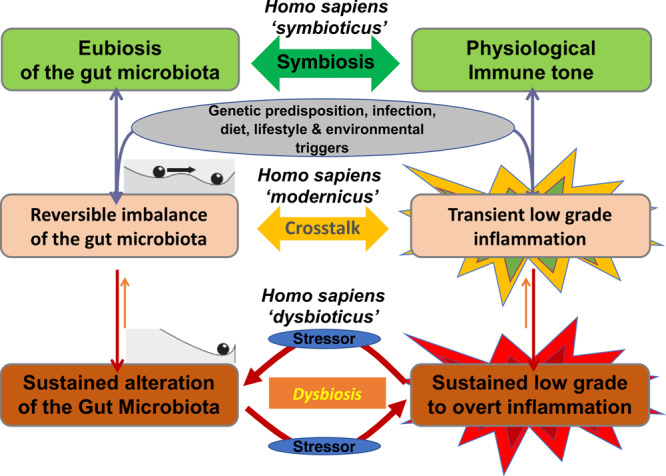
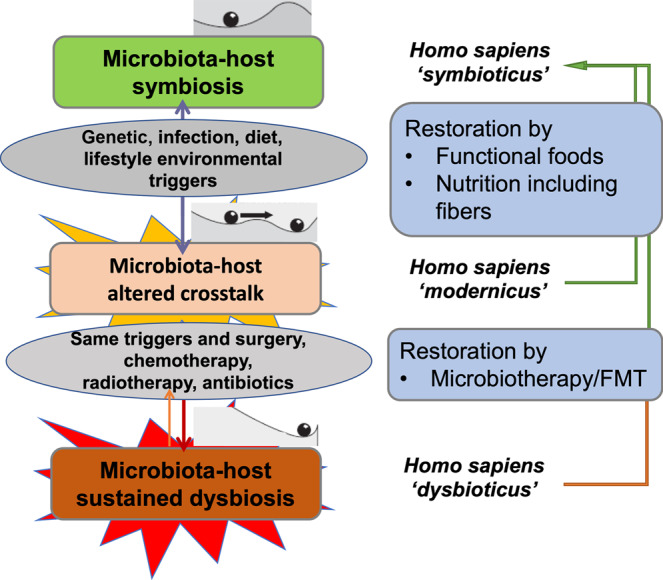
Humans share a core intestinal microbiome and yet human microbiome differs by genes, species, enterotypes (ecology), and gene count (microbial diversity). Achievement of microbiota metagenomic analysis has revealed that the microbiome gene count is a key stratifier of health in several immune disorders and clinical conditions. We review here the progress of the metagenomic pipeline analysis, and how this has allowed us to define the host-microbe symbiosis associated with a healthy status. The link between host-microbe symbiosis disruption, the so-called dysbiosis and chronic diseases or iatrogenic conditions is highlighted. Finally, opportunities to use microbiota modulation, with specific nutrients and/or live microbes, as a target for personalized nutrition and therapy for the maintenance, preservation, or restoration of host-microbe symbiosis are discussed.
人类拥有核心的肠道微生物组,但人类微生物组因基因、物种、肠型(生态)和基因数量(微生物多样性)而异。宏基因组分析的实现揭示了微生物组基因数量是几种免疫紊乱和临床状况中健康的关键分层因素。我们在这里回顾宏基因组分析管道分析的进展,以及这如何使我们能够定义与健康状态相关的宿主-微生物共生关系。强调了宿主-微生物共生关系破坏(所谓的失调)与慢性疾病或医源性疾病之间的联系。最后,讨论了利用微生物组调节(特定营养素和/或活体微生物)作为维持、保护或恢复宿主-微生物共生关系的个性化营养和治疗目标的机会。