Jülich Supercomputing Centre, Forschungszentrum Jülich, Germany.
Philos Trans A Math Phys Eng Sci. 2021 Apr 5;379(2194):20200097. doi: 10.1098/rsta.2020.0097. Epub 2021 Feb 15.
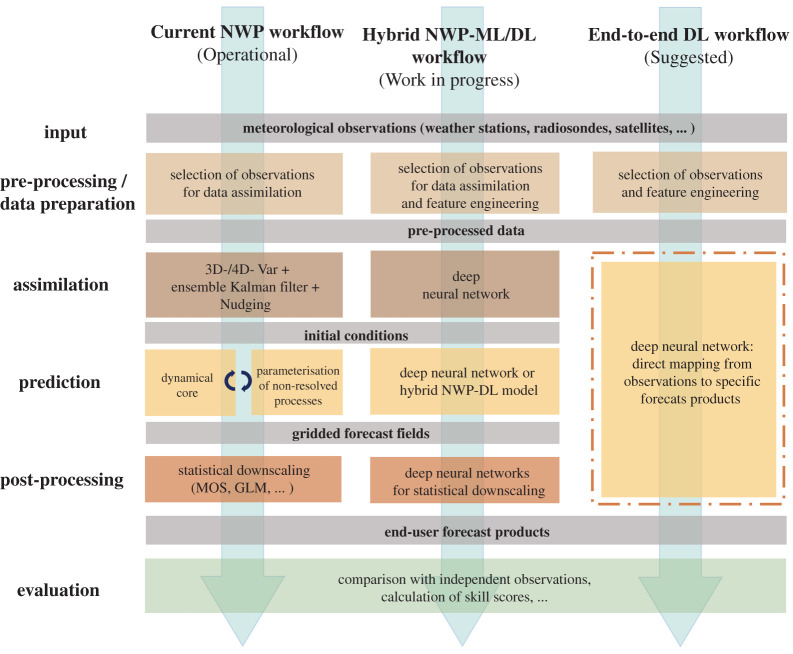
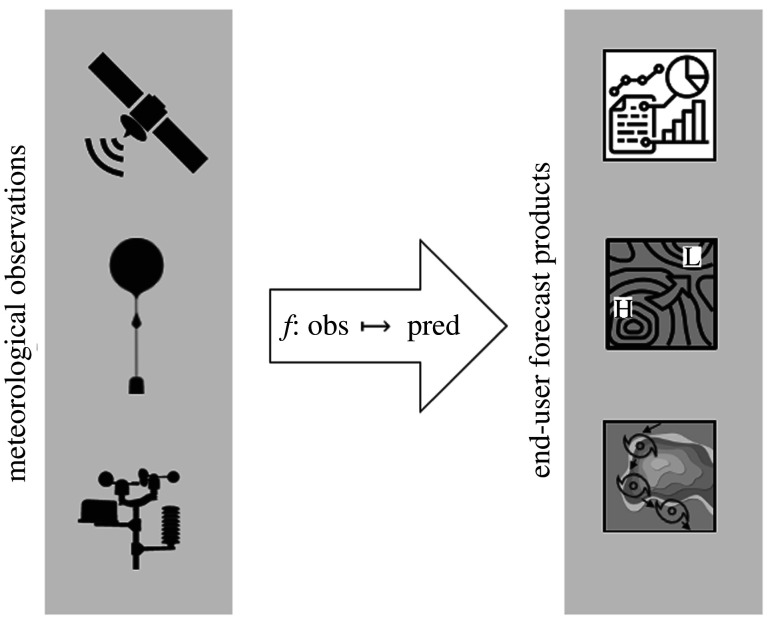
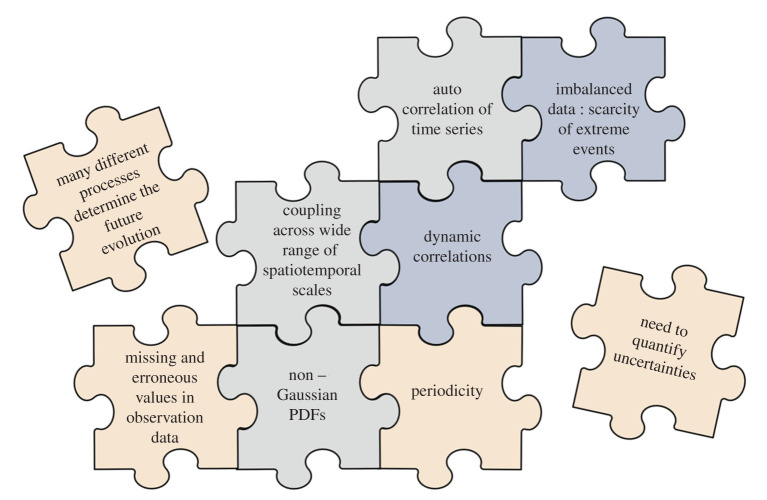
The recent hype about artificial intelligence has sparked renewed interest in applying the successful deep learning (DL) methods for image recognition, speech recognition, robotics, strategic games and other application areas to the field of meteorology. There is some evidence that better weather forecasts can be produced by introducing big data mining and neural networks into the weather prediction workflow. Here, we discuss the question of whether it is possible to completely replace the current numerical weather models and data assimilation systems with DL approaches. This discussion entails a review of state-of-the-art machine learning concepts and their applicability to weather data with its pertinent statistical properties. We think that it is not inconceivable that numerical weather models may one day become obsolete, but a number of fundamental breakthroughs are needed before this goal comes into reach. This article is part of the theme issue 'Machine learning for weather and climate modelling'.
最近,人工智能的炒作再次引发了将深度学习(DL)方法成功应用于图像识别、语音识别、机器人技术、战略游戏和其他应用领域的热潮,应用于气象领域。有一些证据表明,通过将大数据挖掘和神经网络引入天气预报工作流程,可以生成更好的天气预报。在这里,我们讨论了是否可以完全用 DL 方法替代当前的数值天气模型和数据同化系统的问题。这一讨论需要审查最先进的机器学习概念及其在具有相关统计特性的天气数据中的适用性。我们认为,数值天气模型有朝一日可能会变得过时,但在这一目标实现之前,还需要一些重大突破。本文是“天气和气候建模的机器学习”主题专刊的一部分。