BioMotion Center, Institute of Sports and Sports Science, Karlsruhe Institute of Technology, Karlsruhe, Germany.
PLoS One. 2021 Mar 31;16(3):e0247353. doi: 10.1371/journal.pone.0247353. eCollection 2021.
Air-rifle and small-bore shooting are fascinating Olympic sports due to their unique performance requirements for accuracy and precision.
The purpose of our study was to systematically research the literature to determine and summarize performance determinants in both air-rifle and small-bore shooting. Since some athletes participate internationally in both disciplines in competition, the disciplines must have some similarity in the performance structure. Therefore, we further investigated whether performance in air-rifle and small-bore shooting can be explained by the same performance determinants.
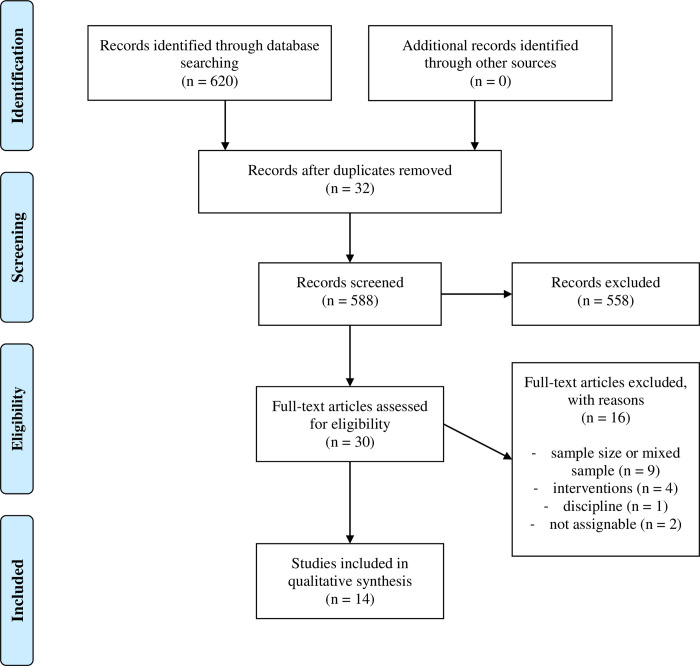
We systematically searched in four databases using combined keywords relevant to performance in air-rifle and small-bore shooting. The articles included had undergone peer-review and had a) a direct relation to shooting performance, b) an indirect relation by comparing the performance of shooters of different skill levels, and c) a practical relevance (directly controllable through training). After the quality of each article was assessed, the key data were extracted and summarized.
The fourteen articles included achieved an average of 60 ± 14% (range 30-80%) in quality assessment. Altogether, articles covered 268 subjects (32% female), of which 19% were elite- and 28% were national-level athletes. Sixteen performance determinants were investigated, which were divided into anthropometric, technical-coordinative, physiological and psychological categories. Both in air-rifle and small-bore shooting, rifle stability and body sway were found to differ between elite- and national-level athletes. In both disciplines, body sway seemed to have no influence on shot score in elite- and national-level athletes. Similarly, heart rate did not correlate with shot score at nearly all performance levels in both disciplines. In national-level air-rifle athletes, horizontal rifle stability, aiming accuracy and aiming time were found to affect shot score.
To be competitive at a national-level in air-rifle shooting, a highly developed aiming process is needed to achieve a high shot score. Lack of data prevented us from drawing evidence-based conclusions in elite-level air-rifle athletes and in small-bore shooting. Future research should investigate possible performance determinants both in air-rifle and in small-bore shooting, especially with elite-level athletes, to confirm or disprove existing findings. Further research should use more complex analyses to investigate the multifaceted processes associated with different performance determinants.
气步枪和小口径步枪射击是令人着迷的奥运运动项目,因为它们对准确性和精度有独特的表现要求。
我们的研究目的是系统地研究文献,以确定和总结气步枪和小口径步枪射击的表现决定因素。由于一些运动员在国际比赛中同时参加这两个项目,因此这两个项目在表现结构上必须有一些相似之处。因此,我们进一步研究了气步枪和小口径步枪射击的表现是否可以用相同的表现决定因素来解释。
我们使用与气步枪和小口径步枪射击表现相关的组合关键词,在四个数据库中进行了系统搜索。纳入的文章经过同行评审,具有以下特点:a)与射击表现直接相关;b)通过比较不同技能水平的射手的表现间接相关;c)具有实际相关性(可通过训练直接控制)。在评估每篇文章的质量后,提取并总结关键数据。
纳入的 14 篇文章的质量评估平均得分为 60±14%(范围为 30-80%)。这些文章总共涵盖了 268 名受试者(32%为女性),其中 19%为精英运动员,28%为国家级运动员。共研究了 16 个表现决定因素,分为人体测量学、技术协调、生理学和心理学类别。在气步枪和小口径步枪射击中,精英运动员和国家级运动员的步枪稳定性和身体晃动存在差异。在这两个项目中,身体晃动似乎对精英和国家级运动员的射击成绩没有影响。同样,心率在这两个项目的几乎所有表现水平上都与射击成绩无关。在国家级气步枪运动员中,发现水平步枪稳定性、瞄准准确性和瞄准时间会影响射击成绩。
要在国家级气步枪射击比赛中具有竞争力,需要高度发达的瞄准过程才能获得高分。由于缺乏数据,我们无法在精英级气步枪运动员和小口径步枪射击中得出基于证据的结论。未来的研究应调查气步枪和小口径步枪射击中的可能表现决定因素,特别是在精英级运动员中,以证实或反驳现有发现。进一步的研究应使用更复杂的分析方法来调查与不同表现决定因素相关的多方面过程。