National Center for International Research of Bio-targeting Theranostics, Guangxi Key Laboratory of Bio-targeting Theranostics, Collaborative Innovation Center for Targeting Tumor Diagnosis and Therapy, Guangxi Talent Highland of Bio-targeting Theranostics, Guangxi Medical University, Nanning, China.
Departments of Diagnostic Radiology, Surgery, Chemical and Biomolecular Engineering and Biomedical Engineering, Faculty of Engineering, Yong Loo Lin School of Medicine, National University of Singapore, Singapore, Singapore.
Cancer Sci. 2022 Jan;113(1):7-16. doi: 10.1111/cas.15194. Epub 2021 Nov 16.
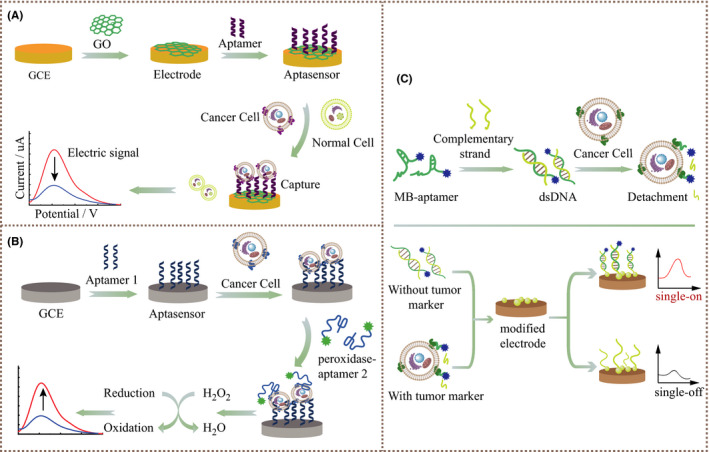
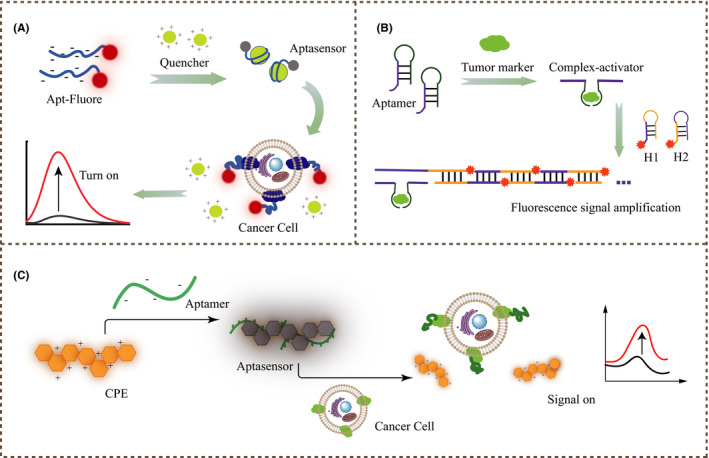
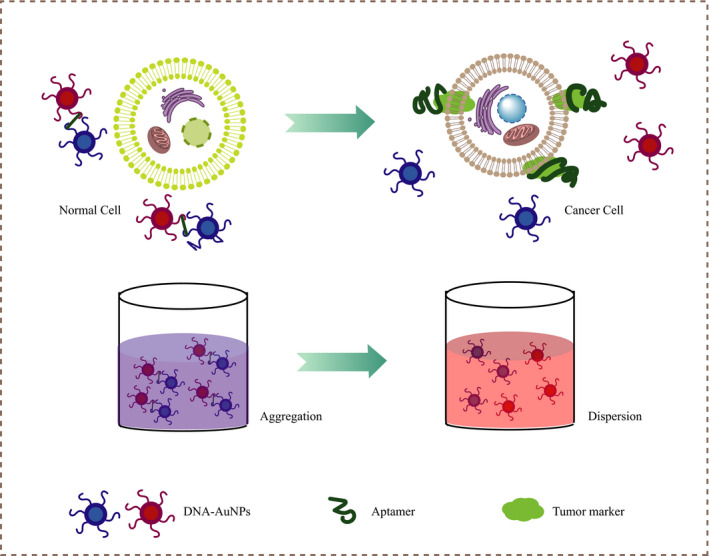
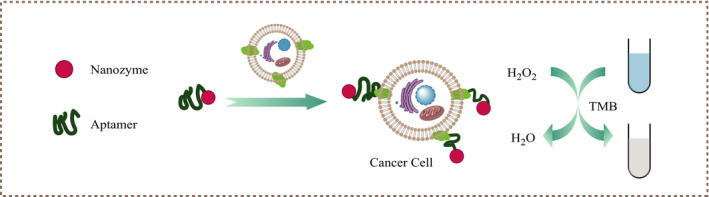
An aptamer is a short oligonucleotide chain that can specifically recognize targeting analytes. Due to its high specificity, low cost, and good biocompatibility, aptamers as the targeting elements of biosensors have been applied widely in non-invasive tumor imaging and treatment in situ to replace traditional methods. In this review, we will summarize recent advances in using aptamer-based biosensors in tumor diagnosis. After a brief introduction of the advantage of aptamers compared with enzyme sensors and immune sensors, the different sensing designs and mechanisms based on 3 signal transduction modes will be reviewed to cover different kinds of analytical methods, including: electrochemistry analysis, colorimetry analysis, and fluorescence analysis. Finally, the prospective advantages of aptamer-based biosensors in tumor theranostics and post-treatment monitoring are also evaluated in this review.
适配体是一段短的寡核苷酸链,能够特异性地识别靶向分析物。由于其高特异性、低成本和良好的生物相容性,适配体作为生物传感器的靶向元件已广泛应用于非侵入性肿瘤成像和原位治疗,以替代传统方法。在本综述中,我们将总结基于适配体的生物传感器在肿瘤诊断中的最新进展。在简要介绍了与酶传感器和免疫传感器相比适配体的优势之后,将根据 3 种信号转导模式回顾不同的传感设计和机制,以涵盖不同类型的分析方法,包括:电化学分析、比色分析和荧光分析。最后,在本综述中还评估了基于适配体的生物传感器在肿瘤治疗和治疗后监测中的优势。