Department of Computer Science, HITEC University, Taxila 47080, Pakistan.
College of Computer Science and Engineering, University of Ha'il, Ha'il 55211, Saudi Arabia.
Sensors (Basel). 2021 Nov 2;21(21):7286. doi: 10.3390/s21217286.
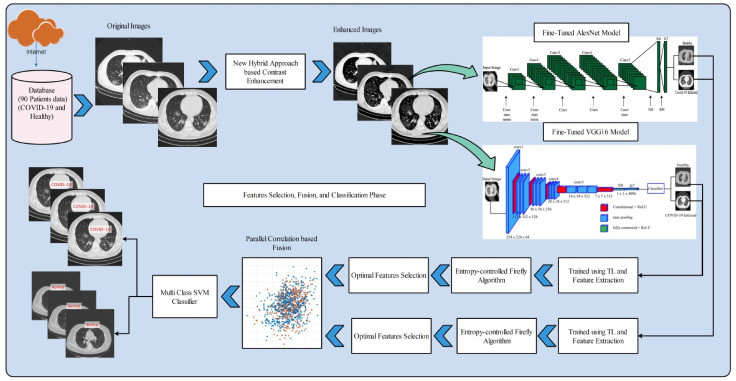
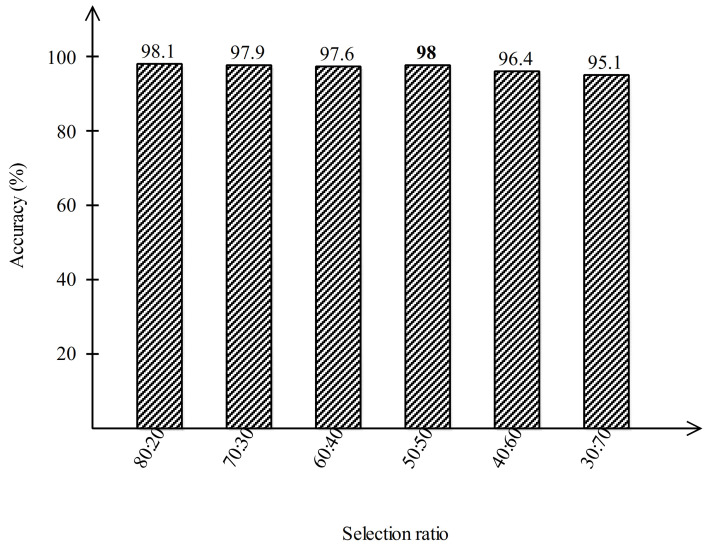
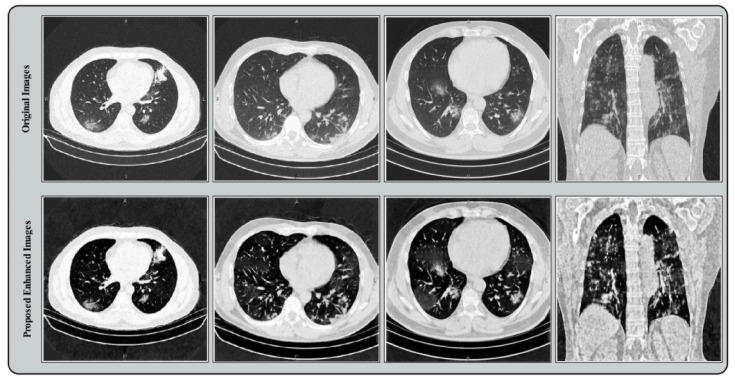
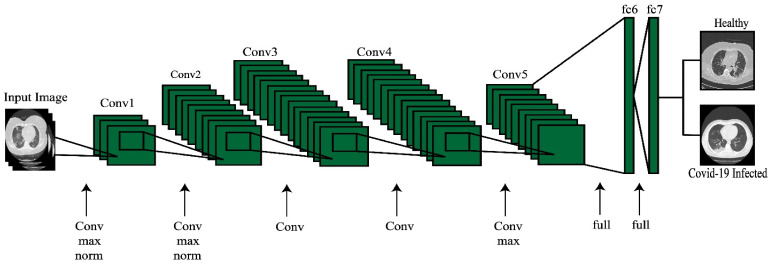
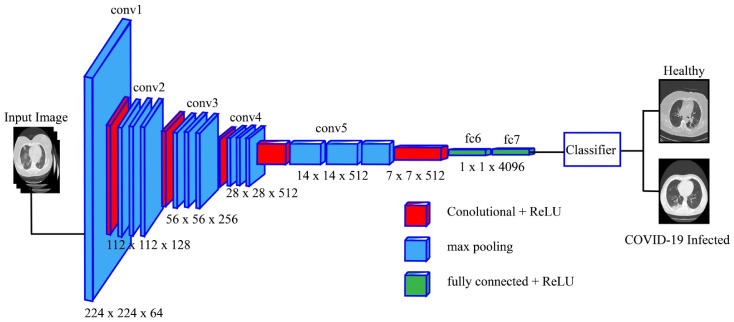
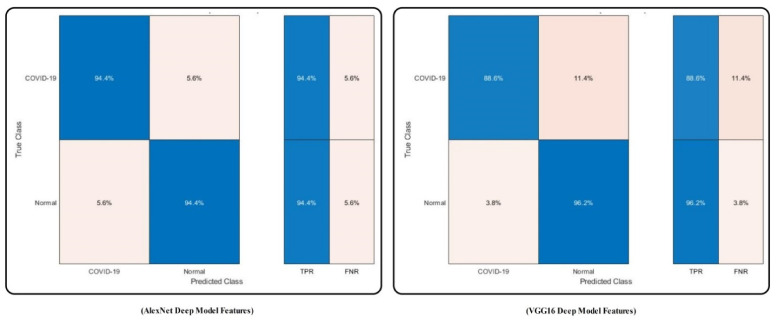
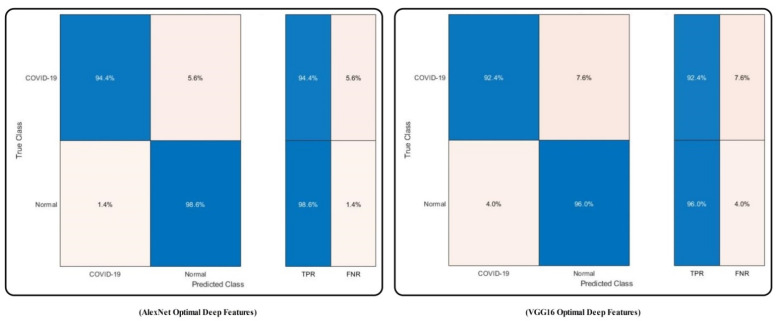
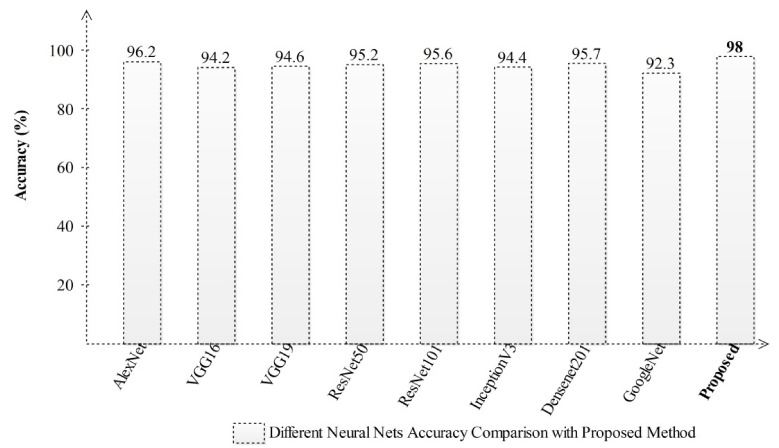
In healthcare, a multitude of data is collected from medical sensors and devices, such as X-ray machines, magnetic resonance imaging, computed tomography (CT), and so on, that can be analyzed by artificial intelligence methods for early diagnosis of diseases. Recently, the outbreak of the COVID-19 disease caused many deaths. Computer vision researchers support medical doctors by employing deep learning techniques on medical images to diagnose COVID-19 patients. Various methods were proposed for COVID-19 case classification. A new automated technique is proposed using parallel fusion and optimization of deep learning models. The proposed technique starts with a contrast enhancement using a combination of top-hat and Wiener filters. Two pre-trained deep learning models (AlexNet and VGG16) are employed and fine-tuned according to target classes (COVID-19 and healthy). Features are extracted and fused using a parallel fusion approach-parallel positive correlation. Optimal features are selected using the entropy-controlled firefly optimization method. The selected features are classified using machine learning classifiers such as multiclass support vector machine (MC-SVM). Experiments were carried out using the Radiopaedia database and achieved an accuracy of 98%. Moreover, a detailed analysis is conducted and shows the improved performance of the proposed scheme.
在医疗保健领域,从 X 光机、磁共振成像、计算机断层扫描(CT)等医疗传感器和设备中收集了大量数据,可以通过人工智能方法进行分析,以便早期诊断疾病。最近,COVID-19 疾病的爆发导致了许多人死亡。计算机视觉研究人员通过在医学图像上使用深度学习技术来支持医生诊断 COVID-19 患者。已经提出了各种用于 COVID-19 病例分类的方法。本文提出了一种使用深度学习模型的并行融合和优化来进行自动分类的新技术。该技术首先使用顶帽和维纳滤波器的组合进行对比度增强。然后使用两个预先训练的深度学习模型(AlexNet 和 VGG16),并根据目标类别(COVID-19 和健康)进行微调。使用并行融合方法-并行正相关来提取和融合特征。使用基于熵的萤火虫优化方法选择最优特征。使用多类支持向量机(MC-SVM)等机器学习分类器对选定的特征进行分类。实验是在 Radiopaedia 数据库上进行的,准确率达到 98%。此外,还进行了详细的分析,表明了所提出方案的性能得到了提高。