Institute of Control and Computation Engineering, University of Zielona Góra, Zielona Góra, Poland.
Computer Center, University of Zielona Góra, Zielona Góra, Poland.
Sci Rep. 2022 Jul 29;12(1):13010. doi: 10.1038/s41598-022-15830-2.
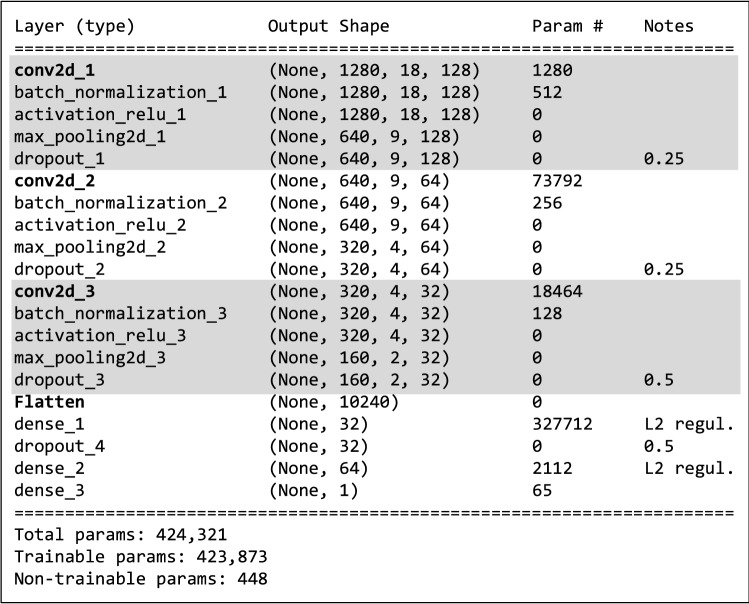
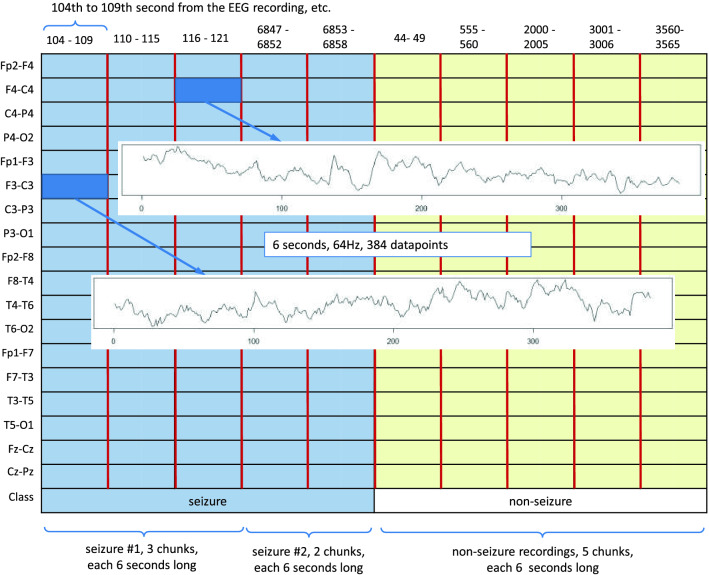
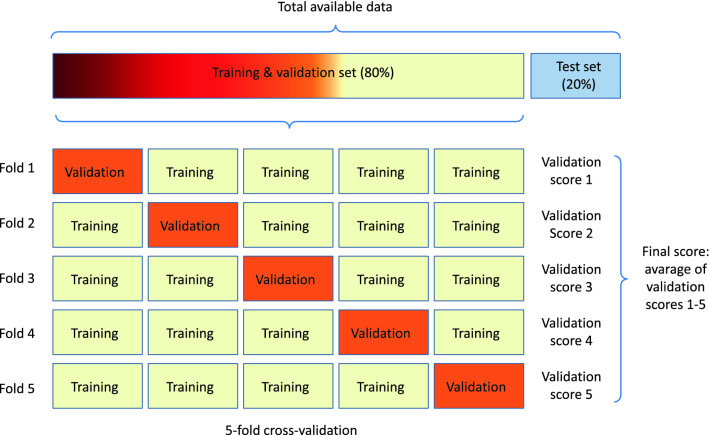
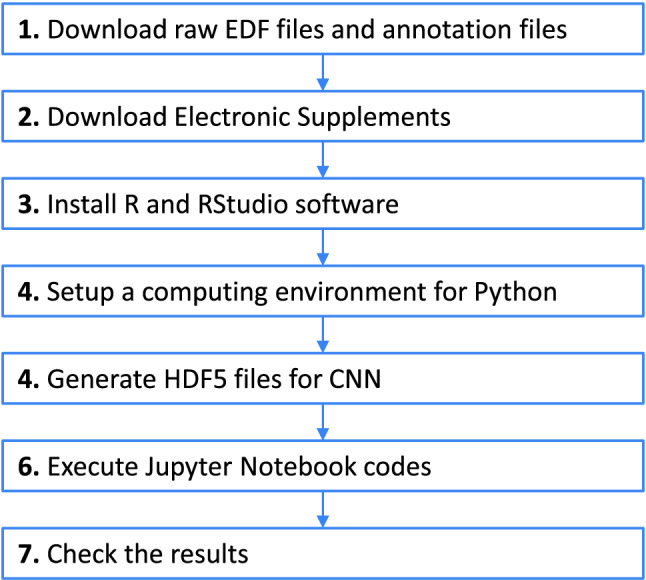
Electroencephalogram (EEG) is one of the main diagnostic tests for epilepsy. The detection of epileptic activity is usually performed by a human expert and is based on finding specific patterns in the multi-channel electroencephalogram. This is a difficult and time-consuming task, therefore various attempts are made to automate it using both conventional and Deep Learning (DL) techniques. Unfortunately, authors do not often provide sufficiently detailed and complete information to be able to reproduce their results. Our work is intended to fill this gap. Using a carefully selected 79 neonatal EEG recordings we developed a complete framework for seizure detection using DL approch. We share a ready to use R and Python codes which allow: (a) read raw European Data Format files, (b) read data files containing the seizure annotations made by human experts, (c) extract train, validation and test data, (d) create an appropriate Convolutional Neural Network (CNN) model, (e) train the model, (f) check the quality of the neural classifier, (g) save all learning results.
脑电图(EEG)是癫痫的主要诊断测试之一。癫痫活动的检测通常由人类专家进行,其基础是在多通道脑电图中找到特定模式。这是一项困难且耗时的任务,因此人们尝试使用传统技术和深度学习(DL)技术对其进行自动化。不幸的是,作者通常没有提供足够详细和完整的信息来重现他们的结果。我们的工作旨在填补这一空白。我们使用经过精心挑选的 79 份新生儿脑电图记录,开发了一个使用 DL 方法进行癫痫检测的完整框架。我们分享了一个可立即使用的 R 和 Python 代码,该代码允许:(a)读取原始欧洲数据格式文件,(b)读取包含人类专家做出的癫痫发作注释的数据文件,(c)提取训练、验证和测试数据,(d)创建适当的卷积神经网络(CNN)模型,(e)训练模型,(f)检查神经分类器的质量,(g)保存所有学习结果。