
使用目标检测方法自动识别粪便检查中的寄生虫产物。
Automatic recognition of parasitic products in stool examination using object detection approach.
作者信息
Naing Kaung Myat, Boonsang Siridech, Chuwongin Santhad, Kittichai Veerayuth, Tongloy Teerawat, Prommongkol Samrerng, Dekumyoy Paron, Watthanakulpanich Dorn
机构信息
Center of Industrial Robot and Automation (CiRA), College of Advanced Manufacturing Innovation, King Mongkut's Institute of Technology Ladkrabang, Bangkok, Thailand.
Department of Electrical Engineering, School of Engineering, King Mongkut's Institute of Technology Ladkrabang, Bangkok, Thailand.
出版信息
PeerJ Comput Sci. 2022 Aug 17;8:e1065. doi: 10.7717/peerj-cs.1065. eCollection 2022.
BACKGROUND
Object detection is a new artificial intelligence approach to morphological recognition and labeling parasitic pathogens. Due to the lack of equipment and trained personnel, artificial intelligence innovation for searching various parasitic products in stool examination will enable patients in remote areas of undeveloped countries to access diagnostic services. Because object detection is a developing approach that has been tested for its effectiveness in detecting intestinal parasitic objects such as protozoan cysts and helminthic eggs, it is suitable for use in rural areas where many factors supporting laboratory testing are still lacking. Based on the literatures, the YOLOv4-Tiny produces faster results and uses less memory with the support of low-end GPU devices. In comparison to the YOLOv3 and YOLOv3-Tiny models, this study aimed to propose an automated object detection approach, specifically the YOLOv4-Tiny model, for automatic recognition of intestinal parasitic products in stools.
METHODS
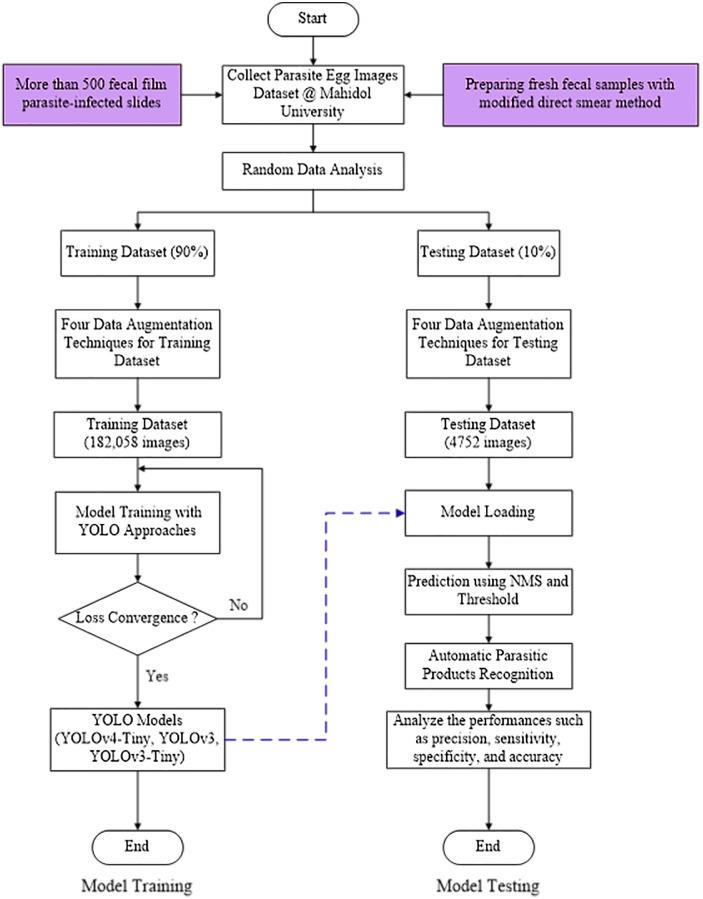
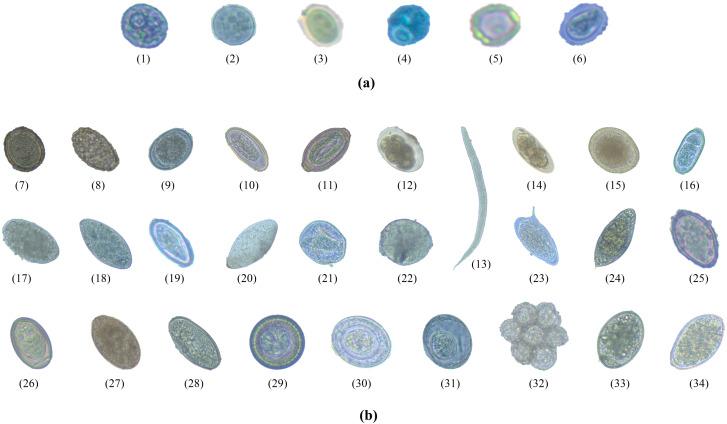
To identify protozoan cysts and helminthic eggs in human feces, the three YOLO approaches; YOLOv4-Tiny, YOLOv3, and YOLOv3-Tiny, were trained to recognize 34 intestinal parasitic classes using training of image dataset. Feces were processed using a modified direct smear method adapted from the simple direct smear and the modified Kato-Katz methods. The image dataset was collected from intestinal parasitic objects discovered during stool examination and the three YOLO models were trained to recognize the image datasets.
RESULTS
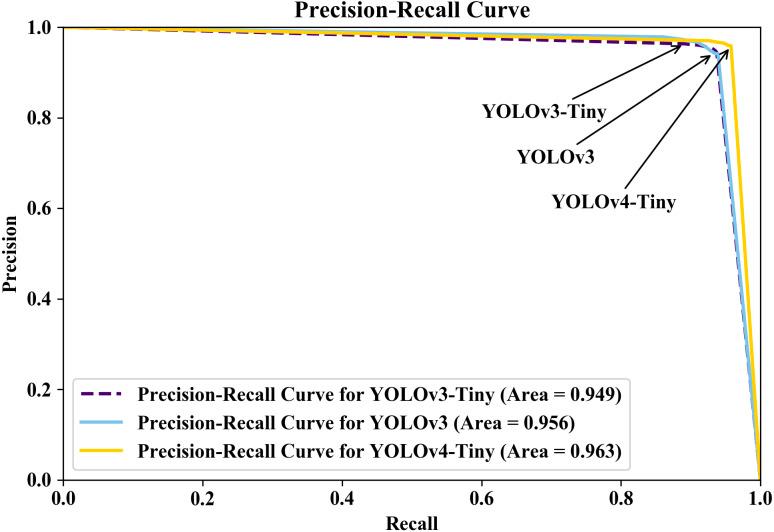
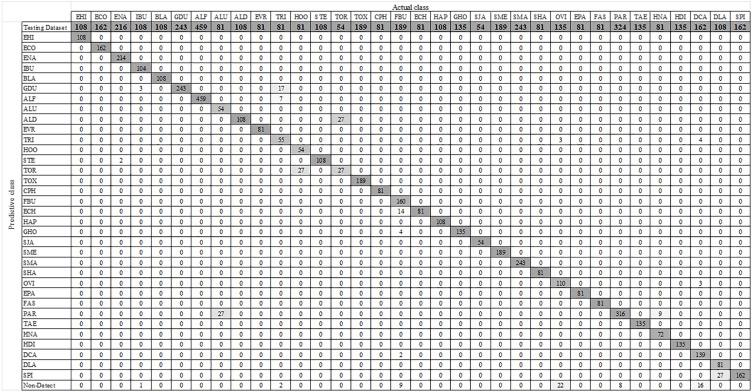
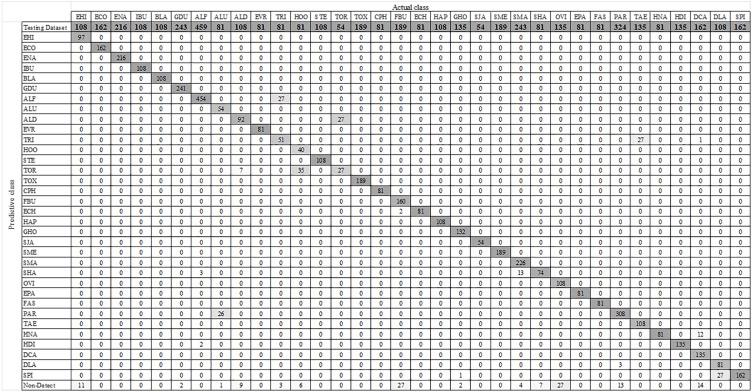
The non-maximum suppression technique and the threshold level were used to analyze the test dataset, yielding results of 96.25% precision and 95.08% sensitivity for YOLOv4-Tiny. Additionally, the YOLOv4-Tiny model had the best AUPRC performance of the three YOLO models, with a score of 0.963.
CONCLUSION
This study, to our knowledge, was the first to detect protozoan cysts and helminthic eggs in the 34 classes of intestinal parasitic objects in human stools.
背景
目标检测是一种用于形态识别和标记寄生性病原体的新型人工智能方法。由于缺乏设备和训练有素的人员,利用人工智能创新技术在粪便检查中搜索各种寄生虫产物,将使欠发达国家偏远地区的患者能够获得诊断服务。由于目标检测是一种正在发展的方法,已在检测肠道寄生虫物体(如原生动物囊肿和蠕虫卵)方面测试了其有效性,因此适用于许多支持实验室检测的因素仍然缺乏的农村地区。基于文献,YOLOv4-Tiny在低端GPU设备的支持下产生更快的结果且使用更少的内存。与YOLOv3和YOLOv3-Tiny模型相比,本研究旨在提出一种自动目标检测方法,特别是YOLOv4-Tiny模型,用于自动识别粪便中的肠道寄生虫产物。
方法
为了识别人类粪便中的原生动物囊肿和蠕虫卵,使用图像数据集训练了三种YOLO方法,即YOLOv4-Tiny、YOLOv3和YOLOv3-Tiny,以识别34种肠道寄生虫类别。粪便采用从简单直接涂片法和改良加藤-厚涂片法改编而来的改良直接涂片法进行处理。图像数据集从粪便检查中发现的肠道寄生虫物体中收集,并且训练这三种YOLO模型以识别图像数据集。
结果
使用非极大值抑制技术和阈值水平分析测试数据集,YOLOv4-Tiny的精确率为96.25%,灵敏度为95.08%。此外,YOLOv4-Tiny模型在三种YOLO模型中具有最佳的AUPRC性能,得分为0.963。
结论
据我们所知,本研究首次在人类粪便中的34种肠道寄生虫物体类别中检测到原生动物囊肿和蠕虫卵。

 Zotero 插件