• 文献检索
  • 文档翻译
  • 深度研究
  • 学术资讯
  • Suppr Zotero 插件Zotero 插件
  • 邀请有礼
  • 套餐&价格
  • 历史记录
应用&插件
Suppr Zotero 插件Zotero 插件浏览器插件Mac 客户端Windows 客户端微信小程序
定价
高级版会员购买积分包购买API积分包
服务
文献检索文档翻译深度研究API 文档MCP 服务
关于我们
关于 Suppr公司介绍联系我们用户协议隐私条款
关注我们

Suppr 超能文献

核心技术专利:CN118964589B侵权必究
粤ICP备2023148730 号-1Suppr @ 2026

文献检索

告别复杂PubMed语法,用中文像聊天一样搜索,搜遍4000万医学文献。AI智能推荐,让科研检索更轻松。

立即免费搜索

文件翻译

保留排版,准确专业,支持PDF/Word/PPT等文件格式,支持 12+语言互译。

免费翻译文档

深度研究

AI帮你快速写综述,25分钟生成高质量综述,智能提取关键信息,辅助科研写作。

立即免费体验

使用混合深度学习方法的皮肤癌良恶性自动分类

Automatic Malignant and Benign Skin Cancer Classification Using a Hybrid Deep Learning Approach.

作者信息

Bassel Atheer, Abdulkareem Amjed Basil, Alyasseri Zaid Abdi Alkareem, Sani Nor Samsiah, Mohammed Husam Jasim

机构信息

Computer Center, University of Anbar, Al-Anbar 31001, Iraq.

Center for Artifical Intelligence Technology, Faculty of Information Science and Technology, Universiti Kebangsaan Malaysia, Bangi 43600, Selangor Darul Ehsan, Malaysia.

出版信息

Diagnostics (Basel). 2022 Oct 12;12(10):2472. doi: 10.3390/diagnostics12102472.

DOI:10.3390/diagnostics12102472
PMID:36292161
原文链接:https://pmc.ncbi.nlm.nih.gov/articles/PMC9600556/
Abstract

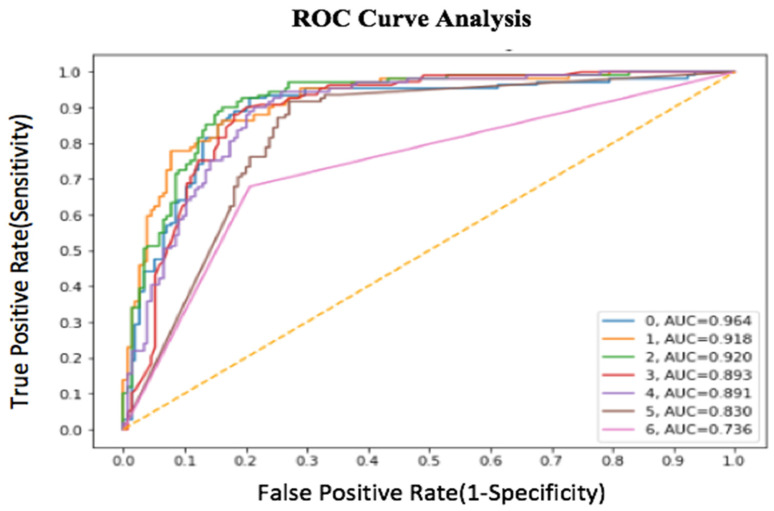
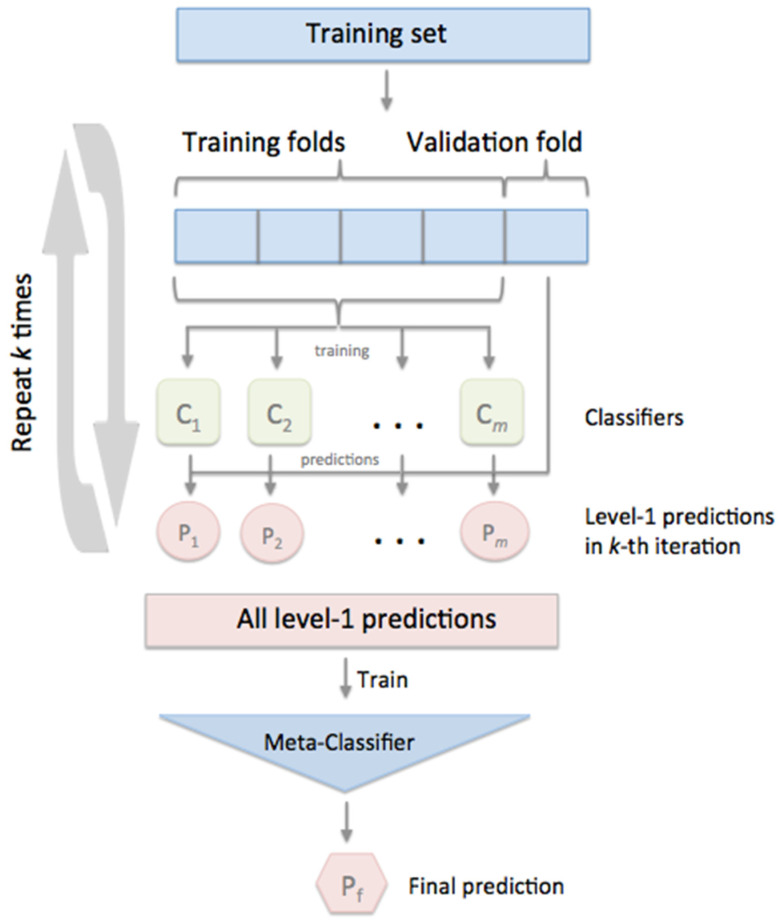
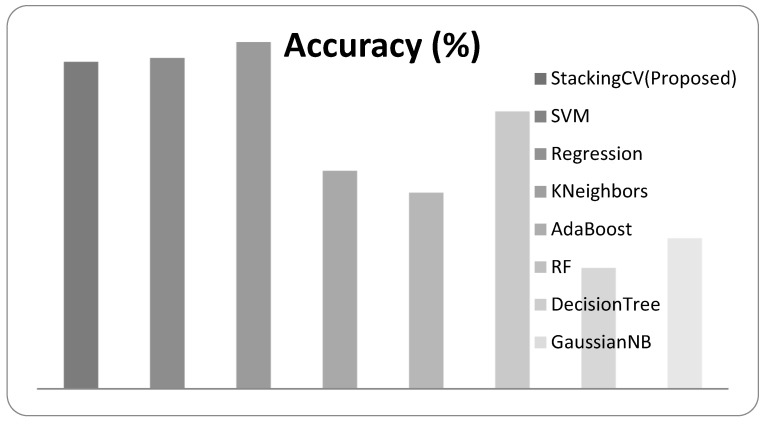
Skin cancer is one of the major types of cancer with an increasing incidence in recent decades. The source of skin cancer arises in various dermatologic disorders. Skin cancer is classified into various types based on texture, color, morphological features, and structure. The conventional approach for skin cancer identification needs time and money for the predicted results. Currently, medical science is utilizing various tools based on digital technology for the classification of skin cancer. The machine learning-based classification approach is the robust and dominant approach for automatic methods of classifying skin cancer. The various existing and proposed methods of deep neural network, support vector machine (SVM), neural network (NN), random forest (RF), and K-nearest neighbor are used for malignant and benign skin cancer identification. In this study, a method was proposed based on the stacking of classifiers with three folds towards the classification of melanoma and benign skin cancers. The system was trained with 1000 skin images with the categories of melanoma and benign. The training and testing were performed using 70 and 30 percent of the overall data set, respectively. The primary feature extraction was conducted using the Resnet50, Xception, and VGG16 methods. The accuracy, F1 scores, AUC, and sensitivity metrics were used for the overall performance evaluation. In the proposed Stacked CV method, the system was trained in three levels by deep learning, SVM, RF, NN, KNN, and logistic regression methods. The proposed method for Xception techniques of feature extraction achieved 90.9% accuracy and was stronger compared to ResNet50 and VGG 16 methods. The improvement and optimization of the proposed method with a large training dataset could provide a reliable and robust skin cancer classification system.

摘要

皮肤癌是近几十年来发病率不断上升的主要癌症类型之一。皮肤癌的发病源于各种皮肤病。根据质地、颜色、形态特征和结构,皮肤癌可分为多种类型。传统的皮肤癌识别方法需要花费时间和金钱来获取预测结果。目前,医学正在利用各种基于数字技术的工具对皮肤癌进行分类。基于机器学习的分类方法是皮肤癌自动分类方法中强大且占主导地位的方法。现有的和提出的各种深度神经网络、支持向量机(SVM)、神经网络(NN)、随机森林(RF)和K近邻方法被用于恶性和良性皮肤癌的识别。在本研究中,提出了一种基于分类器堆叠的方法,对黑色素瘤和良性皮肤癌进行三重分类。该系统使用1000张黑色素瘤和良性类别皮肤图像进行训练。训练和测试分别使用了整个数据集的70%和30%。主要特征提取采用Resnet50、Xception和VGG16方法。使用准确率、F1分数、AUC和灵敏度指标进行整体性能评估。在所提出的堆叠交叉验证(Stacked CV)方法中,该系统通过深度学习、SVM、RF、NN、KNN和逻辑回归方法分三个层次进行训练。所提出的用于Xception特征提取技术的方法达到了90.9%的准确率,比ResNet50和VGG 16方法更强。通过大量训练数据集对所提出的方法进行改进和优化,可以提供一个可靠且强大的皮肤癌分类系统。

https://cdn.ncbi.nlm.nih.gov/pmc/blobs/09df/9600556/f8085f21c2d3/diagnostics-12-02472-g013.jpg
https://cdn.ncbi.nlm.nih.gov/pmc/blobs/09df/9600556/2492da15cce8/diagnostics-12-02472-g006.jpg
https://cdn.ncbi.nlm.nih.gov/pmc/blobs/09df/9600556/e5f24f3e961f/diagnostics-12-02472-g001.jpg
https://cdn.ncbi.nlm.nih.gov/pmc/blobs/09df/9600556/20f4bb0974c4/diagnostics-12-02472-g002.jpg
https://cdn.ncbi.nlm.nih.gov/pmc/blobs/09df/9600556/524e8ff78477/diagnostics-12-02472-g003.jpg
https://cdn.ncbi.nlm.nih.gov/pmc/blobs/09df/9600556/4879c5e948ff/diagnostics-12-02472-g004.jpg
https://cdn.ncbi.nlm.nih.gov/pmc/blobs/09df/9600556/f2e9307e78fc/diagnostics-12-02472-g005.jpg
https://cdn.ncbi.nlm.nih.gov/pmc/blobs/09df/9600556/d0ead21755a7/diagnostics-12-02472-g007.jpg
https://cdn.ncbi.nlm.nih.gov/pmc/blobs/09df/9600556/246b6d1481b5/diagnostics-12-02472-g008.jpg
https://cdn.ncbi.nlm.nih.gov/pmc/blobs/09df/9600556/52618290fbd6/diagnostics-12-02472-g009.jpg
https://cdn.ncbi.nlm.nih.gov/pmc/blobs/09df/9600556/e01143708aaa/diagnostics-12-02472-g010.jpg
https://cdn.ncbi.nlm.nih.gov/pmc/blobs/09df/9600556/095ee9fc6fd5/diagnostics-12-02472-g011.jpg
https://cdn.ncbi.nlm.nih.gov/pmc/blobs/09df/9600556/10337533d513/diagnostics-12-02472-g012.jpg
https://cdn.ncbi.nlm.nih.gov/pmc/blobs/09df/9600556/f8085f21c2d3/diagnostics-12-02472-g013.jpg
https://cdn.ncbi.nlm.nih.gov/pmc/blobs/09df/9600556/2492da15cce8/diagnostics-12-02472-g006.jpg
https://cdn.ncbi.nlm.nih.gov/pmc/blobs/09df/9600556/e5f24f3e961f/diagnostics-12-02472-g001.jpg
https://cdn.ncbi.nlm.nih.gov/pmc/blobs/09df/9600556/20f4bb0974c4/diagnostics-12-02472-g002.jpg
https://cdn.ncbi.nlm.nih.gov/pmc/blobs/09df/9600556/524e8ff78477/diagnostics-12-02472-g003.jpg
https://cdn.ncbi.nlm.nih.gov/pmc/blobs/09df/9600556/4879c5e948ff/diagnostics-12-02472-g004.jpg
https://cdn.ncbi.nlm.nih.gov/pmc/blobs/09df/9600556/f2e9307e78fc/diagnostics-12-02472-g005.jpg
https://cdn.ncbi.nlm.nih.gov/pmc/blobs/09df/9600556/d0ead21755a7/diagnostics-12-02472-g007.jpg
https://cdn.ncbi.nlm.nih.gov/pmc/blobs/09df/9600556/246b6d1481b5/diagnostics-12-02472-g008.jpg
https://cdn.ncbi.nlm.nih.gov/pmc/blobs/09df/9600556/52618290fbd6/diagnostics-12-02472-g009.jpg
https://cdn.ncbi.nlm.nih.gov/pmc/blobs/09df/9600556/e01143708aaa/diagnostics-12-02472-g010.jpg
https://cdn.ncbi.nlm.nih.gov/pmc/blobs/09df/9600556/095ee9fc6fd5/diagnostics-12-02472-g011.jpg
https://cdn.ncbi.nlm.nih.gov/pmc/blobs/09df/9600556/10337533d513/diagnostics-12-02472-g012.jpg
https://cdn.ncbi.nlm.nih.gov/pmc/blobs/09df/9600556/f8085f21c2d3/diagnostics-12-02472-g013.jpg

相似文献

1
Automatic Malignant and Benign Skin Cancer Classification Using a Hybrid Deep Learning Approach.使用混合深度学习方法的皮肤癌良恶性自动分类
Diagnostics (Basel). 2022 Oct 12;12(10):2472. doi: 10.3390/diagnostics12102472.
2
Bayesian optimized multimodal deep hybrid learning approach for tomato leaf disease classification.贝叶斯优化多模态深度混合学习方法在番茄叶部病害分类中的应用。
Sci Rep. 2024 Sep 14;14(1):21525. doi: 10.1038/s41598-024-72237-x.
3
Development of an Artificial Intelligence-Based Breast Cancer Detection Model by Combining Mammograms and Medical Health Records.通过结合乳房X光照片和医疗健康记录开发基于人工智能的乳腺癌检测模型。
Diagnostics (Basel). 2023 Jan 17;13(3):346. doi: 10.3390/diagnostics13030346.
4
Deep Learning Based Skin Lesion Segmentation and Classification of Melanoma Using Support Vector Machine (SVM).基于深度学习的皮肤病变分割以及使用支持向量机(SVM)对黑色素瘤进行分类
Asian Pac J Cancer Prev. 2019 May 25;20(5):1555-1561. doi: 10.31557/APJCP.2019.20.5.1555.
5
A Non-Invasive Interpretable Diagnosis of Melanoma Skin Cancer Using Deep Learning and Ensemble Stacking of Machine Learning Models.一种使用深度学习和机器学习模型集成堆叠的黑色素瘤皮肤癌无创可解释诊断方法。
Diagnostics (Basel). 2022 Mar 17;12(3):726. doi: 10.3390/diagnostics12030726.
6
COVID-19 diagnosis: A comprehensive review of pre-trained deep learning models based on feature extraction algorithm.COVID-19诊断:基于特征提取算法的预训练深度学习模型综合综述
Results Eng. 2023 Jun;18:101020. doi: 10.1016/j.rineng.2023.101020. Epub 2023 Mar 16.
7
Differentiation of fat-poor angiomyolipoma from clear cell renal cell carcinoma in contrast-enhanced MDCT images using quantitative feature classification.基于定量特征分类的 MDCT 增强图像鉴别乏脂性血管平滑肌脂肪瘤与透明细胞肾细胞癌
Med Phys. 2017 Jul;44(7):3604-3614. doi: 10.1002/mp.12258. Epub 2017 Jun 9.
8
Performance evaluation of E-VGG19 model: Enhancing real-time skin cancer detection and classification.E-VGG19模型的性能评估:增强皮肤癌实时检测与分类
Heliyon. 2024 May 17;10(10):e31488. doi: 10.1016/j.heliyon.2024.e31488. eCollection 2024 May 30.
9
Machine learning for evolutive lymphoma and residual masses recognition in whole body diffusion weighted magnetic resonance images.机器学习在全身弥散加权磁共振图像中对淋巴瘤和残留肿块的识别。
Comput Methods Programs Biomed. 2021 Sep;209:106320. doi: 10.1016/j.cmpb.2021.106320. Epub 2021 Aug 4.
10
A Hybrid Deep Learning CNN model for COVID-19 detection from chest X-rays.一种用于从胸部X光片中检测新冠肺炎的混合深度学习卷积神经网络模型。
Heliyon. 2024 Feb 29;10(5):e26938. doi: 10.1016/j.heliyon.2024.e26938. eCollection 2024 Mar 15.

引用本文的文献

1
A deep learning framework for automated early diagnosis and classification of skin cancer lesions in dermoscopy images.一种用于皮肤镜图像中皮肤癌病变自动早期诊断和分类的深度学习框架。
Sci Rep. 2025 Aug 25;15(1):31234. doi: 10.1038/s41598-025-15655-9.
2
An explainable and federated deep learning framework for skin cancer diagnosis.一种用于皮肤癌诊断的可解释联邦深度学习框架。
PLoS One. 2025 Jul 16;20(7):e0324393. doi: 10.1371/journal.pone.0324393. eCollection 2025.
3
Deep learning-based sex estimation of 3D hyoid bone models in a Croatian population using adapted PointNet++ network.

本文引用的文献

1
The Deep Learning Solutions on Lossless Compression Methods for Alleviating Data Load on IoT Nodes in Smart Cities.用于减轻智慧城市中物联网节点数据负载的无损压缩方法的深度学习解决方案
Sensors (Basel). 2021 Jun 20;21(12):4223. doi: 10.3390/s21124223.
2
An Efficient Skin Cancer Diagnostic System Using Bendlet Transform and Support Vector Machine.一种基于弯曲波变换和支持向量机的高效皮肤癌诊断系统。
An Acad Bras Cienc. 2020;92(1):e20190554. doi: 10.1590/0001-3765202020190554. Epub 2020 May 29.
3
DSNet: Automatic dermoscopic skin lesion segmentation.
基于深度学习的克罗地亚人群三维舌骨模型性别估计:使用适配的PointNet++网络
Sci Rep. 2025 Jul 2;15(1):22728. doi: 10.1038/s41598-025-07608-z.
4
SkinEHDLF a hybrid deep learning approach for accurate skin cancer classification in complex systems.SkinEHDLF:一种用于复杂系统中皮肤癌精确分类的混合深度学习方法。
Sci Rep. 2025 Apr 28;15(1):14913. doi: 10.1038/s41598-025-98205-7.
5
Building Better Deep Learning Models Through Dataset Fusion: A Case Study in Skin Cancer Classification with Hyperdatasets.通过数据集融合构建更好的深度学习模型:超数据集在皮肤癌分类中的案例研究
Diagnostics (Basel). 2025 Feb 3;15(3):352. doi: 10.3390/diagnostics15030352.
6
Deep learning-based skin lesion analysis using hybrid ResUNet++ and modified AlexNet-Random Forest for enhanced segmentation and classification.基于深度学习的皮肤病变分析,使用混合ResUNet++和改进的AlexNet-随机森林进行增强分割和分类。
PLoS One. 2025 Jan 16;20(1):e0315120. doi: 10.1371/journal.pone.0315120. eCollection 2025.
7
Diagnosis and prognosis of melanoma from dermoscopy images using machine learning and deep learning: a systematic literature review.利用机器学习和深度学习从皮肤镜图像诊断黑色素瘤及判断预后:一项系统文献综述
BMC Cancer. 2025 Jan 13;25(1):75. doi: 10.1186/s12885-024-13423-y.
8
Artificial Intelligence in the Non-Invasive Detection of Melanoma.人工智能在黑色素瘤的非侵入性检测中的应用
Life (Basel). 2024 Dec 4;14(12):1602. doi: 10.3390/life14121602.
9
Computationally reconstructing the evolution of cancer progression risk.通过计算重建癌症进展风险的演变。
bioRxiv. 2024 Dec 23:2024.12.23.629914. doi: 10.1101/2024.12.23.629914.
10
Addressing Challenges in Skin Cancer Diagnosis: A Convolutional Swin Transformer Approach.应对皮肤癌诊断中的挑战:一种卷积Swin Transformer方法。
J Imaging Inform Med. 2025 Jun;38(3):1755-1775. doi: 10.1007/s10278-024-01290-9. Epub 2024 Oct 22.
DSNet:皮肤镜下皮肤病变自动分割
Comput Biol Med. 2020 May;120:103738. doi: 10.1016/j.compbiomed.2020.103738. Epub 2020 Apr 2.
4
Semi-Supervised Nests of Melanocytes Segmentation Method Using Convolutional Autoencoders.基于卷积自动编码器的半监督黑素细胞巢分割方法。
Sensors (Basel). 2020 Mar 11;20(6):1546. doi: 10.3390/s20061546.
5
Melanoma Skin Cancer Detection based on Image Processing.基于图像处理的黑色素瘤皮肤癌检测
Curr Med Imaging Rev. 2020;16(1):50-58. doi: 10.2174/1573405614666180911120546.
6
Use of noninvasive imaging in the management of skin cancer.非侵入性成像在皮肤癌管理中的应用。
Curr Opin Oncol. 2020 Mar;32(2):98-105. doi: 10.1097/CCO.0000000000000611.
7
Cancer Diagnosis Using Deep Learning: A Bibliographic Review.使用深度学习进行癌症诊断:文献综述
Cancers (Basel). 2019 Aug 23;11(9):1235. doi: 10.3390/cancers11091235.
8
Detection of Skin Cancer Using SVM, Random Forest and kNN Classifiers.利用支持向量机、随机森林和 kNN 分类器检测皮肤癌。
J Med Syst. 2019 Jul 4;43(8):269. doi: 10.1007/s10916-019-1400-8.
9
A comparative study of deep learning architectures on melanoma detection.深度学习架构在黑色素瘤检测中的比较研究。
Tissue Cell. 2019 Jun;58:76-83. doi: 10.1016/j.tice.2019.04.009. Epub 2019 Apr 22.
10
Deep Learning Based Skin Lesion Segmentation and Classification of Melanoma Using Support Vector Machine (SVM).基于深度学习的皮肤病变分割以及使用支持向量机(SVM)对黑色素瘤进行分类
Asian Pac J Cancer Prev. 2019 May 25;20(5):1555-1561. doi: 10.31557/APJCP.2019.20.5.1555.